Table of Contents
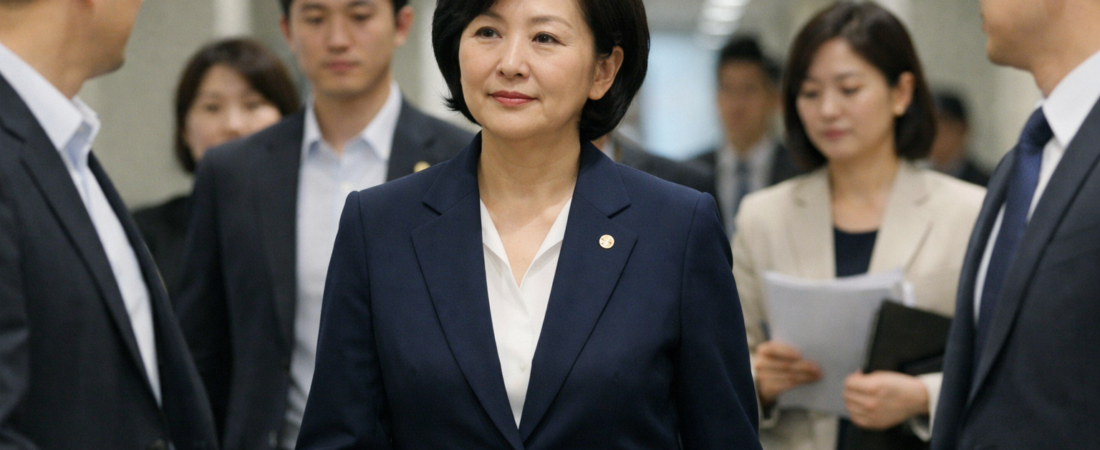
When heavy rain clouds gather over Korea, who takes charge first? This week, that responsibility fell squarely on Prime Minister Han Sung-sook. She issued an urgent directive ordering government agencies to maintain emergency readiness as torrential rain threatens central Korea.
Her message was clear and direct. Protect lives first, ask questions later.
Prime Minister Han Sung-sook’s Emergency Directive
Prime Minister Han Sung-sook called for an all-out effort to secure public safety. She specifically targeted the Seoul metropolitan area, Gangwon province, and the Chungcheong region.
These areas sit in the direct path of an approaching band of intense monsoon rainfall. Why does this matter so much right now?
Korea’s weather agency has forecast rainfall rates of 30 to 50 millimeters per hour across these regions. In some spots, that number could climb to 50 to 80 millimeters per hour.
To put that in perspective, 80 millimeters per hour is enough to turn quiet streets into rivers within minutes. Prime Minister Han Sung-sook understands this danger from experience, not just from briefing reports.
She has instructed every relevant ministry to stay on continuous emergency duty until the storm system passes. This is not a symbolic gesture.
It reflects a working philosophy that has defined her time in office: preparation prevents tragedy. You can already see this playing out across government agencies scrambling to respond.
Why Korea’s Monsoon Season Demands Urgent Action
Korea’s rainy season, known locally as jangma, has always tested the country’s infrastructure. But climate change has made these summer storms far more unpredictable.
Rain that once fell steadily over days now arrives in sudden, violent bursts. Have you noticed how “once in a century” floods seem to happen almost every year now?
This shift explains why Prime Minister Han Sung-sook chose such forceful language in her directive. Standard seasonal precautions no longer feel sufficient.
Korea has painful recent memory to draw from. In 2022, flooding in Seoul’s Gwanak-gu district killed several residents living in semi-basement apartments, known as banjiha.
Those deaths shocked the nation and exposed how vulnerable low-income housing remains during extreme weather. Prime Minister Han Sung-sook’s directive specifically references semi-basement housing monitoring, a direct response to that painful lesson.
Underground roadways present another recurring danger. In 2023, a flooded underpass in Cheongju trapped and killed multiple drivers when water rushed in faster than anyone could react.
These are not distant hypotheticals for Korean officials. They are recent tragedies that shape every emergency order issued today, including this latest one from Prime Minister Han Sung-sook.
You might wonder why the government reacts so strongly to rain forecasts that sound almost routine. The answer lies in Korea’s dense population and its unique mix of mountainous terrain and low-lying urban housing.
Landslides can strike hillside neighborhoods within seconds of a rainfall spike. Meanwhile, poorly ventilated basement units can flood before residents even realize water has entered.
The Specific Safety Measures Prime Minister Han Sung-sook Ordered
Prime Minister Han Sung-sook did not stop at general warnings. Her directive laid out concrete, actionable steps for local governments and safety agencies.
First, she ordered advance inspections of landslide-prone zones, flood-risk areas, and locations vulnerable to falling rocks. These inspections must happen before the rain intensifies, not after.
Second, she called for stronger evacuation systems for residents living in high-risk areas. This includes clearer communication about when and how to leave, especially for elderly residents who may need extra time.
Third, Prime Minister Han Sung-sook specifically addressed tourists and campers. Korea’s river valleys and mountain campsites attract huge summer crowds, and many visitors underestimate how quickly water levels can rise.
Local authorities must now actively guide these visitors away from danger zones. Fourth, she demanded heightened monitoring of underground roadways and semi-basement housing units, the two site types most linked to recent fatalities.
This combination of measures shows a layered approach to disaster response. It targets infrastructure, communication, and vulnerable populations all at once.
Is this level of detail unusual for a prime ministerial directive? Not in Korea’s current political climate, where public trust in disaster response has become a defining measure of government competence.
According to reporting from Yonhap News Agency, the Korea Meteorological Administration expects the heaviest rainfall to concentrate over the next several days. This timeline gives local governments a narrow window to implement Prime Minister Han Sung-sook’s instructions before conditions worsen.
Emergency management teams across affected provinces are now conducting site visits, checking drainage systems, and pre-positioning rescue equipment. Every hour counts when forecasts predict rainfall this intense.
What This Reveals About Korea’s Disaster Preparedness
Why should international readers care about one directive from a Korean prime minister? Because it reveals how modern governments are adapting to climate volatility in real time.
Prime Minister Han Sung-sook’s response follows a pattern seen increasingly across East Asia. Governments are shifting from reactive disaster management toward proactive, preventive systems.
This shift did not happen overnight. Korea invested heavily in disaster infrastructure after the tragedies of 2022 and 2023, including expanded early warning systems and revised building codes for basement housing.
Yet infrastructure alone cannot prevent every disaster. Human coordination matters just as much, and that is exactly what Prime Minister Han Sung-sook’s directive emphasizes.
She is essentially asking every layer of government, from national ministries to neighborhood offices, to move in sync. Coordination like this is harder than it sounds.
Local officials must interpret national directives quickly and adapt them to their specific terrain and population needs. A coastal town faces different risks than a mountain village, even under the same national emergency order.
This is where leadership style becomes visible. Prime Minister Han Sung-sook’s approach favors specificity over vague warnings, giving local officials clear benchmarks rather than open-ended instructions.
That clarity can make the difference between an effective evacuation and a delayed, confused response. Will this directive prevent every possible flood-related death this season?
Realistically, no single order can guarantee zero casualties. But Prime Minister Han Sung-sook’s insistence on advance inspection and layered protection strategies significantly reduces the odds of repeating past tragedies.
For Korean citizens living in flood-prone neighborhoods, this kind of proactive governance offers real reassurance. It signals that lessons from past disasters are shaping current policy, not just filling news cycles.
For global observers, Korea’s approach offers a useful case study in climate adaptation. As extreme weather intensifies worldwide, the question of how governments prepare, communicate, and coordinate will only grow more urgent.
Korea’s monsoon season will keep testing infrastructure and leadership every summer. How a government responds under pressure often says more about its priorities than any long-term policy document ever could.
Prime Minister Han Sung-sook’s directive this week offers one clear answer. Preparation, communication, and rapid coordination remain the backbone of effective disaster response, no matter how unpredictable the weather becomes.
As central Korea braces for more intense rainfall in the coming days, all eyes remain on how local governments execute these instructions. Will this proactive strategy hold up against nature’s unpredictability?
What do you think about Korea’s approach to disaster preparedness under Prime Minister Han Sung-sook’s leadership?
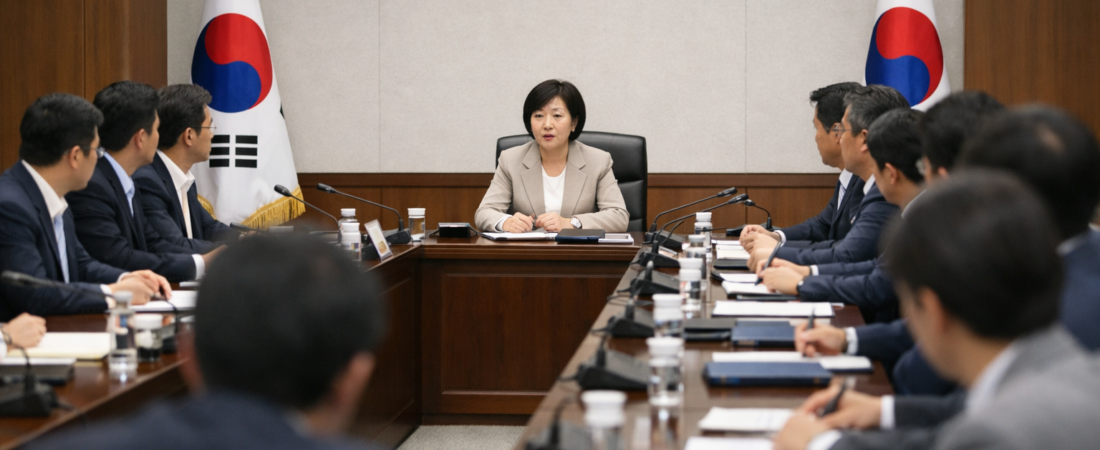
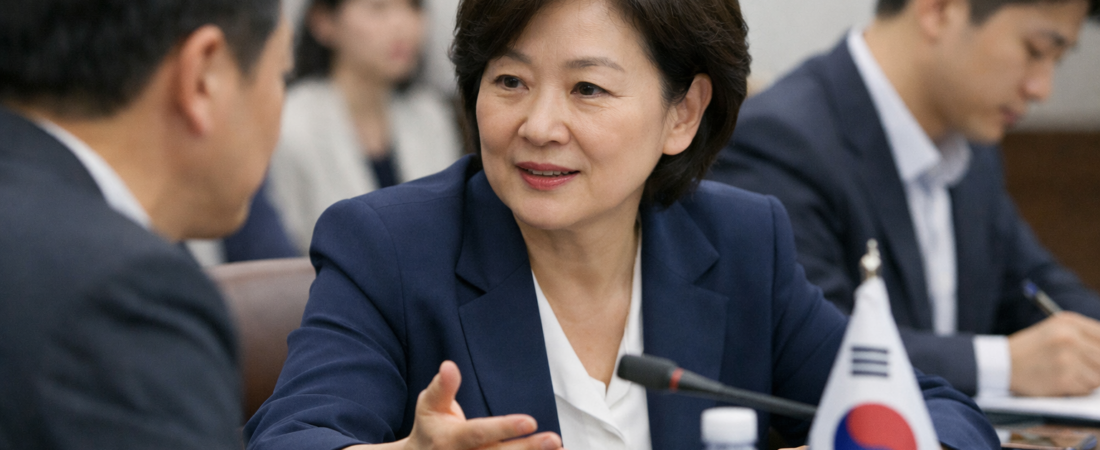
AI-Generated Photorealistic Image — All people, scenes, and details in this image are entirely AI-generated and fictional. Not a real photograph of an actual person or event. 이 이미지는 AI로 생성된 가상 이미지입니다.
Leave a Reply