Table of Contents
What does it take to sell an entire country’s tech ambitions in just eleven days? President Lee Jae-myung is about to find out. He is heading out on a whirlwind diplomatic tour spanning the United States, three South American nations, and Germany.
This is not a routine overseas visit. This is a calculated bet on Korea’s future in artificial intelligence, trade, and global partnerships. Let’s break down why this trip deserves your attention.
An 11-Day Marathon: What’s on President Lee Jae-myung’s Schedule
Seven nights and eleven days. That’s the length of the journey President Lee Jae-myung is undertaking, and the itinerary reads like a masterclass in modern statecraft.
The trip begins in San Francisco, moves through Brazil, Chile, and Argentina, and finishes in Germany before the president returns home. Why pack so many countries into so little time?
Because global diplomacy today isn’t just about handshakes and photo ops. It’s about securing technology partnerships, opening new trade corridors, and reassuring citizens abroad that their homeland has not forgotten them.
Every stop on this tour serves a distinct strategic purpose. San Francisco represents the future of AI-driven economic growth. South America represents untapped trade potential in critical minerals and agriculture.
Germany, meanwhile, offers a chance to connect with the Korean diaspora and reinforce ties with one of Europe’s industrial powerhouses. Have you ever wondered how much planning goes into a trip like this?
Behind the scenes, teams of diplomats, trade officials, and security personnel have spent weeks preparing every meeting. President Lee Jae-myung‘s team clearly wants this tour to deliver measurable results, not just symbolic gestures.
Silicon Valley Calling: President Lee Jae-myung Meets Big Tech
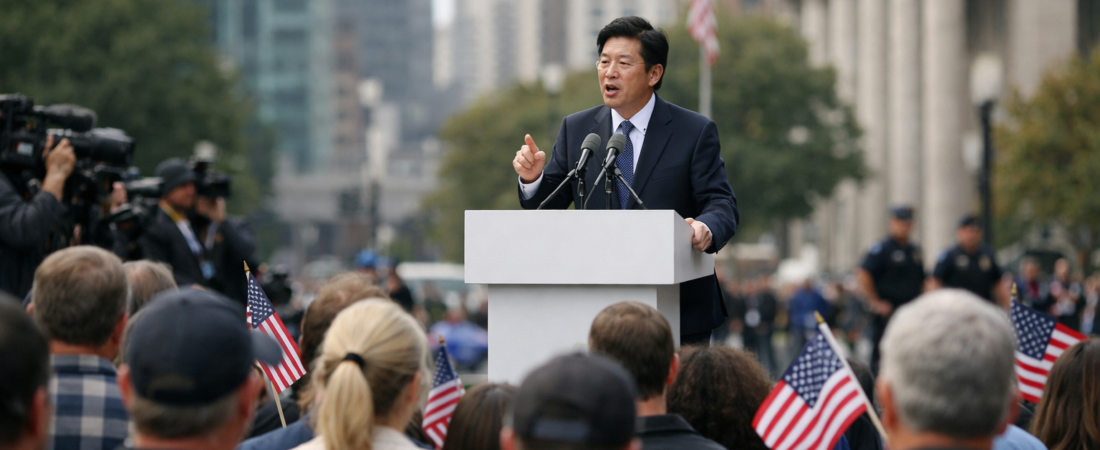
San Francisco is where the real action starts. President Lee Jae-myung plans to sit down with CEOs from Nvidia, OpenAI, and other major technology firms.
These aren’t casual meetings. They’re negotiations over investment, chip supply chains, and collaborative AI research that could reshape Korea’s tech industry for a decade.
Why does this matter so much right now? Because the global AI race has become the defining economic competition of our era, and Korea wants a front-row seat.
Nvidia’s chips power much of the world’s AI infrastructure. OpenAI leads the charge in generative AI development. Meeting both signals that Korea intends to be a serious player, not just a spectator.
At the AI Summit itself, President Lee Jae-myung is expected to formally endorse what’s being called the San Francisco AI Declaration. This is a statement of shared principles among nations committed to responsible AI development.
He also plans to outline Korea’s own ambitions for growing its domestic AI industry. Think of it as Korea’s pitch to the world: we’re ready to build, invest, and lead alongside the biggest names in tech.
For readers wanting deeper background on how nations coordinate AI policy internationally, Yonhap News Agency offers helpful context on these ongoing global discussions.
This isn’t Korea’s first attempt to position itself in the AI conversation. Samsung, SK Hynix, and Naver have all invested heavily in semiconductor and AI infrastructure over the past several years.
But a direct meeting between the sitting president and Big Tech’s top executives sends a louder message than any corporate announcement ever could. It says the entire government stands behind this push.
Beyond the AI Summit: South America and Germany
After San Francisco, the tour shifts continents entirely. President Lee Jae-myung will visit Brazil, Chile, and Argentina, three countries with very different but complementary relationships to Korea.
Brazil offers agricultural trade opportunities and a massive consumer market. Chile holds some of the world’s largest lithium reserves, a resource critical for batteries and electric vehicles.
Argentina brings its own mix of natural resources and growing bilateral trade interest. Together, these three stops form a coherent strategy: securing raw materials and markets that Korean industry desperately needs.
Why does South America matter so much for a country focused on AI and semiconductors? Because chips and batteries don’t build themselves.
They require rare minerals, stable trade agreements, and long-term diplomatic goodwill. This leg of the trip lays groundwork that may not make headlines immediately but will matter enormously in five or ten years.
The final stop is Germany, where the tone shifts from trade negotiations to something more personal. President Lee Jae-myung plans to hold a meeting with the Korean diaspora community living there.
These gatherings matter more than outsiders might assume. Korean communities abroad often serve as informal ambassadors, sharing culture, building business networks, and maintaining emotional ties to home.
A president who takes time to meet them directly sends a message of respect and continuity. It says: distance doesn’t diminish belonging.
Why This Trip Matters for Korea’s Global Standing
So what’s the bigger picture here? This 11-day tour isn’t random. It’s a deliberate effort to position Korea at the center of three major global conversations: technology, trade, and diaspora diplomacy.
Consider the historical context. Korea transformed from a war-torn nation in the 1950s into one of the world’s most advanced economies within a single generation.
That transformation relied heavily on strategic international partnerships, much like the ones President Lee Jae-myung is pursuing now. History doesn’t repeat exactly, but it certainly rhymes.
Compare this trip to previous administrations’ overseas visits. Past Korean presidents often focused narrowly on security alliances or single-country trade deals.
This tour is broader in scope, touching AI policy, critical mineral access, and cultural diplomacy all within one itinerary. That breadth reflects how complex global leadership has become in 2026.
What does this mean for everyday readers outside Korea? If you follow global tech trends, watch how Korea’s AI partnerships with Nvidia and OpenAI develop over the coming months.
If you’re interested in international trade, keep an eye on how Chile’s lithium resources connect to Korean battery manufacturers. And if you have Korean friends or colleagues living abroad, this trip is a reminder that their homeland still actively engages with its diaspora.
President Lee Jae-myung‘s journey reflects a country trying to punch above its weight on the world stage. Korea is a mid-sized nation with outsized technological ambition, and this tour is proof of that ambition in motion.
Will these eleven days translate into concrete investment deals and lasting partnerships? That’s the real test, and one worth watching closely in the months ahead.
As President Lee Jae-myung returns home from Germany, the true measure of this trip’s success won’t be the handshakes or photos. It will be whether Korea’s AI ambitions gain real traction with companies like Nvidia and OpenAI, and whether new trade doors in South America actually open.
What do you think about Korea’s strategy of blending tech diplomacy, trade expansion, and diaspora engagement into a single overseas tour?
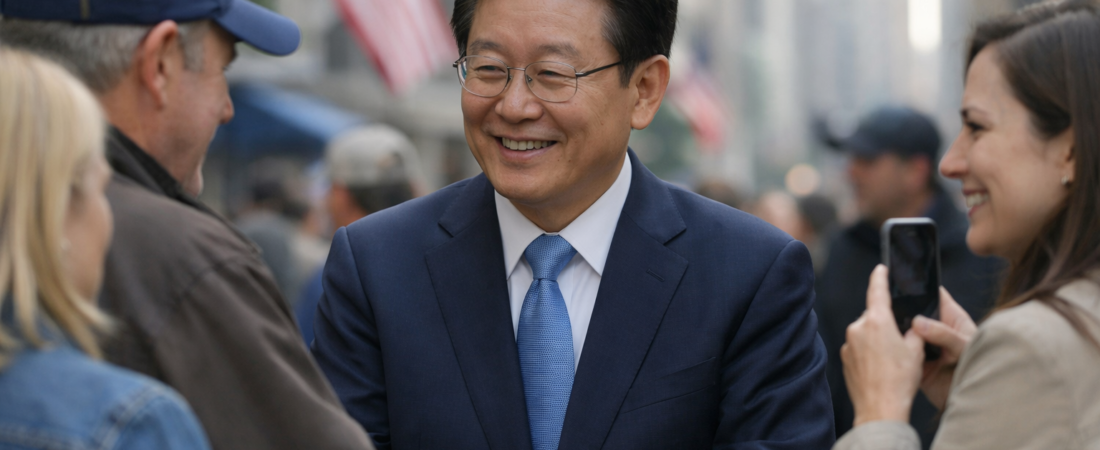
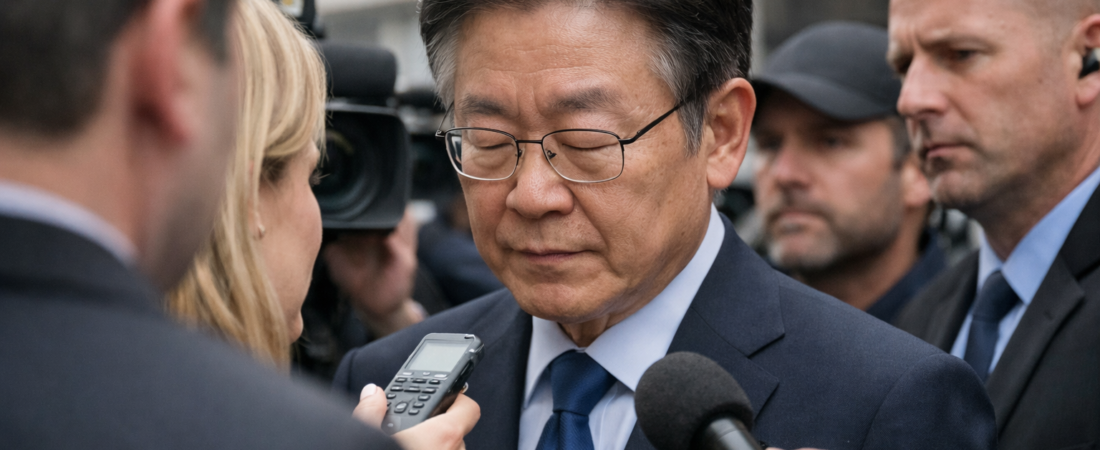
AI-Generated Photorealistic Image — All people, scenes, and details in this image are entirely AI-generated and fictional. Not a real photograph of an actual person or event. 이 이미지는 AI로 생성된 가상 이미지입니다.
Leave a Reply