
Table of Contents
Can a single court ruling shake an entire political party? That’s the question swirling around Seoul right now, and lawmaker Cho Eun-hee has stepped right into the middle of it. In a recent SBS Radio interview, Cho Eun-hee didn’t hold back her opinions on Seoul Mayor Oh Se-hoon’s legal troubles, government housing policy, and her own party’s leadership crisis.
Her comments touch three separate storylines. But together, they paint a picture of a conservative party trying to find its footing. Let’s break down what Cho Eun-hee actually said, and why it matters.
What Did Cho Eun-hee Say About Oh Se-hoon’s Trial?
Seoul Mayor Oh Se-hoon recently lost his first-trial court case. That’s a big deal for any sitting mayor, let alone one of Korea’s most prominent conservative politicians. So how did Cho Eun-hee respond?
She called the ruling a case built more on inference than actual evidence. That’s a strong claim from a sitting lawmaker about a court decision. Cho Eun-hee argued the verdict lacked the solid proof needed for such a serious outcome.
Her confidence didn’t stop there. Cho Eun-hee predicted the appeals court will correct the ruling in the second trial. Is this wishful thinking, or does she have grounds for optimism?
It’s hard to say without seeing the full case file. But her framing tells us something important. Cho Eun-hee wants the public to see this as a legal problem, not a political scandal.
That distinction matters a lot in Korean politics. Legal troubles can end careers overnight. By calling the verdict weak on evidence, Cho Eun-hee is trying to protect Oh Se-hoon’s reputation while the appeal plays out.
Whether her prediction comes true remains to be seen. Korean courts don’t always follow the pattern politicians expect. Still, her comments show how party members are already preparing their public defense strategy.
Cho Eun-hee’s Warning on Real Estate Policy
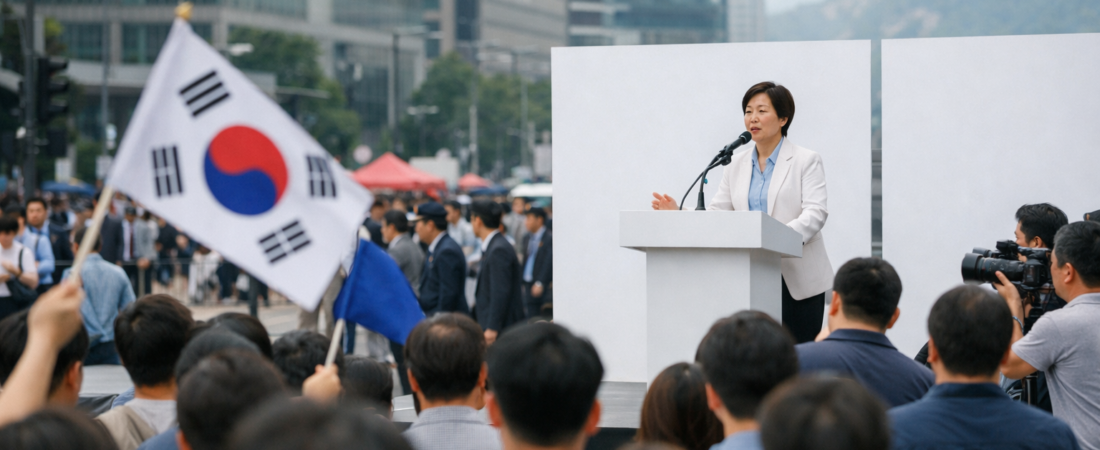
Housing prices have always been a touchy subject in Korea. Ask any young couple trying to buy their first apartment in Seoul. So when the president held a large-scale real estate forum, Cho Eun-hee watched closely.
Her verdict? She said the forum looked like it was copying the previous Moon Jae-in administration’s playbook. That’s a pointed comparison, especially since Moon’s housing policies remain controversial years later.
What exactly worried Cho Eun-hee? She pointed to two specific tools: demand suppression and tax increases. These were signature strategies under the Moon government, aimed at cooling an overheated housing market.
Did those policies actually work? Many economists and everyday homeowners say no. Prices kept climbing in some areas despite the crackdowns, while transaction volumes dropped sharply.
Cho Eun-hee predicted a similar outcome this time. She specifically named two likely results: higher property holding taxes and tighter loan restrictions. If she’s right, homeowners and buyers alike will feel the pressure.
Why does this matter for regular families? Loan restrictions directly affect who can afford a home. Tax hikes on property holdings hit anyone who already owns real estate, not just wealthy investors.
Cho Eun-hee’s critique reflects a broader conservative argument. Government intervention, she suggests, often backfires by restricting supply and discouraging investment. You can find more background on Korea’s housing debates through outlets like SBS, which has tracked these policy shifts closely.
Is history really repeating itself? That’s the real question behind Cho Eun-hee’s warning. Only time, and the next few housing reports, will tell.
The Jang Dong-hyuk Leadership Question

Every political party eventually faces a leadership crisis. Right now, that crisis belongs to the People Power Party, and it centers on party leader Jang Dong-hyuk. His position has come under scrutiny amid ongoing scrutiny from the National Election Commission and the party’s own Ethics Committee.
Cho Eun-hee addressed this directly in her interview. She said discussions about Jang Dong-hyuk’s future would resume once these election commission and ethics issues get resolved. In other words, don’t expect a resolution overnight.
Why the delay? Political parties in Korea often wait for official investigations to conclude before making leadership decisions. Acting too early can look reactive or panicked, rather than principled.
But waiting has its own risks too. Every month of uncertainty weakens public confidence in party leadership. Supporters want clarity, and rivals use the confusion as ammunition.
Cho Eun-hee seems aware of this tension. That’s likely why she paired her comments on Jang Dong-hyuk with a bigger point: the party itself needs deeper reform. Leadership questions, she suggests, are really symptoms of a larger structural problem.
Think about it this way. If a party keeps cycling through leadership crises, maybe the problem isn’t the individual leader. Maybe it’s the system producing these crises again and again.
What Cho Eun-hee’s Comments Reveal About Party Reform
Here’s where Cho Eun-hee’s interview gets most interesting. She didn’t just defend Oh Se-hoon or criticize housing policy. She called for the People Power Party to become a genuinely people-centered party.
What does that phrase actually mean? In Korean politics, it usually signals a shift away from insider power struggles. Instead, parties try to focus more on voter needs and everyday concerns.
Cho Eun-hee specifically mentioned systemic reform. This suggests she believes the party’s internal structure, not just its personnel, needs an overhaul. Rules around leadership selection, internal discipline, and decision-making processes may all be on the table.
Why raise this now, during an already turbulent moment? Timing matters in politics. Crisis often creates the opening reformers need.
When a party is already dealing with a mayor’s court case, a housing policy fight, and a leadership question, calls for change land differently. People are already paying attention. Cho Eun-hee may be using this window to push ideas that wouldn’t gain traction in calmer times.
Does her strategy make sense? Conservative parties across many democracies have faced similar identity crises. The ones that adapt tend to survive; the ones that don’t often fade into irrelevance.
Cho Eun-hee’s comments suggest she wants the People Power Party to choose adaptation. Whether her colleagues agree, and whether reform actually follows through, is the story to watch next.
Korean political parties often talk about reform without delivering it. Will this be different? Cho Eun-hee’s public remarks put pressure on party leadership to follow words with action, and voters will be watching closely for signs of real change rather than just talk.
Looking ahead, three threads deserve attention. First, watch how the Oh Se-hoon appeal unfolds in the coming months. Second, track whether the government’s real estate approach shifts toward the tax and lending measures Cho Eun-hee predicted.
Third, and perhaps most telling, watch what happens with Jang Dong-hyuk once the election commission and ethics reviews close. These three storylines are connected by more than timing. They reflect a party wrestling with its identity, its credibility, and its future direction.
What do you think about Cho Eun-hee’s push for a more people-centered conservative party in Korea?
AI-Generated Photorealistic Image — All people, scenes, and details in this image are entirely AI-generated and fictional. Not a real photograph of an actual person or event. 이 이미지는 AI로 생성된 가상 이미지입니다.


Leave a Reply