Table of Contents
Can a religious group quietly change the outcome of a major political election? That question is now hanging over the Democratic Party National Convention, Korea’s biggest ruling-party leadership race. As the main bracket for candidates gets finalized, two rival camps inside the party are clashing in public, and investigators are looking into whether outside believers tried to tip the scales.
This isn’t just an internal party squabble. It touches core questions about fairness, faith, and political influence in South Korea. Let’s break down what’s happening and why it matters.
What’s Really Happening at the Democratic Party National Convention
The Democratic Party of Korea just locked in its final bracket of candidates for the upcoming national convention. This convention decides who leads the party heading into the next major election cycle. So the stakes here are very high.
With the matchups now confirmed, the Democratic Party National Convention has turned into more than a simple leadership vote. It has become a battleground between two competing internal factions. Party insiders describe the mood as tense, even combative, ahead of the final vote.
Why does a party leadership race draw this much attention? Because whoever wins effectively controls the party’s direction, its candidate selections, and its relationship with the current administration. In Korean politics, party leadership often shapes national policy far more than outsiders realize.
The Democratic Party National Convention this year carries extra weight because of how close the factional split has become. Neither camp holds a commanding lead. That uncertainty is fueling sharper rhetoric and, as we’ll see, serious allegations of outside interference.
Inside the Faction Fight: Pro-Lee vs. Pro-Jung
To understand this convention, you need to understand Korea’s faction culture. Korean political parties often split into camps built around individual leaders rather than pure policy differences. That’s exactly what’s playing out here.
One side is known as the pro-Lee Jae-myung faction, loyal to the party’s most prominent figure. The other is the pro-Jung Chung-rae faction, built around a different senior party voice. Both camps want control of the Democratic Party National Convention outcome, and neither is backing down quietly.
These aren’t new rivalries. Korean political history is full of factional battles that outlast any single election cycle — think of how party splits shaped the opposition movements of past decades. What makes this round different is how openly the conflict has spilled into leadership meetings.
During a recent party leadership session, tensions boiled over in front of reporters. Members from both factions traded accusations directly, rather than working things out behind closed doors. That kind of public friction rarely happens in Korean party politics — and it signals how personal this convention has become.
Is this healthy competition or a warning sign? That depends on how the party handles the next controversy, which is arguably even more serious than the factional sniping itself.
The Shincheonji Controversy Rocking the Democratic Party National Convention
Here’s where the story gets genuinely alarming. Allegations have surfaced that members of Shincheonji, a controversial religious group, may have tried to influence the Democratic Party National Convention from the inside.
Specifically, reports suggest some Shincheonji followers joined the Democratic Party recently, possibly with the goal of affecting the primary vote. If true, this would mean an outside religious organization tried to steer an internal party leadership contest. That’s a serious breach of political norms in any democracy.
The two factions didn’t handle this quietly. Instead, they clashed openly over the allegations during a party leadership meeting, each side seemingly suspicious the other might benefit from — or even be tied to — the alleged interference. You can imagine how quickly trust erodes in that kind of environment.
Shincheonji has a complicated history in Korean public life. The group drew massive national attention in 2020, when it became linked to one of Korea’s largest early COVID-19 outbreaks. That episode left lasting public wariness toward the organization’s methods and reach.
Now, a joint investigation team made up of prosecutors and police has stepped in. They confirmed they are actively looking into whether Shincheonji members joined the Democratic Party under questionable circumstances, and whether any of them attempted to manipulate the primary process. This is a formal criminal investigation, not just political noise.
For readers outside Korea, this might sound unusual. But Korean political parties keep relatively open membership rules, which makes them vulnerable to exactly this kind of bloc-voting scheme. If a large group joins quickly and votes together, they can shift a close race — and that’s precisely what investigators are checking.
You can find more background on Shincheonji’s public controversies through outlets like Yonhap News Agency, which has tracked the group’s activities over the years.
So what happens if the investigation confirms interference? The Democratic Party National Convention results could face legal challenges, or at minimum, a serious credibility problem. That’s not a small risk for any party heading into future elections.
What This Means for Korean Politics Going Forward
Step back for a moment. What does this controversy tell us about Korean democracy in 2026 and beyond? It shows that party primaries, once seen as internal business, are now under intense public and legal scrutiny.
The Democratic Party National Convention isn’t just picking a leader anymore. It’s become a test case for how Korean parties guard against outside manipulation, whether from religious groups, business interests, or other organized blocs. That’s a bigger conversation than just this one election.
Consider the precedent this sets. If investigators confirm Shincheonji involvement, other parties may need to tighten membership rules before their own conventions. Loose entry requirements that once seemed harmless could suddenly look like serious vulnerabilities.
There’s also the factional angle to watch. Whether the pro-Lee Jae-myung camp or the pro-Jung Chung-rae camp wins, the losing side won’t simply disappear. Korean party history shows factional wounds from a bruising convention often shape internal politics for years afterward.
Why should readers outside Korea care about this? Because South Korea remains one of Asia’s most closely watched democracies, and its ruling party’s internal health affects regional stability, trade policy, and diplomatic consistency. A party distracted by scandal governs differently than one operating with full public trust.
The joint investigation team’s findings will likely arrive before the final convention vote is fully settled. If evidence of interference proves solid, expect calls for a partial redo or tighter oversight of future primaries. If the allegations fade, the factional rivalry will still remain the dominant story.
Either way, the Democratic Party National Convention has already revealed something important. Korean political parties are grappling with new-style threats to democratic processes, ones that go beyond traditional factional politics.
What do you think — should political parties in Korea tighten membership rules to prevent this kind of organized interference in the future?
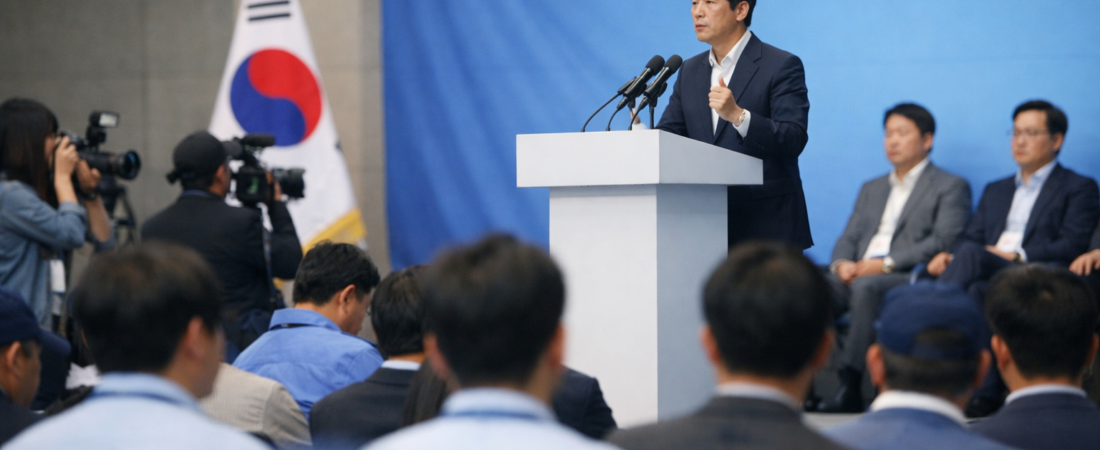
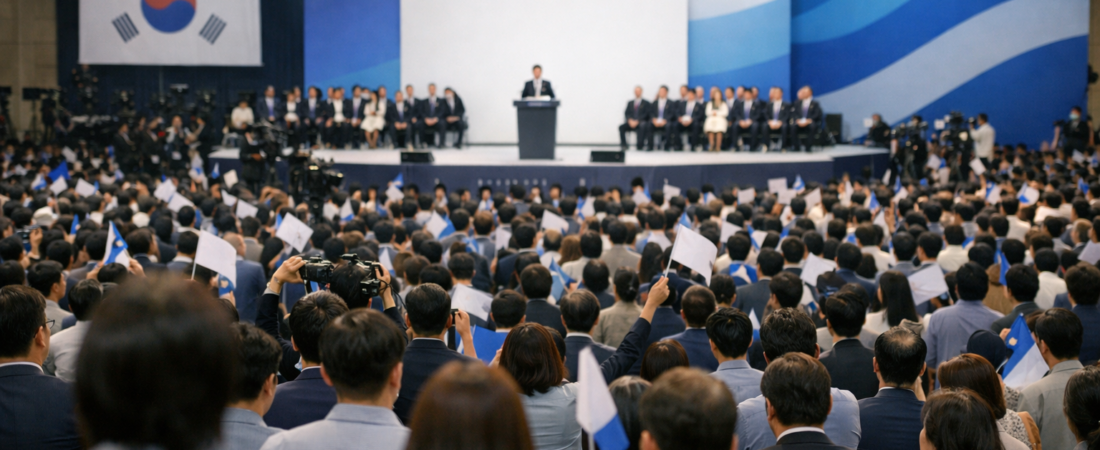
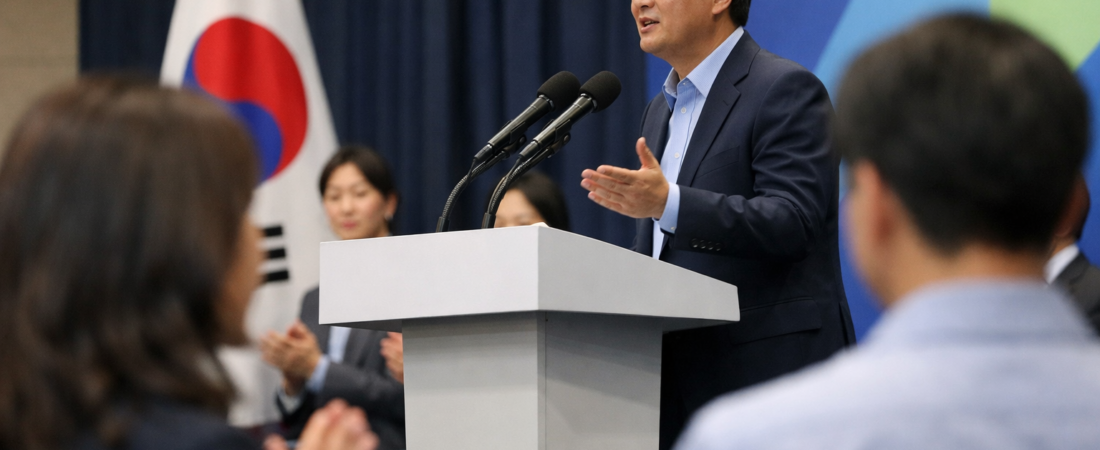
AI-Generated Photorealistic Image — All people, scenes, and details in this image are entirely AI-generated and fictional. Not a real photograph of an actual person or event. 이 이미지는 AI로 생성된 가상 이미지입니다.
Leave a Reply