Table of Contents
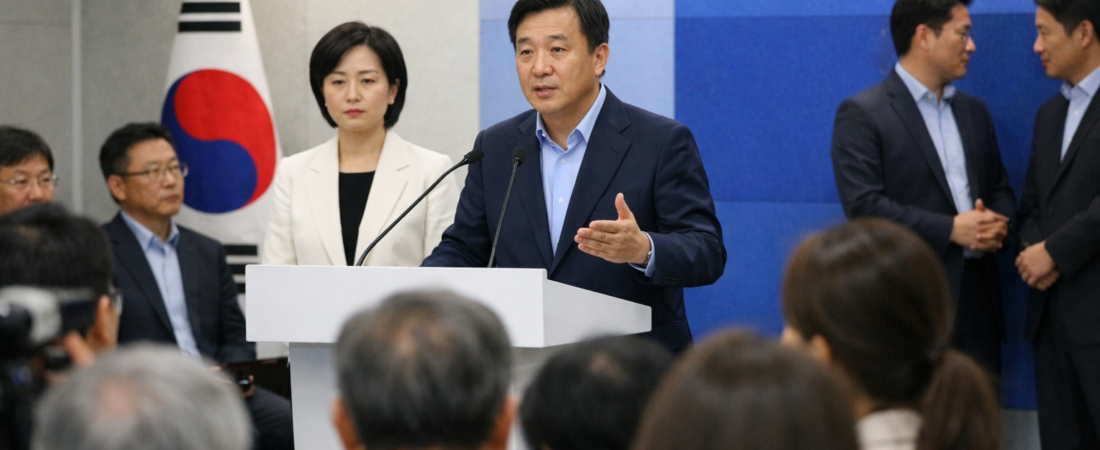
What does it take to lead South Korea’s most powerful political party? That question sits at the heart of a heated leadership contest inside the Democratic Party of Korea this week. Three candidates spent their weekend crisscrossing the country, hunting for votes ahead of a pivotal internal election.
This isn’t a minor party procedure. Whoever wins will help shape the Democratic Party of Korea’s direction under President Lee Jae-myung’s administration. So let’s break down what happened, why it matters, and what it tells us about Korean politics right now.
Why This Leadership Race Matters
The Democratic Party of Korea holds a commanding majority in the National Assembly. That means its internal leadership race isn’t just party business—it’s a preview of national policy direction.
Three candidates have advanced to the main leadership election: Kim Min-seok, Jung Chung-rae, and Song Young-gil. Each brings a different vision for the Democratic Party of Korea’s future, and each is fighting hard for grassroots support.
Have you ever wondered why party elections in Korea draw so much public attention? Unlike many Western democracies, Korean party leadership races often function as bellwethers for broader political trends. The winner doesn’t just manage party affairs—they set the tone for legislative strategy, coordinate with the presidential office, and often position themselves for future national leadership.
That’s exactly why this weekend’s campaign swing through Honam and Gyeongnam carried so much weight. These regions have historically been strongholds—or battlegrounds—for the Democratic Party of Korea. Winning hearts there signals broader electoral strength across the country.
Three Candidates, Three Strategies
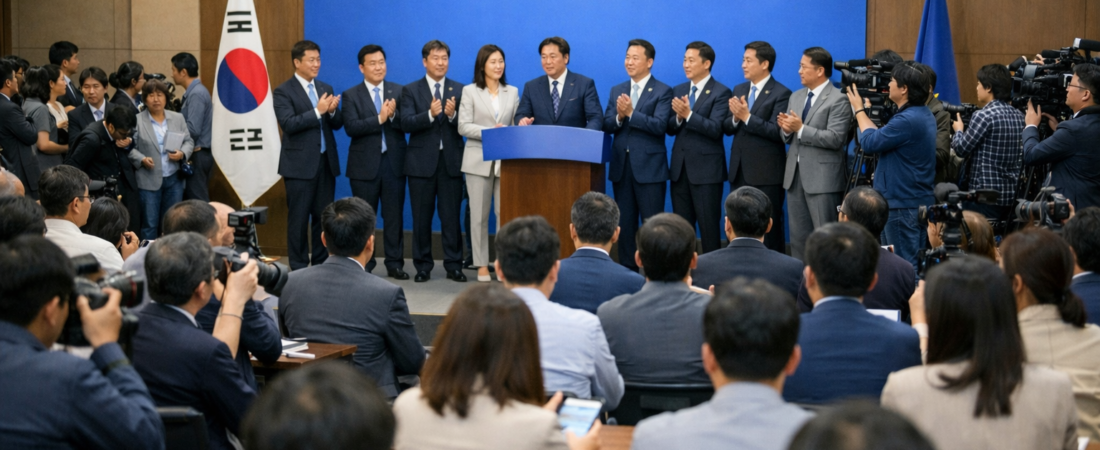
Kim Min-seok and Jung Chung-rae dominated headlines with a public dispute over party identity. Their exchange centered on allegations involving the Shincheonji religious group and what it means for the Democratic Party of Korea’s core values.
Song Young-gil took a different path. He focused his message on Jeollabuk-do public sentiment and emphasized his ability to cooperate closely with President Lee Jae-myung.
Why does strategy diversity matter in a leadership race like this? Because it reveals how candidates read the party’s mood differently. Kim and Jung seem to believe ideological battles win over party members, while Song is betting that cooperation and regional trust matter more.
Each approach carries risk. Sharp attacks can energize a base but also alienate moderate members who dislike infighting.
Song’s cooperative messaging, meanwhile, positions him as a bridge-builder. But some party members may see that as lacking a distinct, independent voice.
All three candidates share one urgent goal: mobilizing party members to actually vote. Internal elections often suffer from low turnout, so candidates spent the weekend urging supporters not to sit this one out. That grassroots push says a lot about how competitive this race has become within the Democratic Party of Korea.
The Shincheonji Controversy and Party Identity
Let’s talk about the Shincheonji controversy directly. Jung Chung-rae raised concerns about alleged Shincheonji involvement connected to Kim Min-seok’s campaign network.
Kim pushed back firmly, framing the accusation as an unfair attack on his character and campaign integrity. This back-and-forth quickly became one of the most talked-about storylines of the entire leadership race.
Why would a religious group’s alleged involvement matter so much in party politics? In Korea, religious organizations occasionally become flashpoints in political debates, especially when transparency and public trust are at stake. Voters want to know their party leaders answer to party members—not to outside religious networks.
This dispute also touches something deeper: what does the Democratic Party of Korea actually stand for today? Kim and Jung’s clash wasn’t just personal.
It reflected a larger debate about ideological direction, coalition-building, and who gets to define “true” party identity going forward. That question will likely follow whoever wins the leadership post.
Readers following Korean politics closely can find detailed coverage of these campaign disputes through outlets like Korean Daily News, which has tracked the controversy since it first emerged. Understanding this dispute requires context, too. Korean political parties often experience internal factional battles that outsiders might read as chaotic.
But these clashes actually serve a function. They force candidates to clarify their positions publicly, giving party members clearer choices before they cast ballots. Whether this particular controversy fades quickly or leaves lasting scars on the Democratic Party of Korea remains an open question.
Regional Campaigning: Honam and Gyeongnam in Focus
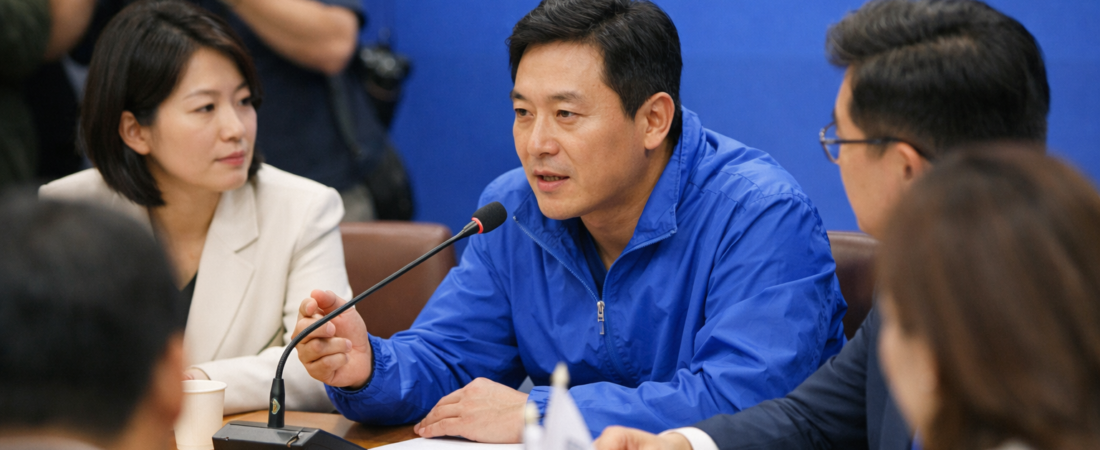
Why did all three candidates prioritize Honam and Gyeongnam this weekend? Simple: these regions carry significant weight in Democratic Party of Korea primaries.
Honam, in particular, has long been considered the party’s traditional base. Winning strong support there often signals broader legitimacy within the party.
Song Young-gil leaned heavily into this regional strategy. He emphasized his connection to Jeollabuk-do voters and stressed his working relationship with President Lee Jae-myung as proof of his readiness to lead.
This dual message—regional loyalty plus presidential cooperation—aims to reassure party members that Song offers stability.
Meanwhile, Kim Min-seok and Jung Chung-rae used their regional stops to keep pressing their identity dispute in front of live audiences. Campaign rallies became stages for their ongoing rivalry, rather than purely regional listening tours.
This tells us something important about how Korean party primaries work. Physical presence still matters enormously.
Shaking hands, giving speeches, and appearing at local events builds trust in ways online campaigning simply cannot replicate. All three candidates understood this, which explains the packed weekend travel schedule across Honam and Gyeongnam.
Consider the historical pattern here too. Korean political parties, including the Democratic Party of Korea, have long relied on regional coalitions to secure leadership positions.
Since South Korea’s democratization in the late 1980s, regional identity has shaped voting behavior in ways that persist even today. Candidates who ignore this reality risk losing touch with the party’s traditional support base.
That’s precisely why Song’s Jeollabuk-do-focused messaging carries strategic logic, even if it seems, on the surface, less flashy than Kim and Jung’s public clash.
What This Means Going Forward
So where does this leave the Democratic Party of Korea heading into its final vote? The race remains tight, with each candidate offering a distinct path forward.
Kim Min-seok and Jung Chung-rae continue battling over identity and credibility. Song Young-gil bets on cooperation and regional trust to carry him through.
Whoever wins will inherit a party navigating both internal disputes and the responsibility of governing alongside President Lee Jae-myung. That’s no small task.
Party members now hold the real decision-making power. Their turnout, and their judgment on these competing visions, will determine which strategy actually worked.
Will voters reward sharp ideological confrontation, or will they choose the candidate promising stability and cooperation? We won’t know until ballots are counted, but the answer will say a lot about where the Democratic Party of Korea sees itself heading next.
One thing is clear: this leadership race reflects larger tensions within Korean progressive politics today. Identity, loyalty, and cooperation with the presidential office—these three themes will likely keep shaping the Democratic Party of Korea’s internal debates long after this election concludes.
What do you think about how the Democratic Party of Korea is navigating this leadership contest?
AI-Generated Photorealistic Image — All people, scenes, and details in this image are entirely AI-generated and fictional. Not a real photograph of an actual person or event. 이 이미지는 AI로 생성된 가상 이미지입니다.


Leave a Reply