Table of Contents
What happens when a ruling party turns its attention inward? The Democratic Party of Korea is finding out. As its national convention approaches, factional rivalries have exploded into open competition for the party leadership and Supreme Council seats.
Three candidates are leading the charge, each backed by a different wing of the party. Their fight tells us something bigger about where the Democratic Party is headed next.
What’s Happening Inside the Democratic Party Right Now
Every few years, Korea’s major parties hold conventions to elect new leadership. This time, the stakes feel higher for the Democratic Party.
Three candidates are competing hard for the top position. Jung Cheong-rae, Kim Min-seok, and Song Young-gil each represent a distinct base within the party.
Jung Cheong-rae draws support from his own loyal faction, often called the pro-Jung Cheong-rae camp. Kim Min-seok leans on the pro-Lee Jae-myung network, the group aligned with the party’s most prominent figure.
Song Young-gil, meanwhile, is courting voters in the Honam region, historically the Democratic Party’s strongest base. So why does this matter beyond party headquarters?
Because the outcome will shape how the Democratic Party governs, campaigns, and presents itself to voters for years ahead. Leadership races like this one rarely stay contained to internal politics alone.
Meet the Contenders: Three Factions, One Convention
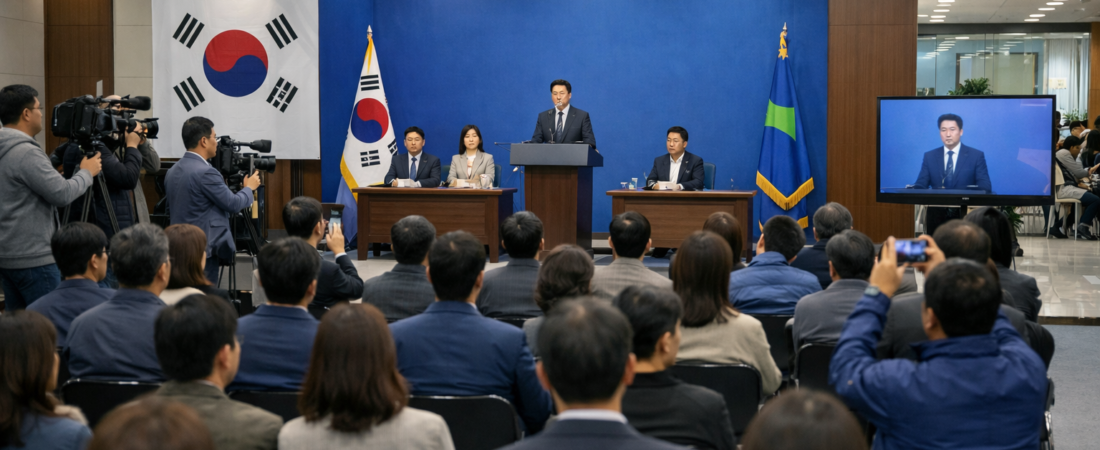
Let’s break down who these candidates actually are. Understanding their bases helps explain why this race has turned so combative.
Jung Cheong-rae has built a reputation as a firebrand within the Democratic Party. His faction values loyalty above all, and his supporters are known for aggressive campaigning on his behalf.
Kim Min-seok represents a different strategy entirely. He’s positioning himself as the candidate closest to Lee Jae-myung, the party’s central figure and current president.
That connection carries real weight inside the Democratic Party. Aligning with Lee Jae-myung signals continuity and access to power, something many party members find appealing.
Song Young-gil takes yet another path, appealing directly to Honam voters. This region has anchored the Democratic Party’s identity for decades, tracing back to the pro-democracy movements of the 1980s.
Winning Honam support isn’t just about votes. It’s about claiming the moral authority that comes with representing the party’s founding spirit.
Each candidate, then, is fighting on different ground. But they’re all fighting for the same prize: control of the Democratic Party’s direction.
Why “Our Side Only” Politics Is Reshaping the Democratic Party
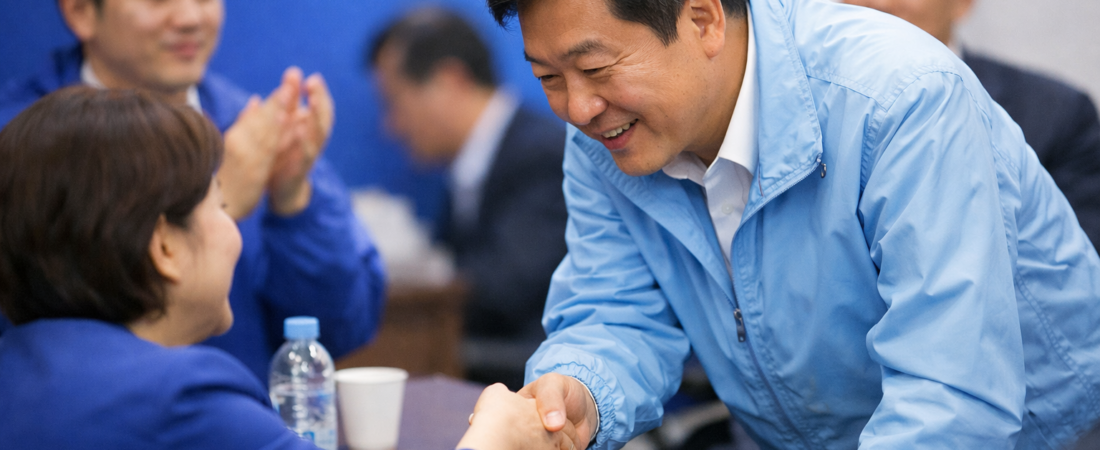
Here’s where things get interesting. This race isn’t limited to the top leadership position.
The competition has spread down to the Supreme Council elections too. Candidates and their supporters are pushing a simple message: vote only for “our side.”
Is that healthy for a major political party? It’s worth pausing on that question.
When factions ask members to vote strictly along loyalty lines, party unity often suffers. Each camp attacks rivals directly, hoping to discredit the competition before ballots are even cast.
This pattern isn’t unique to the Democratic Party, of course. Factional politics have shaped Korean parties across the political spectrum for decades.
But when it intensifies this visibly, it signals deeper tension underneath. The Democratic Party currently holds significant power in the National Assembly and the presidency.
That power makes internal unity even more important. A party that wins elections but fractures internally risks losing its ability to govern effectively.
Think about it this way. If Supreme Council members owe loyalty to specific factions rather than the party as a whole, decision-making becomes harder.
Every policy debate risks turning into a proxy battle between camps. That’s the real cost of “our side only” politics inside the Democratic Party.
For readers following Korean politics from abroad, this pattern may look familiar. Ruling parties in many democracies face similar internal splits once they hold power for an extended period.
You can read more detailed reporting on this convention race through Yonhap News Agency, which has tracked the candidates’ statements closely.
What This Power Struggle Means for Korea’s Political Future
So where does this leave the Democratic Party going forward? The convention outcome will decide more than just who holds the leadership title.
It will signal which faction has the strongest grip on party direction. Will the Democratic Party lean further toward Lee Jae-myung’s inner circle?
Or will Honam’s traditional influence reassert itself through Song Young-gil’s campaign? Jung Cheong-rae’s path suggests a third possibility: a leadership built on personal loyalty networks rather than regional or presidential ties.
Each scenario carries different implications for how the Democratic Party approaches upcoming elections and legislative battles. A leadership closely tied to Lee Jae-myung might prioritize policies that reinforce his political standing.
A Honam-rooted leadership might emphasize the party’s founding values and historical identity instead. Neither approach is inherently wrong, but they lead the Democratic Party down different paths.
Voters watching this convention should ask themselves a simple question. Does factional loyalty serve the public interest, or does it mainly serve the factions themselves?
That question matters for any democracy, not just Korea’s. Parties that reward internal loyalty over broader competence often struggle to maintain public trust over time.
The Democratic Party currently enjoys a strong position in Korean politics. But strong positions can erode quickly when internal conflict becomes public and personal.
History offers some guidance here. Korean political parties, including earlier iterations of the Democratic Party itself, have split or weakened after bitter leadership contests.
The 2015 split that eventually reshaped Korea’s progressive political landscape remains a cautionary example. Whether current leaders remember that lesson will become clear once convention results arrive.
For global readers, this race offers a useful lens into Korean democracy more broadly. Political parties everywhere face tension between unity and internal competition.
The Democratic Party’s current struggle simply makes that tension visible. Watching how Jung Cheong-rae, Kim Min-seok, and Song Young-gil navigate this contest tells us something about Korea’s political culture as a whole.
Moving forward, expect continued sharp exchanges between camps until convention day arrives. The Democratic Party’s ability to unify afterward will matter just as much as who wins.
Leadership races test more than popularity. They test whether a party can heal quickly enough to govern effectively once voting ends.
What do you think about how the Democratic Party is handling this factional competition? Does this kind of internal rivalry strengthen a party in the long run, or does it weaken public trust instead?
AI-Generated Photorealistic Image — All people, scenes, and details in this image are entirely AI-generated and fictional. Not a real photograph of an actual person or event. 이 이미지는 AI로 생성된 가상 이미지입니다.