Table of Contents
Why would a Korean president fly halfway around the world to meet Brazil’s leader? The answer says a lot about where Korea’s foreign policy is heading in 2026. President Lee Jae-myung just wrapped up a state visit to Brazil, and the results could reshape Korea’s economic ties with South America for years.
This wasn’t a routine diplomatic stop. President Lee Jae-myung sat down with Brazilian President Lula da Silva to talk trade, technology, and security. Both sides walked away with concrete commitments, not just polite handshakes.
A New Chapter in Korea-Brazil Relations
Let’s set the scene first. Brazil is Korea’s largest trading partner in Latin America. So a summit between these two leaders carries real weight, not just symbolic value.
President Lee Jae-myung’s visit comes at a moment when Korea is actively diversifying its trade relationships. Why does that matter? Because relying too heavily on a few major markets leaves any country exposed to sudden shocks.
Think about supply chain disruptions from recent years. Semiconductor shortages, energy price spikes, and shipping delays taught Korean policymakers a hard lesson. Spreading economic partnerships across multiple continents isn’t optional anymore—it’s survival strategy.
Brazil offers something Korea desperately needs: raw materials and agricultural resources. Korea, in turn, offers Brazil advanced manufacturing, defense technology, and semiconductor expertise. This is a classic complementary relationship, and President Lee Jae-myung clearly wanted to formalize it.
The choice of Brazil also reflects a broader trend. Korean administrations have increasingly looked toward the Global South for partnerships. You could call it a hedge against overdependence on traditional allies alone.
President Lee Jae-myung Pushes for Mercosur Trade Revival
Here’s where things get interesting. President Lee Jae-myung specifically raised the need to restart talks on a Korea-Mercosur trade agreement. Mercosur includes Brazil, Argentina, Paraguay, and Uruguay—a bloc representing a massive consumer market.
Why does reviving this agreement matter so much right now? Korean exporters, especially in automobiles and electronics, face growing competition from Chinese manufacturers in Latin American markets. A formal trade agreement would lower tariffs and give Korean companies a real edge.
Negotiations between Korea and Mercosur have stalled multiple times over the past decade. Political changes in member countries and shifting priorities kept delaying progress. President Lee Jae-myung’s direct push signals that Seoul wants to break this cycle of postponement.
Beyond tariffs, there’s a deeper strategic angle here. Critical minerals cooperation was another major theme of the summit. Brazil holds significant reserves of minerals essential for batteries, electric vehicles, and semiconductor production.
Korea’s tech industry runs on these materials. Without stable access to lithium, nickel, and rare earth elements, Korean battery and chip manufacturers face serious bottlenecks. President Lee Jae-myung’s emphasis on critical minerals cooperation directly addresses this vulnerability.
Should Korean readers expect quick results from this Mercosur push? Trade agreements typically take years to finalize, so patience will be necessary. But the political will demonstrated at this summit matters—it restarts momentum that had gone cold.
For more background on how critical minerals shape global trade negotiations, you can explore related coverage at Yonhap News Agency.
Expanding Cooperation: Defense, Space, and Semiconductors
Trade wasn’t the only topic on the table. President Lee Jae-myung and President Lula agreed to expand cooperation across an impressively wide range of sectors. Defense industry, space technology, semiconductors, and energy all made the list.
Why would Brazil want defense cooperation with Korea? Korean defense manufacturers have built a strong global reputation recently, particularly through arms exports to Poland and other European nations. Brazil likely sees an opportunity to diversify its own defense procurement away from traditional Western suppliers.
Space cooperation might surprise some readers. But Brazil has an active space program, and Korea has been rapidly developing its own satellite and rocket capabilities. Joint projects here could benefit both nations’ scientific ambitions.
Semiconductor collaboration follows a similar logic to the critical minerals discussion. Korea dominates global memory chip production, but the entire supply chain depends on raw material access. Building stronger ties with resource-rich Brazil protects that dominance.
Energy security rounds out this list of priorities. Both nations agreed to deepen cooperation on energy and food security, alongside broader supply chain resilience. This makes sense given recent global disruptions to both energy markets and food distribution networks.
Perhaps most notably, the two countries agreed to establish a joint working group. What does that actually mean in practice? It means these aren’t just aspirational statements—there’s now a formal mechanism to track progress and hold both governments accountable.
Working groups like this often determine whether summit promises translate into real policy. President Lee Jae-myung’s administration seems aware that lofty statements mean little without follow-through structures. This detail deserves attention from anyone watching Korea’s diplomatic strategy unfold.
Brazil’s Support for Korean Peninsula Peace
Now let’s turn to the security dimension of this visit. Denuclearization of the Korean Peninsula remains one of Seoul’s most persistent diplomatic goals. President Lee Jae-myung secured Brazil’s explicit support for this objective during the summit.
Does Brazil’s endorsement actually change anything on the ground? Not directly—Brazil has no formal role in North Korea negotiations. But diplomatic support from a major Global South nation adds international legitimacy to Korea’s peace-building efforts.
Every country that publicly backs denuclearization helps build broader consensus. North Korea’s nuclear program isn’t just a regional problem; it’s a global nonproliferation concern. Getting nations like Brazil on record supporting peace on the Korean Peninsula reinforces that broader framing.
President Lee Jae-myung has consistently framed peninsula peace as connected to global stability, not just regional security. This messaging strategy makes sense diplomatically. It invites countries with no direct stake in Korean affairs to still care about the outcome.
Korea’s history with denuclearization diplomacy stretches back decades, through multiple administrations and shifting approaches. Some presidents favored engagement, others favored pressure. President Lee Jae-myung’s approach during this Brazil trip suggests a preference for building wide international coalitions rather than relying solely on traditional allies like the United States and Japan.
This matters for how we understand Korean foreign policy going forward. Building support networks across Latin America, Africa, and Southeast Asia gives Seoul more diplomatic tools. It’s not replacing traditional alliances—it’s supplementing them.
What This Summit Means Going Forward
So what should readers take away from President Lee Jae-myung’s Brazil visit? First, Korea is serious about trade diversification, especially given rising competition from China in emerging markets. The push to revive Mercosur talks reflects genuine urgency, not just diplomatic courtesy.
Second, critical minerals and supply chain security have become central to Korean foreign policy thinking. This isn’t unique to Korea—many advanced economies now treat resource access as a national security issue. President Lee Jae-myung’s emphasis on this front puts Korea in step with global trends.
Third, the breadth of cooperation areas—defense, space, semiconductors, energy—shows Korea thinking beyond simple bilateral trade. These are the building blocks of a genuine strategic partnership. Whether this translates into measurable outcomes will depend on how actively that new working group functions.
Finally, Brazil’s support for Korean Peninsula denuclearization adds another data point to Korea’s ongoing efforts to build broad international consensus. It won’t solve the North Korea problem overnight. But every diplomatic building block matters in a decades-long process.
Korea’s foreign policy under President Lee Jae-myung appears increasingly global in scope, reaching beyond traditional partners toward emerging economic powers. This Brazil summit offers a clear case study of that strategy in action. Will these agreements produce tangible results within the next few years, or remain largely symbolic?
That question deserves real attention as talks progress. What do you think about Korea’s growing outreach to Latin America under President Lee Jae-myung’s leadership?
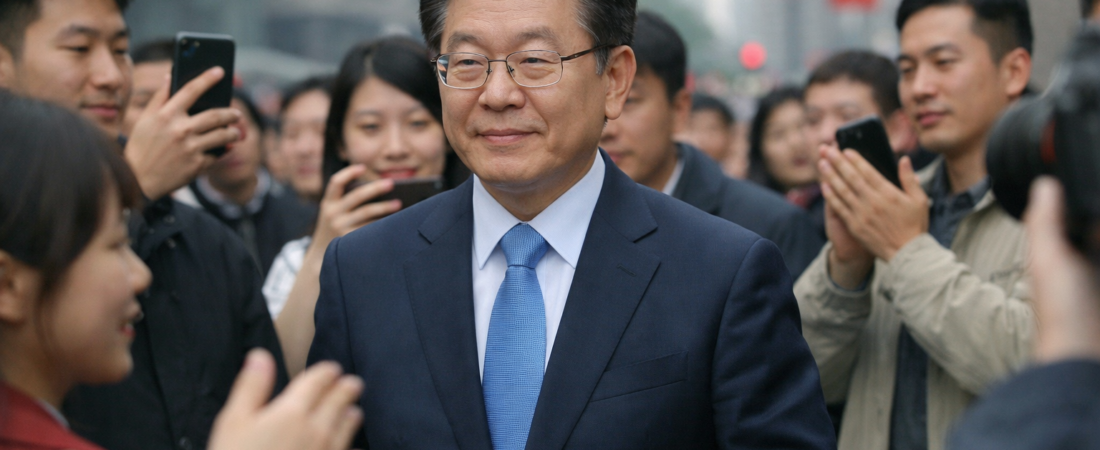
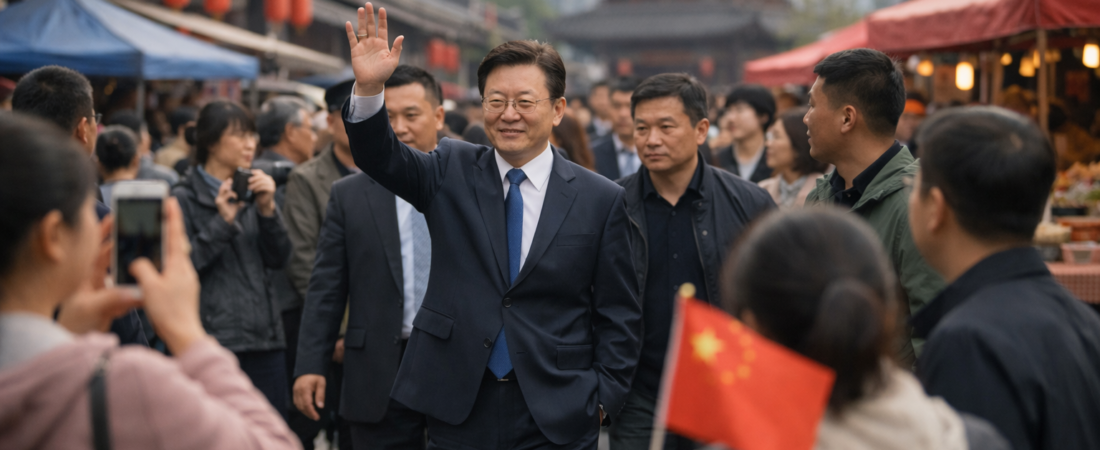
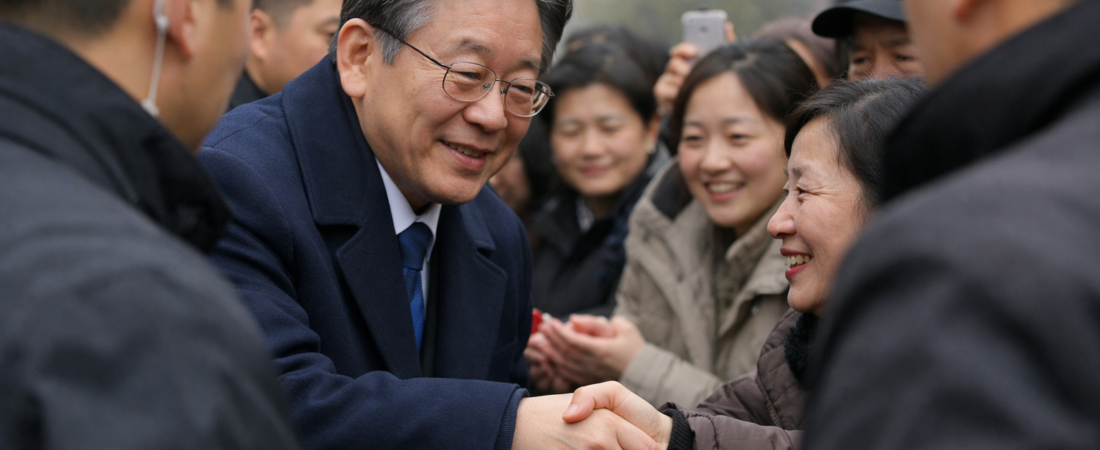
AI-Generated Photorealistic Image — All people, scenes, and details in this image are entirely AI-generated and fictional. Not a real photograph of an actual person or event. 이 이미지는 AI로 생성된 가상 이미지입니다.