Table of Contents
Can an actor really open a “second chapter” after decades in the spotlight? So Ji-sub thinks so. His SBS drama Kim Bu-jang just wrapped with ratings above 20 percent, and he’s calling it the project that reshaped his career.
That’s a bold claim from someone who has been a household name in Korea since the early 2000s. But So Ji-sub isn’t exaggerating for headlines here. He’s talking about something deeper — how one role can shift how an actor sees his own future.
A New Chapter: So Ji-sub’s Second Act in Kim Bu-jang
Kim Bu-jang — a title that translates roughly to “Section Chief Kim” — became one of the most talked-about dramas of the season. So Ji-sub played the lead, a middle-aged corporate worker pulled into unexpected danger. Viewers responded fast, pushing ratings past the 20 percent mark, a rare feat in today’s fragmented streaming era.
So Ji-sub credits an earlier work, which he refers to as “Missa,” as the true starting point of his acting life. But he says Kim Bu-jang is different. It’s not a continuation, he explains — it’s a second opening, a chance to redefine what kind of actor he wants to be in his next decade.
Why does that distinction matter? Because actors, like anyone else, hit points where old formulas stop working. So Ji-sub seems to have found a role that let him prove he still has range, still has stamina, and still has something new to offer audiences who’ve followed him for over twenty years.
Fighting Fit at 50: How So Ji-sub Trains for Action

Here’s a number that might surprise you: So Ji-sub is about to turn 50. Yet he handled the physically demanding action sequences in Kim Bu-jang without major difficulty. How does that happen?
The answer is consistency, not shortcuts. So Ji-sub has maintained a steady exercise routine for years, long before this drama was even a script. That discipline, he says, is what let him step into fight scenes and stunt work without the exhaustion younger viewers might expect from someone approaching 50.
Korean entertainment culture puts real pressure on actors to look ageless, and So Ji-sub is often cited as an example of that standard. Still, his own framing is less about vanity and more about capability. He wants his body ready for the work, not just ready for the camera.
That distinction matters in an industry where action roles often go to actors half his age. So Ji-sub’s comments suggest he sees fitness as a professional tool, similar to how a craftsman keeps their equipment sharp. (Think of it as an actor’s version of preventive maintenance — unglamorous, but it’s what keeps the whole machine running.)
He also hinted at wanting to take on more action roles while his body still allows it. That’s a practical statement, not a nostalgic one. So Ji-sub understands that action work has a window, and he wants to use his while it’s open.
A Father’s Universal Instinct: The Heart Behind Kim Bu-jang

What makes a father-daughter story travel across cultures? So Ji-sub offered a simple answer during interviews about the drama. A father’s inability to stay calm when his daughter is in danger, he said, is something every country understands.
That line captures the emotional core of Kim Bu-jang. The character’s motivation isn’t abstract heroism — it’s parental instinct pushed to its limit. This kind of storytelling taps into something Korean dramas have long done well: turning ordinary family bonds into high-stakes emotional drivers.
Family loyalty has deep roots in Korean culture, shaped historically by Confucian values that place enormous weight on parental duty and filial connection. Modern K-dramas often update these traditional themes with action, crime, or corporate intrigue, but the emotional foundation stays familiar. So Ji-sub’s character fits neatly into that lineage — a father whose protective instinct becomes the engine of the entire plot.
Is that why international audiences connect with these stories so strongly? Possibly. A father protecting his daughter doesn’t need subtitles to translate emotionally. So Ji-sub seemed to understand this instinctively, framing his character’s motivation in terms anyone, anywhere, could recognize immediately.
Gratitude on Set and What Comes Next for So Ji-sub
Beyond the screen, So Ji-sub made headlines for something quieter. He reportedly gave gold gifts to his production crew after filming wrapped, saying everyone had suffered together to make the drama succeed. It’s a gesture that says something about how he views collaboration in an industry often focused on the lead actor’s spotlight.
You can read more about the drama’s production reception through Kyunghyang Shinmun, which first reported on So Ji-sub’s remarks and the crew’s reaction to his gift. Small gestures like this rarely make international news, but they shape how Korean film sets function behind the scenes.
Korean drama production is famous for grueling schedules — sometimes stretching past 16-hour shooting days, especially near broadcast deadlines. So Ji-sub’s gesture reflects an awareness of that shared exhaustion, not just his own effort in front of the camera. It’s a small window into an industry that runs on collective endurance, even when only one name ends up trending online.
That collective endurance deserves honest examination, not just praise. Korean television production has faced real criticism over demanding schedules that push crews and younger actors past healthy limits, and reform on this front has been slow. But there are also genuine signs of change — growing industry conversations about working hour caps, and senior actors like So Ji-sub publicly acknowledging the crew’s sacrifice rather than staying silent about it.
What stands out in So Ji-sub’s story isn’t just the discipline or the gratitude on their own. It’s the way ordinary human effort — showing up, training the body, thanking the people around you — quietly holds a production together. Fame gets the headlines, but persistence and shared struggle are usually what make a drama actually work.
So where does So Ji-sub go from here? He’s already signaled interest in more action roles while his body can handle them, and Kim Bu-jang‘s success gives him leverage to choose ambitious projects. For an actor calling this his “second chapter,” the story seems far from finished.
Do you think Korean dramas do a better job than Western shows at turning simple family instincts into gripping television? And does So Ji-sub’s approach to aging in an action-heavy industry change how you think about longevity in acting careers?
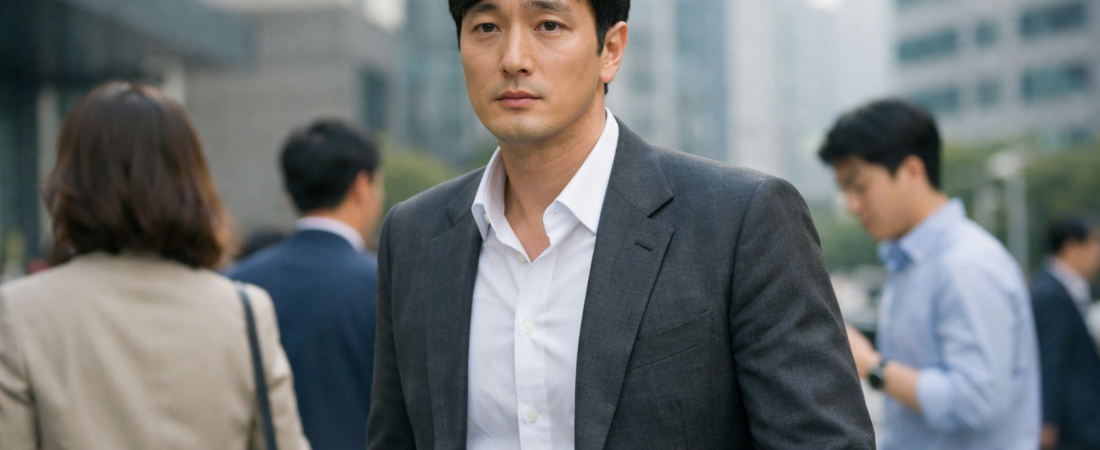
AI-Generated Photorealistic Image — All people, scenes, and details in this image are entirely AI-generated and fictional. Not a real photograph of an actual person or event. 이 이미지는 AI로 생성된 가상 이미지입니다.




Leave a Reply