
Korea’s 2026 Super Budget: A New Fiscal Playbook
Korea will spend 821 trillion won next year, the largest budget in its history. The centerpiece is a 162.3 trillion won future response fund, plus 21 trillion won pushed into 15 strategic sectors like AI and mega infrastructure. This is what officials are calling the “super budget” — and it marks a real shift in how Korea plans its economic future.
Why does a single number this large matter to you, even if you don’t live in Korea? Government spending decisions like this ripple outward, into global tech supply chains, chip markets, and construction industries. Korea’s super budget is not just a domestic story — it’s a signal about where one of Asia’s most innovation-driven economies is placing its bets.
Let’s break down what’s inside this record-setting plan, and why it matters for Korea’s next decade.
What’s Driving the Super Budget?
The 821 trillion won figure isn’t random. It reflects a government trying to solve two problems at once: short-term economic pressure and long-term structural decline. Korea faces slowing growth, a shrinking workforce, and rising competition from China and the United States in advanced technology.
The government’s answer is the future response fund, worth 162.3 trillion won. Officials describe it as an “innovation model” for national fiscal management — essentially, a dedicated pool of money meant to outlast any single administration’s term. Think of it as planting trees whose shade you won’t sit under yourself, but future generations will.
Inside this fund, 21 trillion won is earmarked for 15 priority sectors. These are being called Korea’s “national representative” industries — the fields where the country believes it can compete globally. Artificial intelligence sits at the top of that list, alongside large-scale infrastructure projects officials are calling “landmark” or mega projects.
Is this just political branding, or a genuine strategic pivot? Based on the scale of funding, it looks more like the latter. Governments don’t usually attach this much money to symbolic gestures.
Inside the AI and Mega-Project Push
AI investment isn’t new in Korea, but the scale here stands out. Twenty-one trillion won spread across 15 sectors signals an attempt at coordinated national strategy, rather than scattered funding across ministries. That distinction matters more than it sounds.
Historically, Korean industrial policy has worked best when the government picked a handful of sectors and committed for the long haul. Shipbuilding, semiconductors, and automobiles all followed this pattern decades ago. The super budget appears to apply that same playbook to AI and next-generation infrastructure.
Mega projects — the “landmark” initiatives referenced alongside the future fund — likely include large infrastructure and technology hubs designed to anchor regional economic growth. These projects tend to generate jobs quickly, which matters for a government facing public pressure over slowing growth. For readers outside Korea, Maeil Business Newspaper offers ongoing coverage of how these allocations are being debated.
Should every dollar of a super budget go toward flashy mega projects? Not necessarily — infrastructure spending only pays off if it’s paired with sustainable maintenance and clear long-term demand. Korea’s track record here is mixed, with some regional projects succeeding and others sitting underused for years.
What the Super Budget Means for Korea’s Future

A budget this size raises an obvious question: can Korea actually execute on all 15 sectors at once? Spreading 21 trillion won across that many fields risks diluting impact, even with strong intentions. Focus matters as much as funding size.
There’s also the debt question. A record-breaking super budget of 821 trillion won will need financing, and that usually means either higher deficits or future tax adjustments. Korea’s fiscal position remains relatively strong compared to other developed economies, but no country spends at this scale without trade-offs somewhere down the line.
Still, there’s something honest about naming the challenge directly rather than avoiding it. Korea’s demographic decline and technology competition pressures are real, and pretending otherwise would serve no one. What stands out here is not blind optimism, but a government trying to build structures — funds, sectors, timelines — that can outlast short political cycles and give ordinary workers, students, and small businesses something concrete to plan around.
That kind of long-term thinking is hard for any democracy to sustain, since political attention naturally drifts toward the next election cycle. But when a country designates a fund explicitly meant to survive changes in leadership, it’s choosing patience over convenience. Whether Korea can hold that patience for the next decade may matter more than the size of the number itself.
Looking ahead, the real test isn’t the headline figure — it’s implementation. Will the AI investments produce internationally competitive companies, or absorb funding without clear returns? Will mega projects serve regions that actually need them, or become symbolic monuments?
The super budget gives Korea a bold starting point. What happens over the next few years will determine whether “821 trillion won” becomes a turning point or just a big number in a budget report. What do you think — can large-scale national investment plans like Korea’s super budget actually deliver on their promises, or do they often fall short in practice?
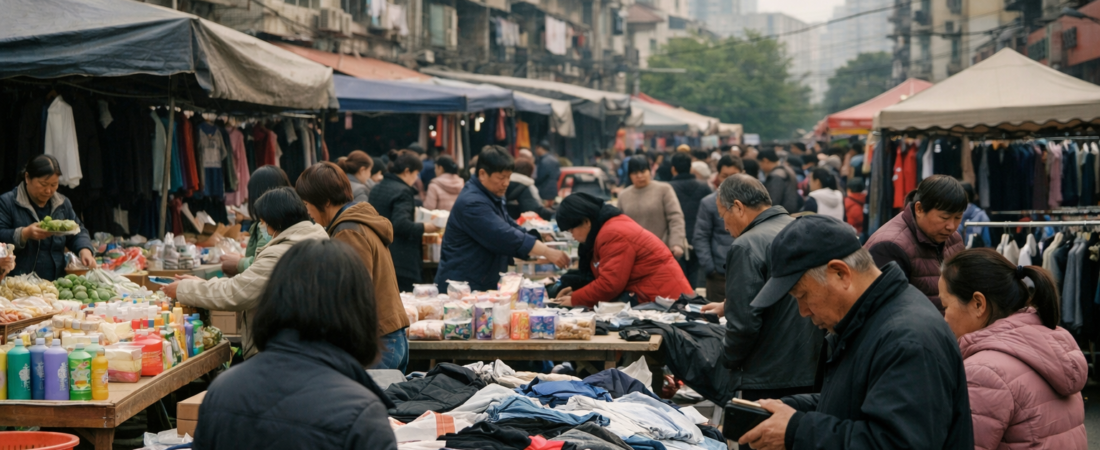
AI-Generated Photorealistic Image — All people, scenes, and details in this image are entirely AI-generated and fictional. Not a real photograph of an actual person or event. 이 이미지는 AI로 생성된 가상 이미지입니다.

Leave a Reply