Table of Contents
Can a lawmaker publicly criticize a party colleague and still call it loyalty? Song Young-gil thinks so. This week, he took direct aim at former party leader Jung Chung-rae, questioning his respect for the nation’s highest office.
The clash reveals something bigger than a personal spat. It shows how Korea’s ruling Democratic Party is quietly redefining what leadership should look like. And Song Young-gil wants to be part of that conversation.
A Bold Challenge Inside the Democratic Party
Song Young-gil is no stranger to controversy. A veteran lawmaker with deep roots in Korean progressive politics, he has built a career on speaking bluntly, even when it costs him allies.
This time, his target is Jung Chung-rae, a former leader of the Democratic Party of Korea. Song Young-gil accused him of showing a dismissive attitude toward President Lee Jae-myung, the nation’s head of state.
Why does this matter? In Korean political culture, respect for the presidency carries deep symbolic weight, rooted in Confucian traditions of hierarchy and public duty. Song Young-gil’s criticism, then, is not just personal. It taps into a cultural expectation that even fierce rivals should honor the office itself.
The timing is no accident either. With the party’s leadership race heating up, Song Young-gil is positioning himself as a candidate who values institutional respect over personal ambition. Is that a genuine principle, or a calculated campaign strategy? Readers can judge for themselves as the race unfolds.
Song Young-gil’s Criticism of Jung Chung-rae

Song Young-gil did not hold back. He pointed to Jung Chung-rae’s past remarks and political conduct, framing them as evidence of a pattern, not a one-time slip.
According to Song Young-gil, the former leader’s tone toward President Lee Jae-myung has repeatedly crossed a line. He described it as a kind of casual disregard, unfitting for someone who once led the party.
This is a striking accusation inside a party that prides itself on unity, especially after winning the presidency. Song Young-gil seems to be asking a simple question: if you cannot show respect to your own president, how can you lead the party that supports him?
He also used the moment to draw a clear line between himself and Jung Chung-rae. Song Young-gil emphasized his own record and approach, suggesting he represents a more disciplined, institution-focused brand of leadership.
This contrast matters heading into the party’s internal power struggle. Korean party leadership races often hinge less on policy differences and more on perceived loyalty, discipline, and personal character. By highlighting Jung Chung-rae’s attitude problem, Song Young-gil is making character itself the campaign issue.
Is this fair? Some observers argue that public criticism of a fellow party member weakens overall unity ahead of elections. Others see it as necessary accountability, the kind of honest self-correction that keeps a ruling party grounded. Either way, Song Young-gil clearly believes silence would have cost him more than speaking out.
Real Estate Policy and the “Anyone’s House” Vision
Politics in Korea rarely stays separate from housing policy for long. Song Young-gil used this moment to also clarify his stance on real estate, a topic that shapes daily life for millions of Koreans.
He reaffirmed support for the “Anyone’s House” initiative, a housing concept designed to make homeownership more accessible to ordinary citizens. The idea responds to years of skyrocketing apartment prices in Seoul and other major cities.
Why does housing policy connect to a leadership race at all? Because in Korea, real estate affordability is often the single issue that decides elections. Voters remember which politicians promised relief and which ones simply talked.
Song Young-gil appears to understand this dynamic well. By tying his personal brand to a concrete housing solution, he offers voters something more than criticism of a rival. He offers a policy identity.
This matters for global readers too. Korea’s housing crisis has drawn international attention, with Seoul ranking among the world’s least affordable major cities for young buyers. You can read more detailed coverage of Korea’s housing market trends through outlets like Yonhap News Agency, which regularly tracks these shifts.
Song Young-gil also addressed whether he has met or plans to meet President Lee Jae-myung directly. His comments suggest a careful, strategic distance, neither fully aligned nor openly hostile. That balance itself tells you something about how Korean politicians manage intra-party relationships without appearing either too close or too disloyal.
What This Means for Korea’s Political Future
Step back for a moment. What does a dispute between Song Young-gil and Jung Chung-rae actually tell us about Korean democracy today?
It shows a ruling party still working out its identity after taking power. The Democratic Party of Korea now controls the presidency, but internal competition for future leadership has only intensified. Song Young-gil’s willingness to publicly challenge a former leader signals that party unity is not guaranteed, even under a shared banner.
It also reflects a broader trend in Korean politics: personal character and respect for institutions increasingly matter as much as policy platforms. Voters, especially younger ones, seem tired of politicians who prioritize personal image over public duty. Song Young-gil’s strategy taps directly into that fatigue.
There is a historical echo here too. Korean political parties have long histories of factional infighting, dating back to the democratization era of the 1980s and 1990s. Leadership races were often less about ideology and more about personal networks and loyalty tests.
Song Young-gil’s current clash with Jung Chung-rae fits neatly into that pattern, even as the specific issues, respect for the president, housing policy, feel very modern. Understanding this history helps global readers see why a single public statement from Song Young-gil can ripple through an entire party’s internal politics.
Looking ahead, expect Song Young-gil to keep using this contrast strategy. Respect for institutions versus perceived disregard. Concrete housing policy versus vague promises. These are the battle lines he seems to be drawing for the next phase of the party’s leadership contest.
Will voters and party members reward that approach? That remains uncertain. But one thing is clear: Song Young-gil has made himself impossible to ignore in this race.
So here is a question worth sitting with. What do you think matters more in choosing a political leader, personal respect for institutions, or bold, even controversial, honesty?
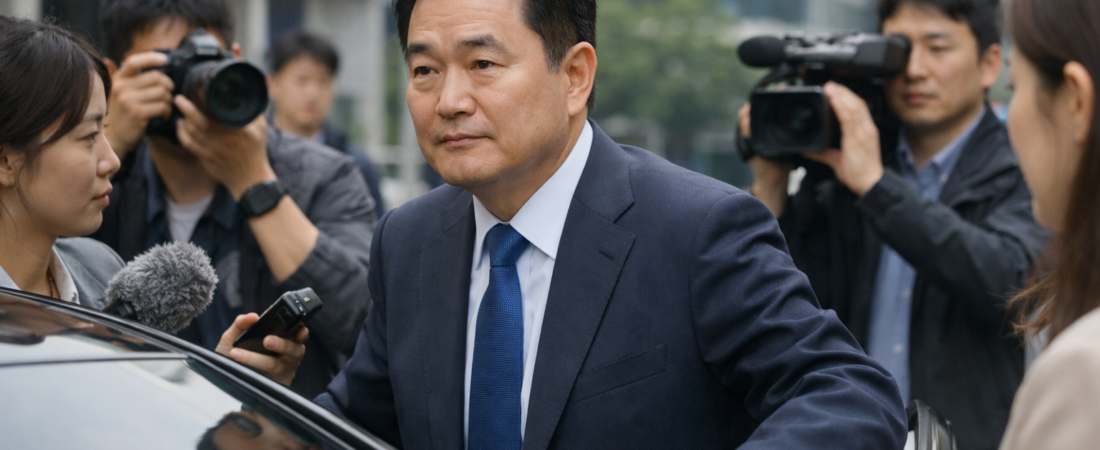
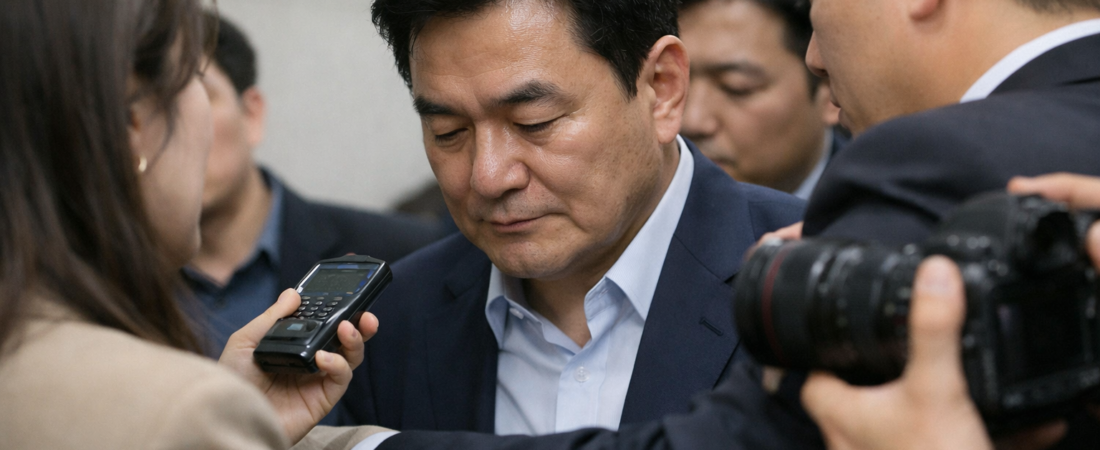
AI-Generated Photorealistic Image — All people, scenes, and details in this image are entirely AI-generated and fictional. Not a real photograph of an actual person or event. 이 이미지는 AI로 생성된 가상 이미지입니다.



Leave a Reply