Table of Contents
Can a single spokesperson’s words bring down a career overnight? For the People Power Party, that question just became very real. Foreign affairs spokesperson Joo Hyun-chul stepped down this week after weeks of controversy over his blunt, often combative remarks toward senior figures inside his own party.
His resignation wasn’t forced by scandal or legal trouble. It came from something more personal — a sense that he had become a liability to party leader Jang Dong-hyuk. Let’s look closer at what actually happened, and why it matters for Korean politics right now.
What Happened: A Sudden Resignation Rocks the People Power Party
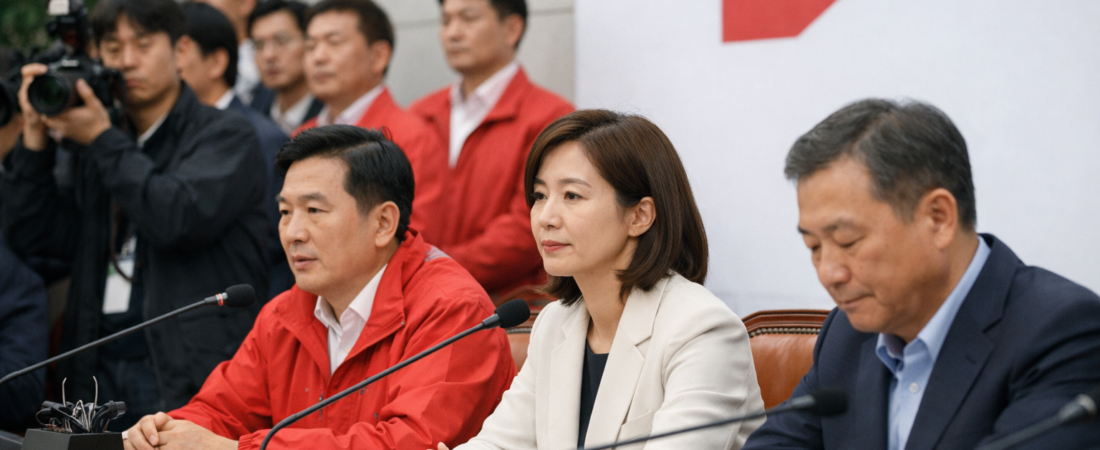
Joo Hyun-chul served as the foreign affairs spokesperson for the People Power Party. His job was simple in theory: communicate the party’s positions to international media and observers. But his delivery style was anything but simple, and it eventually became the story itself.
Over recent months, Joo used sharp, aggressive language when discussing fellow party members. He didn’t hold back, and that lack of restraint drew criticism from inside the People Power Party itself. Was this passion for his beliefs, or a failure to read the room? Many party insiders leaned toward the latter.
When Joo announced his resignation, he framed it as an act of loyalty rather than defeat. He said he didn’t want to become a burden for Jang Dong-hyuk, the party’s leader. That framing matters — it shows how much personal relationships and hierarchy still shape decision-making inside the People Power Party.
He also mentioned his own convictions as part of the reason for stepping back. In his statement, Joo suggested that his beliefs sometimes clashed with the practical needs of the party. This tension between personal conviction and party discipline is nothing new in Korean politics, but it rarely ends this publicly.
Who Is Joo Hyun-chul, and Why Did His Words Matter?
Before this controversy, Joo Hyun-chul wasn’t a household name outside party circles. As foreign affairs spokesperson, his role focused on international communication rather than domestic television appearances. So why did his comments spread so widely and cause so much damage?
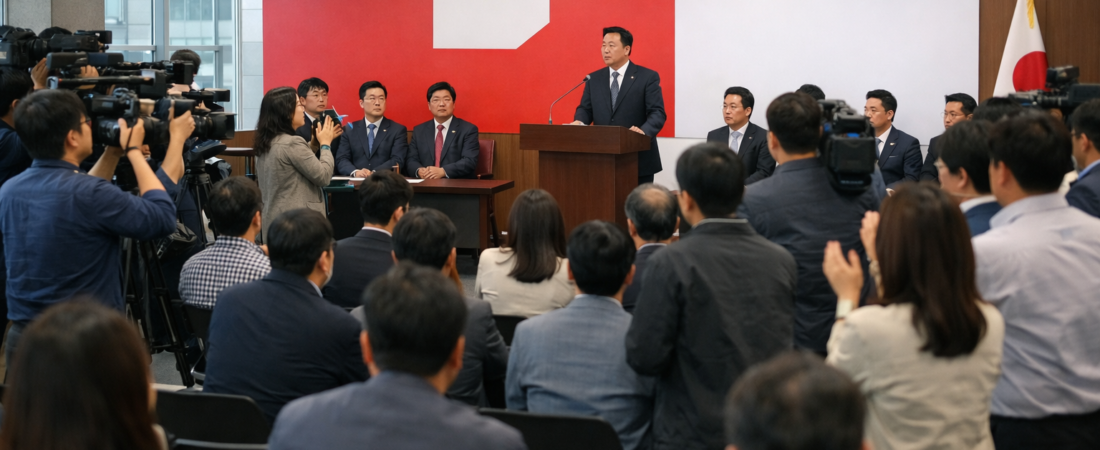
The answer lies in who he targeted. Joo didn’t criticize opposition politicians — he aimed his sharpest words at people within the People Power Party. That included Seoul Mayor Oh Se-hoon, lawmaker Han Dong-hoon, and even the party’s own administrative office staff.
Think about that for a second. A spokesperson attacking his own party’s mayor and a sitting lawmaker is not a small misstep. It’s a direct breach of the unwritten rules that hold political parties together.
In Korean party politics, public unity often matters more than private disagreement. Spokespeople are expected to represent the party’s collective voice, not their personal frustrations. Joo’s repeated use of harsh language toward Oh Se-hoon and Han Dong-hoon suggested he was speaking as an individual, not as a representative of the People Power Party.
That distinction may seem minor to outside observers, but inside Korean political culture, it’s significant. Hierarchy and collective image carry real weight, especially in a conservative party like the People Power Party. Once that boundary gets crossed publicly, trust becomes very hard to rebuild.
Inside the People Power Party: A Pattern of Internal Friction
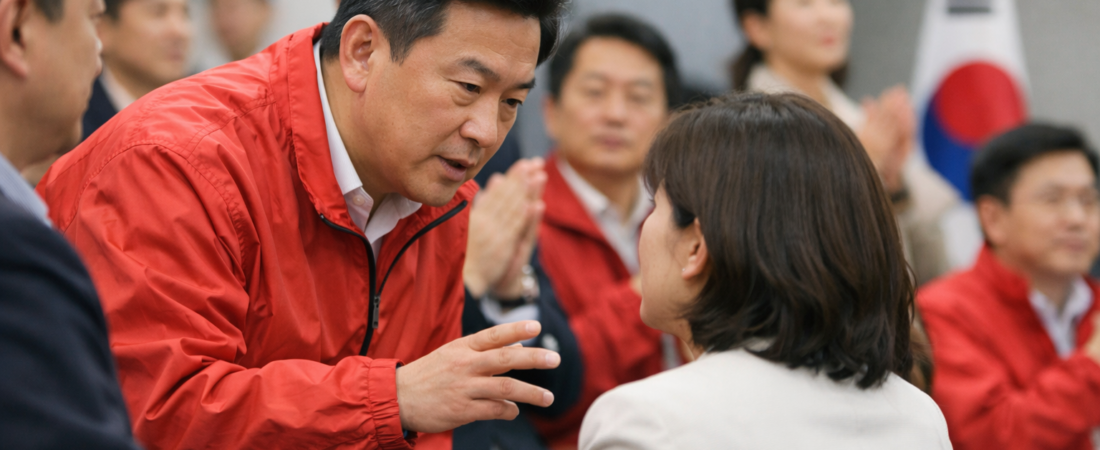
This resignation didn’t happen in a vacuum. The People Power Party has faced ongoing internal tension since its restructuring efforts began under new leadership. Jang Dong-hyuk took over as party leader during a difficult period, and internal unity has been a persistent challenge.
Why does this keep happening? Political parties, especially after election setbacks, often experience internal power struggles. Different factions compete for influence, and spokespeople sometimes become unintentional battlegrounds for those larger conflicts.
Joo Hyun-chul’s comments about Oh Se-hoon and Han Dong-hoon didn’t emerge from nowhere. They reflected deeper disagreements about direction, strategy, and leadership within the People Power Party. His resignation is a symptom of that friction, not necessarily the cause of it.
This is where cultural context helps. In Korean political parties, spokespeople traditionally serve at the pleasure of leadership, expected to echo official messaging with discipline. When a spokesperson breaks from that expectation — as Joo did — it exposes cracks that leadership would rather keep hidden.
Compare this to past controversies in Korean political history, where blunt public statements by junior officials often triggered swift resignations to protect party image. The pattern here follows a familiar script. Public unity gets prioritized over individual expression, almost every time.
For readers wanting more background on how Korean political parties manage internal discipline and public messaging, outlets like Yonhap News Agency offer useful ongoing coverage of these dynamics. Understanding this pattern helps explain why the People Power Party moved quickly once Joo’s remarks became public.
What This Means for the People Power Party’s Future
So what happens next for the People Power Party? Leadership under Jang Dong-hyuk now faces a delicate balancing act. He must reassure the public that the party is unified, while also managing internal voices that clearly disagree on strategy and tone.
This episode also raises a bigger question about political communication in Korea. Should spokespeople have more freedom to express personal views, even if it means occasional friction? Or does party discipline need to stay strict, especially for roles representing the party to international audiences?
There’s no easy answer. But the People Power Party’s handling of this resignation will likely set a precedent for how it manages similar situations going forward. Party leaders elsewhere in Korea are watching closely too, since the outcome may shape norms across other political organizations.
Joo Hyun-chul’s departure also highlights something worth remembering: personal reputation and party reputation are deeply intertwined in Korean politics. One person’s blunt words can dominate headlines for weeks, overshadowing actual policy discussions. That reality puts enormous pressure on anyone speaking publicly for a major party like the People Power Party.
Looking ahead, expect the People Power Party to tighten internal communication guidelines for spokespeople. Leadership under Jang Dong-hyuk will likely emphasize message discipline more heavily in coming months. Whether that improves unity or simply suppresses disagreement remains an open question.
What do you think — should political parties like the People Power Party allow more individual expression from their spokespeople, or does unity always need to come first?
AI-Generated Photorealistic Image — All people, scenes, and details in this image are entirely AI-generated and fictional. Not a real photograph of an actual person or event. 이 이미지는 AI로 생성된 가상 이미지입니다.


Leave a Reply