
Table of Contents
What happens when a Korean first lady and a British royal sit down together? You get a quiet but powerful moment for children’s rights. First Lady Kim Hye-kyung recently welcomed Princess Anne, sister of King Charles III, to Save the Children Korea. Together, they listened to university students working on child climate rights.
This was not a flashy diplomatic event. It was something more personal. First Lady Kim Hye-kyung and Princess Anne sat with young activists and heard their concerns about climate change firsthand.
A Meeting Between Two First Ladies of Public Service
Royal visits often come with pomp and formal photo sessions. This one felt different. First Lady Kim Hye-kyung chose to bring Princess Anne into a working space, not a ceremonial hall.
Why does that choice matter? Because it signals priority. When a first lady picks a nonprofit office over a palace reception, she tells the world what she values.
First Lady Kim Hye-kyung has positioned herself as an advocate for children’s welfare since becoming South Korea’s first lady. This visit builds on that reputation. Princess Anne, known globally for decades of humanitarian work with organizations like Save the Children, made a fitting partner for this conversation.
Think about the symbolism here. Two women, from very different political systems, sat side by side to discuss the same issue: protecting children in a changing climate. That is not a small thing in international diplomacy.
Korea and the United Kingdom do not share a long history of royal-to-first-lady exchanges. This meeting, then, stands out as a fresh model. It shows how soft diplomacy can happen outside formal state visits, through shared causes rather than shared borders.
Inside the Visit: What First Lady Kim Hye-kyung Saw

During the visit, First Lady Kim Hye-kyung and Princess Anne met with a group of Korean university students. These students work specifically on child climate rights protection. This is a growing field, and Korea is paying attention.
What exactly is “child climate rights”? It refers to a child’s right to grow up in a safe environment, free from the worst effects of climate disasters. Floods, heatwaves, and pollution hit children harder than adults, both physically and psychologically.
Korean university students are now organizing around this issue, and First Lady Kim Hye-kyung wanted to hear their work directly.
The students shared their research and advocacy projects with both women. First Lady Kim Hye-kyung listened closely, according to reports from the event. She reportedly encouraged the students to continue their work, calling their efforts meaningful for Korea’s future.
Isn’t it refreshing to see young activists get direct attention from a first lady? Too often, youth-led movements struggle for visibility. This meeting gave these students a rare platform, with international attention attached.
Princess Anne, for her part, brought decades of experience in humanitarian visits. She has toured similar programs across the world during her long royal career. Her presence added weight to the students’ work, showing that child climate advocacy is a global concern, not just a Korean one.
Save the Children’s Africa Goat Project and Child Self-Reliance
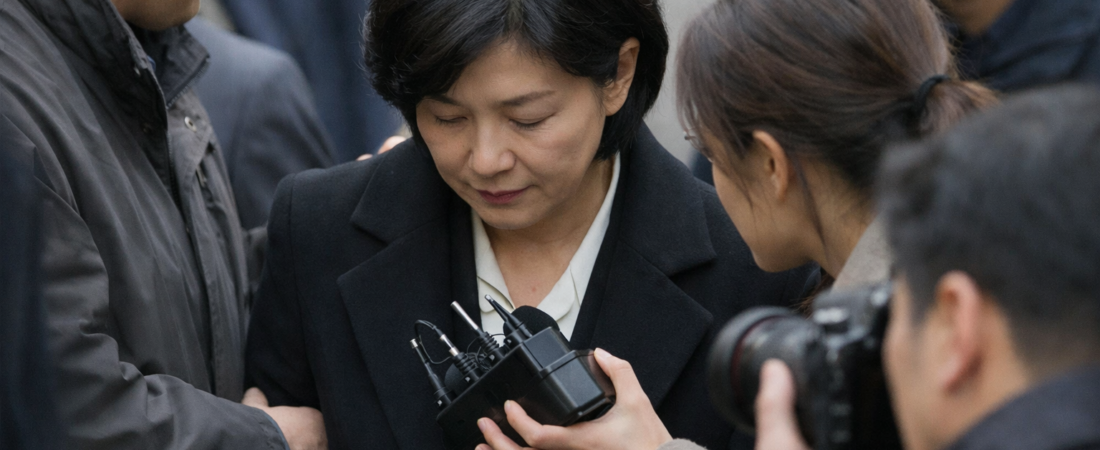
The visit also covered Save the Children’s broader mission. First Lady Kim Hye-kyung and Princess Anne received a briefing on the organization’s child self-reliance programs. One example stood out: the Africa goat support project.
What is the goat project, exactly? Save the Children provides goats to families in parts of Africa facing poverty. Goats offer milk, breeding income, and a path toward financial independence for struggling households.
This is not charity in the traditional sense. It is a self-reliance model. Families receive an asset, not just a handout, and they build income over time.
First Lady Kim Hye-kyung praised this approach during the visit. She reportedly said the organization’s role in supporting vulnerable children around the world deserves high recognition. That praise carries weight, coming from South Korea’s first lady on an international stage.
You might ask: why would a Korean first lady care about goats in Africa? The answer lies in Korea’s own history. Korea itself received international aid after the Korean War, rebuilding from poverty within a single generation. First Lady Kim Hye-kyung’s support for Save the Children reflects that legacy, a country once helped now helping others.
Save the Children has operated in Korea since the 1950s, originally aiding Korean War orphans. Today, the organization runs global programs, and Korea contributes as both a donor nation and a partner. For more on the organization’s international work, readers can visit Yonhap News Agency.
Why Korea-UK Cooperation on Child Rights Matters Now
Toward the end of the visit, First Lady Kim Hye-kyung expressed a clear hope. She wants Korea and the United Kingdom to expand cooperation on child protection, child rights, and climate crisis response. That is a bold ask, but a timely one.
Why timely? Climate change is accelerating faster than most policy frameworks can handle. Children born today will face far more extreme weather events than their parents did.
Countries need partners to build effective child protection systems, and First Lady Kim Hye-kyung seems to understand this urgency. Korea has strong technology and rapid policy implementation. The United Kingdom has decades of humanitarian network experience through organizations like Save the Children.
Combine those strengths, and you get real potential for joint programs. Imagine Korean climate technology paired with British field expertise in Africa or Southeast Asia. First Lady Kim Hye-kyung’s remarks suggest she sees this potential clearly.
This visit also carries domestic significance for Korea. First Lady Kim Hye-kyung is shaping her public role around causes that resonate with younger Koreans, especially climate anxiety among students. That is a smart alignment, given how seriously young Koreans take environmental issues today.
Polls consistently show Korean youth ranking climate change among their top concerns. First Lady Kim Hye-kyung’s engagement with student activists speaks directly to that demographic. It positions her, and by extension the current administration, as responsive to youth priorities rather than distant from them.
Looking ahead, will this meeting lead to concrete Korea-UK programs? That remains uncertain. But symbolic visits often precede real policy, and First Lady Kim Hye-kyung’s public statement of hope creates diplomatic momentum.
Royal family members like Princess Anne frequently serve as bridges for exactly this kind of soft diplomacy. Her visit to Save the Children Korea, alongside First Lady Kim Hye-kyung, may open doors for future joint child welfare initiatives between the two nations.
Korea’s approach to first lady diplomacy has shifted noticeably in recent years. Previous first ladies focused on cultural exchange and fashion diplomacy. First Lady Kim Hye-kyung, in contrast, appears drawn toward substantive policy causes like climate and child rights.
That shift matters for how the world perceives Korea’s leadership priorities. It signals a country thinking beyond its own borders, engaging with global humanitarian challenges rather than only domestic image-building.
So where does this leave global readers watching from outside Korea? It leaves you with a small but telling signal. Korea’s first lady is choosing child rights and climate advocacy as her public platform, and international partners are noticing.
What do you think about Korea’s growing role in global child welfare and climate diplomacy?
AI-Generated Photorealistic Image — All people, scenes, and details in this image are entirely AI-generated and fictional. Not a real photograph of an actual person or event. 이 이미지는 AI로 생성된 가상 이미지입니다.



Leave a Reply