Table of Contents
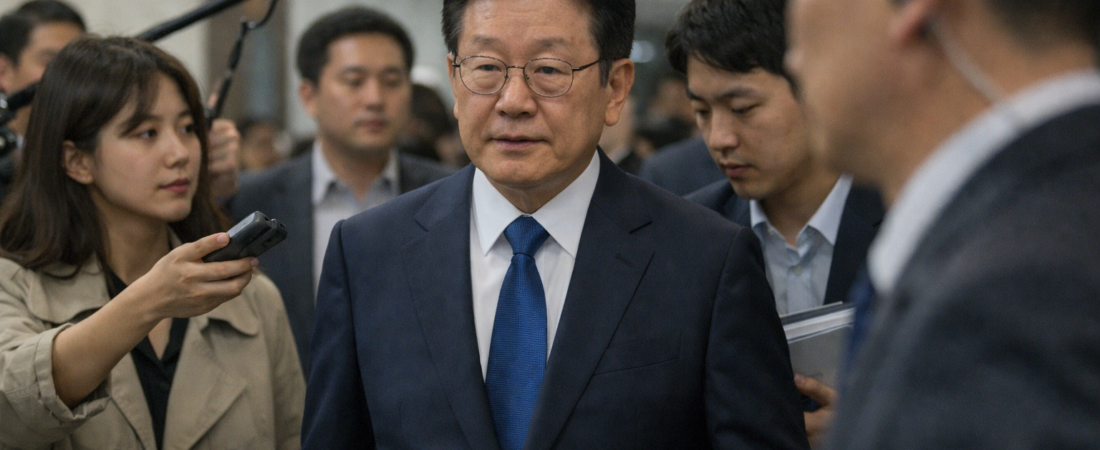
What does a president say to citizens who once stood between tanks and the constitution? President Lee Jae-myung answered that question this week with a ceremony, a promise, and a new national holiday proposal.
He gathered ordinary citizens at the presidential state guest house, not politicians or diplomats. That choice alone tells you something about where he wants Korean democracy to go next.
A Ceremony Unlike Any Other
President Lee Jae-myung hosted a citizen-invitation event at the Yeongbingwan State Guest House to mark the launch of the “Committee of Light.” The name is symbolic, not bureaucratic. It refers to the citizens who lit up the streets of Seoul during last December’s martial law crisis, refusing to let darkness win.
Think about that image for a second. Ordinary people, phones raised, standing against armed force in the middle of the night.
That is exactly the memory this ceremony was built to honor. President Lee Jae-myung invited these very citizens back to the guest house, not as spectators, but as guests of honor.
Why does this matter beyond Korea? Because it shows a leader publicly crediting civilians, not institutions, for saving democratic order.
Few countries formalize that kind of gratitude with a state ceremony. President Lee Jae-myung’s decision to do so signals a broader strategy: turning a traumatic national event into a shared civic memory rather than a partisan talking point.
Why December 3 Still Matters
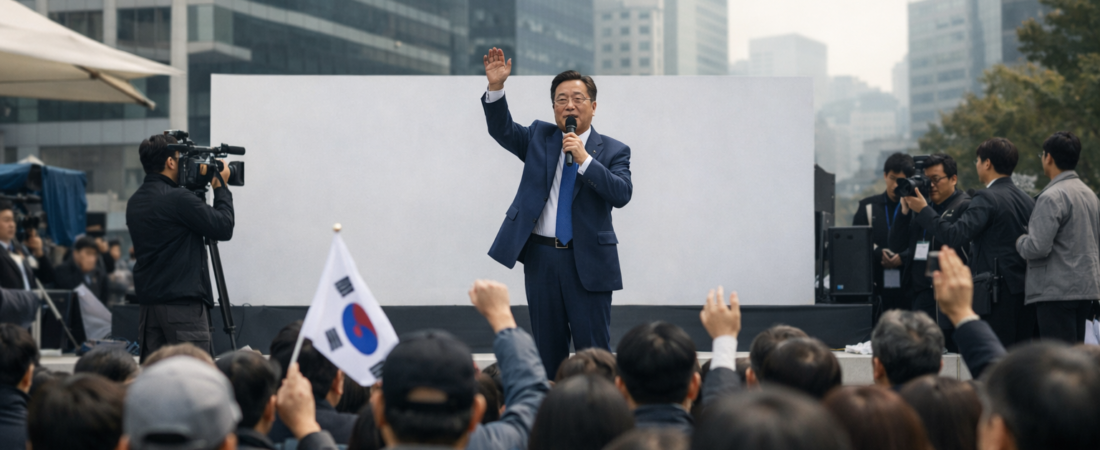
You might be asking yourself: what actually happened on that date? In December 2024, then-President Yoon Suk-yeol declared martial law, sending armed troops toward the National Assembly.
Citizens and lawmakers pushed back within hours. The National Assembly voted to lift martial law, and the crisis ended almost as quickly as it began.
But the shock lingered. Koreans watched their democracy nearly slip away overnight, and that fear reshaped national politics for months afterward.
This is the backdrop for everything President Lee Jae-myung announced this week. His government now wants to designate every December 3 as “National Sovereignty Day,” a permanent yearly reminder of how close the country came to losing constitutional government.
Korea already has several days that mark democratic struggle, including the anniversary of the 1960 April Revolution and the 1987 June Democratic Uprising. Adding December 3 would place last year’s crisis into that same historical lineage.
Is one more holiday really necessary? Maybe not for calendars, but symbolically, it tells future generations that democracy needs active defense, not passive assumption.
For readers outside Korea, this context matters. It explains why President Lee Jae-myung chose such a personal, almost intimate ceremony format instead of a typical political speech.
President Lee Jae-myung’s Message on Constitutional Rule
At the heart of his remarks was one clear line: no one stands above the constitution. President Lee Jae-myung repeated this point directly, addressing both past abuses of power and future risks.
He framed national sovereignty not as an abstract legal term, but as something citizens physically protected with their bodies and their presence. That framing connects law to lived experience, which is rare in formal presidential speeches.
Why choose such blunt language? Because ambiguity after a martial law crisis invites doubt, and doubt weakens trust in government institutions.
President Lee Jae-myung’s promise to safeguard popular sovereignty is also a political commitment with legal weight. It suggests future reforms may target the conditions that allowed martial law to be declared so easily in the first place.
Analysts covering Korean politics have noted similar patterns in past democratic transitions, where symbolic gestures preceded structural legal changes. You can read more detailed coverage of this ceremony from Yonhap News Agency, which captured additional details from the event.
President Lee Jae-myung did not announce specific legislation during the ceremony. Still, the language he used, especially the phrase “no one governs above the constitution,” reads like preparation for policy discussions ahead in the National Assembly.
Building a Digital Legacy for K-Democracy
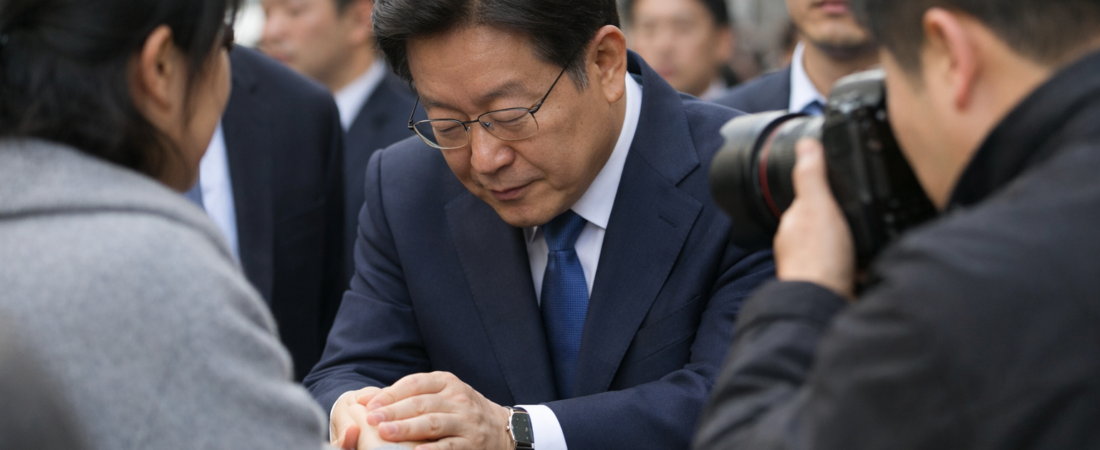
Here is where things get interesting for anyone curious about Korea’s global cultural influence. President Lee Jae-myung also announced plans for a digital archive dedicated to spreading what officials are calling “K-democracy.”
You already know K-pop, K-drama, and K-beauty as global exports. Now Korea wants to add its democratic resilience story to that same cultural brand.
What would this archive actually contain? Likely candidates include citizen testimonies from the martial law crisis, footage of the National Assembly vote, and educational materials for international audiences studying democratic transitions.
This is not just nostalgia. Digital archives shape how younger generations, both in Korea and abroad, understand recent history.
Without documentation, memories fade and get rewritten by whoever tells the loudest story. President Lee Jae-myung seems aware of that risk, which explains why archiving comes paired with the National Sovereignty Day proposal.
Consider how other countries preserve democratic memory. Germany maintains extensive Holocaust and Berlin Wall archives specifically to prevent historical distortion.
South Africa built the Apartheid Museum for similar reasons. President Lee Jae-myung’s digital archive plan fits this global pattern of turning painful national moments into permanent public education tools.
For international readers, this matters because Korea is positioning itself as a modern case study in democratic resilience. Universities, journalists, and policy researchers abroad may soon reference this archive when discussing how young democracies withstand internal threats.
That gives Korea soft power beyond entertainment exports, rooted instead in political credibility. President Lee Jae-myung appears to understand this dual value clearly, blending domestic healing with international image-building in a single policy announcement.
What This Means Going Forward
So where does this leave ordinary citizens, both in Korea and watching from abroad? President Lee Jae-myung has set a tone of gratitude, remembrance, and institutional caution.
The proposed National Sovereignty Day still needs formal legislative approval before it becomes an official holiday. Expect debate in the National Assembly over timing, funding, and how broadly the day should be commemorated nationwide.
Will other political parties support this proposal without friction? Given Korea’s polarized political environment, some resistance seems likely, especially from parties connected to the previous administration’s martial law decision.
Still, the citizen-focused ceremony this week suggests President Lee Jae-myung is building public support first, before pushing formal legislation. That is a smart sequencing strategy in a divided political climate.
For readers new to Korean politics, this moment offers a clear lesson. Democracy is not maintained by law alone; it needs cultural memory, public ceremony, and continuous civic reminders to stay strong.
President Lee Jae-myung’s actions this week reflect that lesson directly, turning a national trauma into an annual civic tradition and a permanent digital record. What do you think about Korea’s approach to memorializing democratic resilience through both new holidays and digital archives?
AI-Generated Photorealistic Image — All people, scenes, and details in this image are entirely AI-generated and fictional. Not a real photograph of an actual person or event. 이 이미지는 AI로 생성된 가상 이미지입니다.
Leave a Reply