Table of Contents
Can a politician expand his base while also pulling further right? That question sits at the heart of a heated debate now surrounding Jang Dong-hyeok, a rising figure in South Korea’s People Power Party. On SBS’s Ju Young-jin News Briefing, two veteran journalists clashed over whether his recent moves help or hurt conservative politics in Korea.
This disagreement matters. It reveals a deeper struggle inside Korea’s conservative camp about how to win back power. Let’s break down what’s happening and why it matters to anyone watching Korean politics today.
Who Is Jang Dong-hyeok and Why Is He Making Headlines
Jang Dong-hyeok has become one of the more closely watched figures within the People Power Party. His recent activities, especially his connection to what’s being called the “Ollgong” rally, have sparked intense discussion among political commentators. Why does one rally generate so much debate?
Because it signals strategy, not just presence. Political analysts see rallies like this as tests of a politician’s future direction. Does Jang Dong-hyeok want to lead a narrower, more ideologically pure faction? Or is he trying to build a bigger tent that can actually win national elections?
This tension came up directly on SBS’s news program. Sung Han-yong, a senior reporter with the Hankyoreh, and Heo Min, a former reporter with the Munhwa Ilbo, offered sharply different readings of the same events. Their disagreement tells us something important about how Korea’s media landscape interprets conservative politics right now.
You might wonder why two respected journalists would see the same set of actions so differently. That’s the nature of Korean political commentary. Context, ideology, and audience all shape how a single rally gets interpreted.
The Great Debate: Is Jang Dong-hyeok Moving Too Far Right
Sung Han-yong’s critique was direct. He argued that Jang Dong-hyeok’s political trajectory is drifting further to the right, away from the political center. For Sung, this is a strategic mistake.
His reasoning is simple. If the People Power Party wants to expand its support base, it needs to appeal to moderate voters, not just the party’s core supporters. Sung stressed that outreach, or “wae-yeon hwakjang” in Korean political language, should target centrist voters who decide most close elections in Korea.
Heo Min saw things differently. He framed Jang Dong-hyeok’s actions around the Ollgong rally as a dual strategy. Heo argued that Jang is trying to consolidate his existing base of support while simultaneously reaching outward for new voters.
In other words, Heo believes Jang Dong-hyeok is not choosing between the base and the center. He’s attempting both at once. Is that even possible in modern Korean politics, where polarization often forces politicians to pick one lane?
This is where the debate gets interesting. Korean political history shows mixed results for this “both sides” approach. Some politicians, like former president Park Chung-hee’s political heirs during the 1990s conservative realignment, managed to hold onto core supporters while slowly building broader coalitions. Others tried and failed, watching their base erode without gaining new voters in return.
The People Power Party’s Bigger Dilemma

This debate over Jang Dong-hyeok is really about something larger. It’s about the identity crisis facing South Korea’s main conservative party. Since its defeat in recent elections, the People Power Party has struggled to answer one core question: who exactly is it trying to represent?
Korea’s political landscape has shifted dramatically over the past decade. Younger voters, especially those in their 20s and 30s, no longer align neatly with traditional left-right categories. This makes the old playbook, energizing the base through rallies and strong rhetoric, less effective than it once was.
Sung Han-yong’s warning reflects this new reality. He suggests that leaning too hard into the party’s traditional right-wing base could backfire. Voters in the middle, who often decide South Korean elections, may feel alienated by moves that seem to prioritize ideological purity over practical governance.
Yet Heo Min’s perspective isn’t wrong either. Political parties do need energized supporters to organize, fundraise, and mobilize on election day. A rally, even a controversial one, can serve that internal purpose while a politician quietly works other channels to reach undecided voters.
This is the balancing act every ambitious Korean politician faces. Jang Dong-hyeok appears to be testing exactly how far he can lean right without losing centrist appeal entirely. For readers unfamiliar with Korean political dynamics, you can find more background on the People Power Party’s structure and recent history through SBS News.
What Jang Dong-hyeok’s Strategy Means for Korea’s Political Future
So where does this leave Jang Dong-hyeok? His next moves will likely clarify which reading is correct. Does he continue leaning into rallies and base-focused rhetoric, or does he pivot toward center-friendly policy positions?
Watch how he handles upcoming party events and public statements. If Jang Dong-hyeok starts softening his rhetoric or reaching out to moderate constituencies, that would support Heo Min’s dual-strategy theory. If he doubles down on rally-style mobilization, Sung Han-yong’s warning about a rightward drift gains more weight.
This isn’t just an academic exercise for political scientists. It has real consequences for South Korea’s next major elections. The People Power Party’s ability to win back power depends heavily on figures like Jang Dong-hyeok correctly reading the electorate’s mood.
Korean politics has seen this pattern before. Conservative politicians who misjudged the center’s patience have paid a steep price at the ballot box. Meanwhile, those who successfully balanced base mobilization with centrist outreach, think of past transitions within Korea’s conservative movement, managed to build lasting coalitions.
Jang Dong-hyeok’s current moment is a live test case of that historical pattern. His choices in the coming months will shape not just his own career, but potentially the trajectory of Korea’s entire conservative bloc. That’s a heavy weight for any single politician to carry.
For international readers trying to understand Korean domestic politics, this debate offers a valuable lesson. Political strategy rarely comes down to a single clear choice between “left” or “right,” “base” or “center.” Real politicians, including Jang Dong-hyeok, often try to walk both paths simultaneously, even when commentators insist they must choose one.
Will Jang Dong-hyeok successfully thread this needle, or will he end up satisfying neither the base nor the center? Only time, and Korea’s notoriously unpredictable electorate, will tell. What do you think about Jang Dong-hyeok’s approach to building support within Korea’s conservative movement?
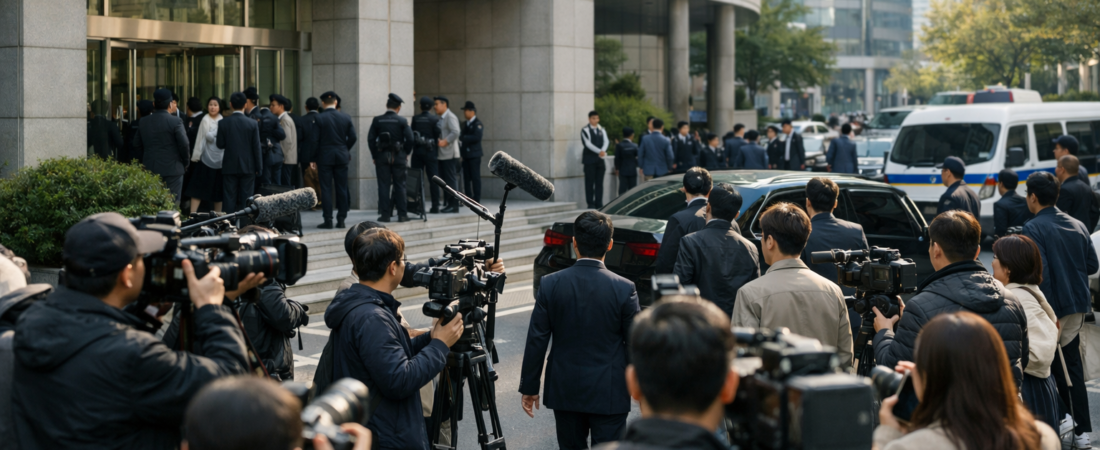
AI-Generated Photorealistic Image — All people, scenes, and details in this image are entirely AI-generated and fictional. Not a real photograph of an actual person or event. 이 이미지는 AI로 생성된 가상 이미지입니다.


Leave a Reply