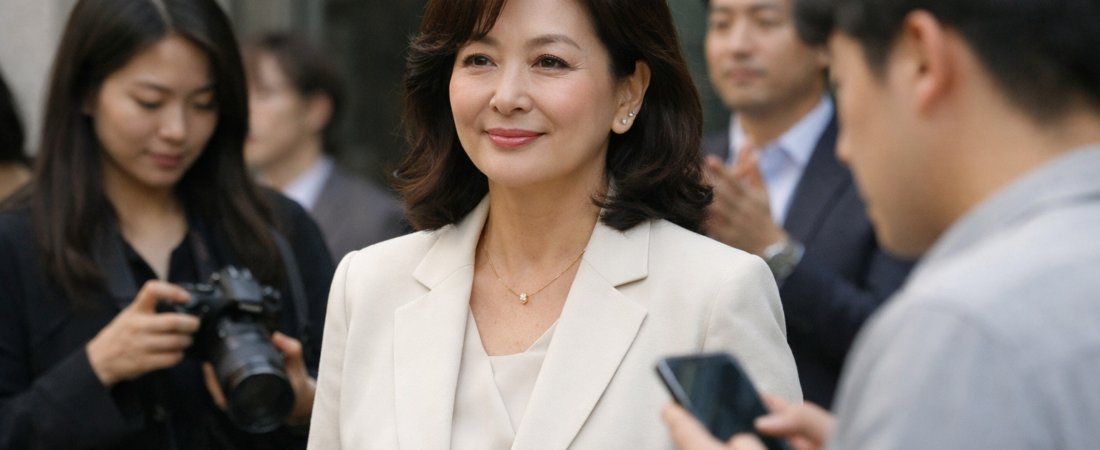
Lee Hwi-hyang Recalls the Slap Scene That Still Haunts Her
Lee Hwi-hyang admits she lost count of how many times she slapped a 14-year-old Park Shin-hye during filming. The scene came from the 2003 hit drama “Stairway to Heaven.” Twenty-two years later, Lee Hwi-hyang still says sorry.
That confession recently resurfaced online, and it caught fans off guard. Why would a veteran actress still feel guilty over a scene from a show that ended over two decades ago?
The answer says a lot about how Korean actors treat their craft. It also says a lot about the emotional weight that comes with playing a villain audiences never forget.
The Scene That Made “Stairway to Heaven” Unforgettable
“Stairway to Heaven” aired from December 2003 to February 2004. It became one of the defining melodramas of early 2000s Korean television, known for its intense emotional scenes and tragic storyline.
Lee Hwi-hyang played a cold, controlling mother figure whose cruelty toward the young female lead became one of the show’s most talked-about elements. Park Shin-hye, then just 14 years old, played the younger version of the main character before Choi Ji-woo took over the adult role.
Lee Hwi-hyang described getting so deep into the character that she lost track of the slaps during filming. That kind of immersion is a hallmark of Korean melodrama acting. Directors often pushed actors toward raw, unfiltered emotion rather than restrained performances.
This approach shaped an entire generation of Korean dramas that followed. Intense confrontation scenes became a genre signature, something international viewers still associate with Korean television storytelling today.
Why Lee Hwi-hyang Still Feels Guilty Today
Lee Hwi-hyang’s lingering guilt reveals something important about acting culture in Korea. Many veteran actors describe similar feelings when their characters harmed young co-stars, even fictionally.
Does staying “in character” excuse real physical contact on set? That question has become more relevant as Korean productions face growing scrutiny over actor safety, especially involving minors.
Lee Hwi-hyang’s comments were not framed as an excuse. She explained the emotional immersion, then followed with a direct apology to Park Shin-hye, even after 22 years.
That combination of explanation and accountability is worth noting. It reflects a shift in how actors today talk about difficult scenes from the past, balancing artistic context with honest reflection.
You can read more coverage of this story from Maeil Business Newspaper, which first reported Lee Hwi-hyang’s remarks this week.
What This Story Says About Korean Drama Culture
Korean melodrama has long relied on intense emotional peaks to hook viewers. Slap scenes, tearful confrontations, and dramatic reveals are practically genre conventions at this point (some fans joke that a Korean drama without at least one dramatic slap barely counts as a melodrama).
But behind those scenes are real people, sometimes very young ones, absorbing real physical and emotional intensity. Lee Hwi-hyang’s story reminds us that acting decisions from 2003 don’t disappear once the cameras stop rolling.
There is a real tension here worth sitting with. On one hand, unfiltered emotional performances have given Korean dramas their global reputation for raw storytelling; on the other hand, that same intensity once came at a cost to child actors who had little power to say no on set.
The encouraging part is that this conversation is happening at all. Korean productions today face far more oversight around minors, and actors like Lee Hwi-hyang speaking openly about past regret helps normalize honest reflection rather than silence.
Human memory works strangely with guilt. We often carry small moments longer than the people we hurt do, turning private regret into a quiet, ongoing apology that outlives the event itself.
Lee Hwi-hyang’s story also shows something hopeful about growth. People can hold two things at once: pride in their craft and honest sorrow over how that craft was practiced, without needing one to cancel out the other.
Looking Back at Park Shin-hye’s Early Career
Park Shin-hye went on to become one of Korea’s most recognized actresses, starring in hits like “The Heirs” and “Doctors.” Her role in “Stairway to Heaven” was one of her earliest major appearances, filmed when she was still a young teenager.
That early exposure to intense dramatic scenes did not stop her career from flourishing. But it does raise a fair question about how the industry protected, or failed to protect, child performers during that era.
Lee Hwi-hyang’s repeated apologies suggest she has thought about this balance for years. Her willingness to revisit the memory publicly, rather than brushing it aside, adds a layer of accountability rarely seen in older industry interviews.
As Korean dramas continue reaching global audiences through streaming platforms, these behind-the-scenes stories matter more than ever. They shape how international fans understand not just the shows themselves, but the people and choices behind them.
What do you think about Lee Hwi-hyang’s decision to apologize decades after filming ended?
AI-Generated Photorealistic Image — All people, scenes, and details in this image are entirely AI-generated and fictional. Not a real photograph of an actual person or event. 이 이미지는 AI로 생성된 가상 이미지입니다.

Leave a Reply