
Table of Contents
Hanroro, a rock singer largely absent from major K-pop label rosters, is now outshining acts backed by HYBE, SM, JYP and YG in emotional impact. Her song “0+0” recently became a personal request from a stressed university applicant to her vocal instructor. That single moment reveals something bigger about what listeners actually want from music today.
Why would a struggling student skip past the technically flashy songs her teacher recommends? Why choose an artist who isn’t part of the usual K-pop machine at all? Hanroro’s story answers both questions, and it says a lot about where Korean music culture is heading.
Why Hanroro Is Suddenly the Name Everyone Wants
Hanroro isn’t a trainee from a major agency. She didn’t come up through years of choreography practice or vocal boot camps. Instead, she built a following through songs that feel like a conversation, not a performance.
Her track “0+0” carries a simple, direct message: “I won’t abandon you. You think the same, don’t you?” That line isn’t designed to show off vocal range. It’s designed to sit with you when you’re struggling.
A vocal instructor in the greater Seoul area, surnamed Lee, described exactly this dynamic. A student preparing for college auditions requested Hanroro specifically, not for technical training, but because the lyrics gave her comfort during a hard year. That’s not typical audition-prep behavior, and that’s exactly the point.
The K-Pop Industry That Hanroro Quietly Outmaneuvered
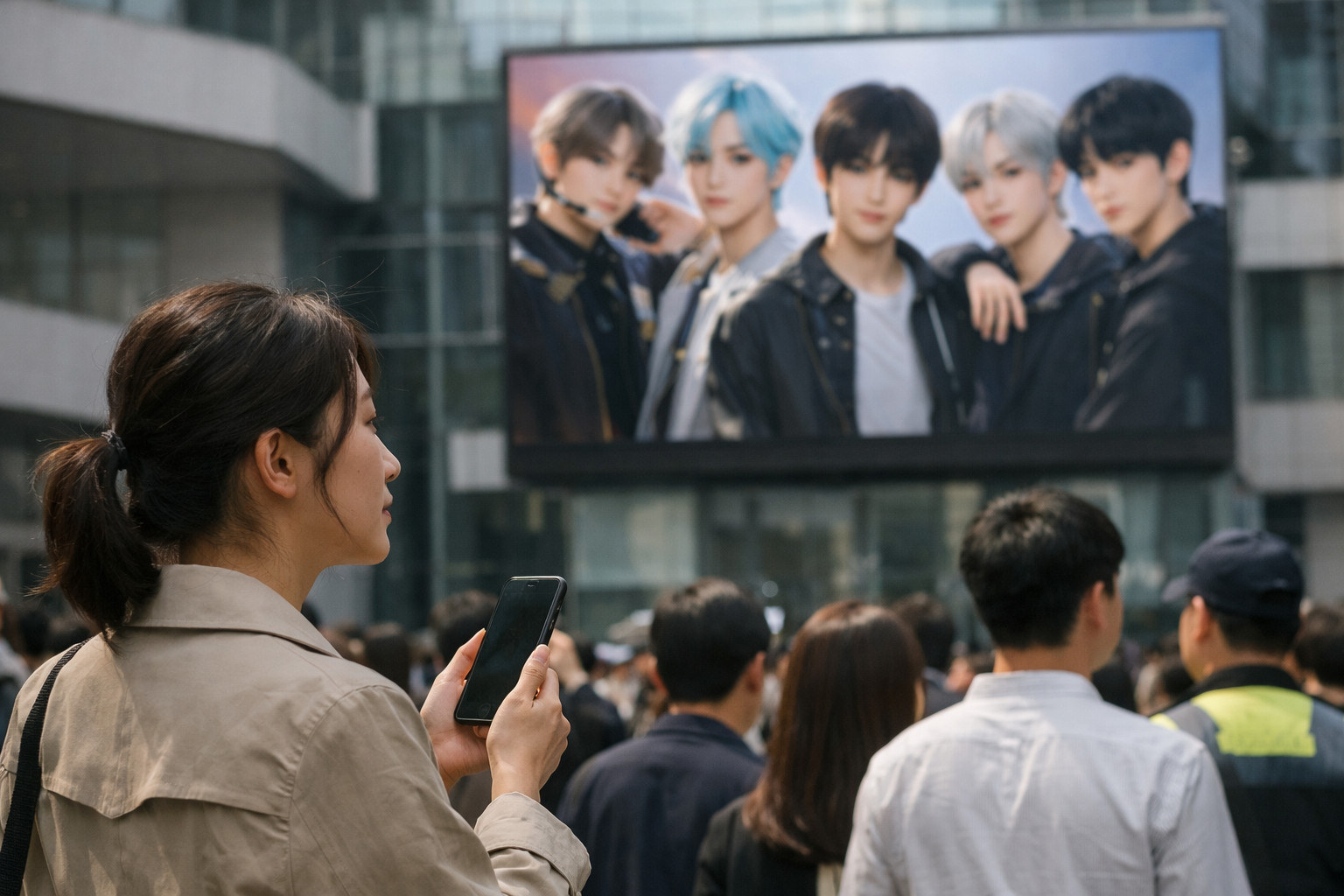
HYBE, SM, JYP and YG have spent decades perfecting a formula. Polished visuals, precise choreography, vocal runs built for maximum technical display — this is the system that made K-pop a global export. It works, and it has worked spectacularly.
But formulas can also create distance. When every act is optimized for the same kind of showcase, listeners sometimes start looking for something that feels less engineered. Hanroro fills that gap almost by accident.
Vocal academies, according to instructor Lee, don’t usually put Hanroro’s songs on their training lists. Her music isn’t built for showing off range or technique — it’s built for feeling. In an industry known for turning every performance into a spectacle, that’s practically a plot twist worth noting.
This isn’t really Hanroro beating the major labels in the traditional sense. She’s not topping their sales charts or replacing their trainees. She’s succeeding in a category those labels rarely target directly: emotional companionship rather than vocal spectacle.
That distinction matters. K-pop’s biggest agencies compete fiercely for chart positions, global tours and merchandise sales. Hanroro is competing for something quieter — a place in someone’s personal, difficult moment. You could say she’s winning a different game entirely, on a field the giants rarely bother to enter.
One Song, One Student, One Reason Hanroro Connects
Consider the student at the center of this story. She started university, found her major didn’t fit, became isolated, and eventually dropped out. Now she’s back at the beginning, preparing to apply all over again.
That’s an incredibly common experience among Korean students, even if it rarely gets discussed openly. Korea’s college admissions system is famously intense, built around a single high-stakes exam and years of preparation leading up to it. Dropping out and starting over carries real social weight in that environment.
So when this student asked to sing “0+0” instead of a technical showcase piece, she wasn’t making a musical choice. She was making an emotional one. Do you remember a moment when a song said exactly what you needed to hear, even if you couldn’t say it yourself? That’s the function Hanroro’s music seems to serve for a specific, pressured generation of listeners.
Lee’s account, reported by Korea Times, captures something instructors don’t always expect to encounter in a vocal training room. Students aren’t only there to build skill. Sometimes they’re there looking for a moment of relief, and Hanroro happens to provide it.
What Hanroro’s Rise Tells Us About Music Right Now
Hanroro’s growing influence raises a real question about what listeners actually value. Is it vocal precision and stage presence, or is it honesty and emotional accessibility? The answer, increasingly, seems to be both — but not always from the same artists.
Korea’s competitive culture produces incredible technical talent, and that shouldn’t be dismissed. The discipline behind K-pop training is genuinely impressive, and it has created some of the most polished performers on the planet. At the same time, that same intensity — in music training, in schooling, in career pressure — can leave people exhausted and searching for something softer.
Hanroro’s appeal doesn’t erase the value of technical mastery, and it shouldn’t be read as a rejection of it. Instead, it points to a gap that needed filling — a space for music that simply says, “I see you, and I’m not going anywhere.” Programs supporting student mental health, informal peer networks among applicants, and artists like Hanroro all represent small, real efforts to soften a demanding system, even as that system’s pressures remain very real.
Where does this leave the rest of the K-pop landscape? Probably exactly where it’s always been — dominant in scale, unmatched in production value, but not the only voice young Koreans are turning to for comfort. Hanroro’s story suggests audiences are becoming more selective about what kind of connection they want from music, and agencies that ignore that shift may find themselves missing something important.
Hanroro didn’t need a major label campaign to matter to that one student in Seoul. She just needed the right lyrics at the right moment. As Korean pop culture keeps evolving, will emotional honesty become as valuable as vocal perfection to the next generation of listeners?
AI-Generated Photorealistic Image — All people, scenes, and details in this image are entirely AI-generated and fictional. Not a real photograph of an actual person or event. 이 이미지는 AI로 생성된 가상 이미지입니다.

Leave a Reply