Table of Contents
A tugboat capsized in Busan coastal waters, and Indonesian crew members survived by escaping within seconds. One rescued sailor said he was cooking in the ship’s kitchen when the vessel suddenly tilted. He ran out, jumped, and was later pulled from the sea still shaking from shock.
Why do these accidents happen so quickly, with almost no warning? That question matters far beyond one incident near Busan. Ships capsize for structural and human reasons, and understanding both helps explain why Busan coastal waters remain a recurring site of maritime risk.
What Happened in Busan Coastal Waters
On the day of the accident, a tugboat overturned while operating in Busan coastal waters. Emergency crews rushed to the scene, and several Indonesian crew members were pulled from the water alive. One survivor described the moment vividly, telling reporters his body was trembling long after he reached safety.
He had been preparing food for the crew when the boat suddenly lost balance. There was no time to grab a life vest or gather belongings. He simply ran toward the deck and jumped, trusting the sea more than the sinking vessel.
Stories like this reveal something important about maritime work. Survival often depends less on training manuals and more on split-second instinct. That instinct, though, is sharper when sailors already understand their vessel’s weak points, which brings us to the mechanics of why tugboats are so vulnerable in the first place.
Why Tugboats Capsize So Fast
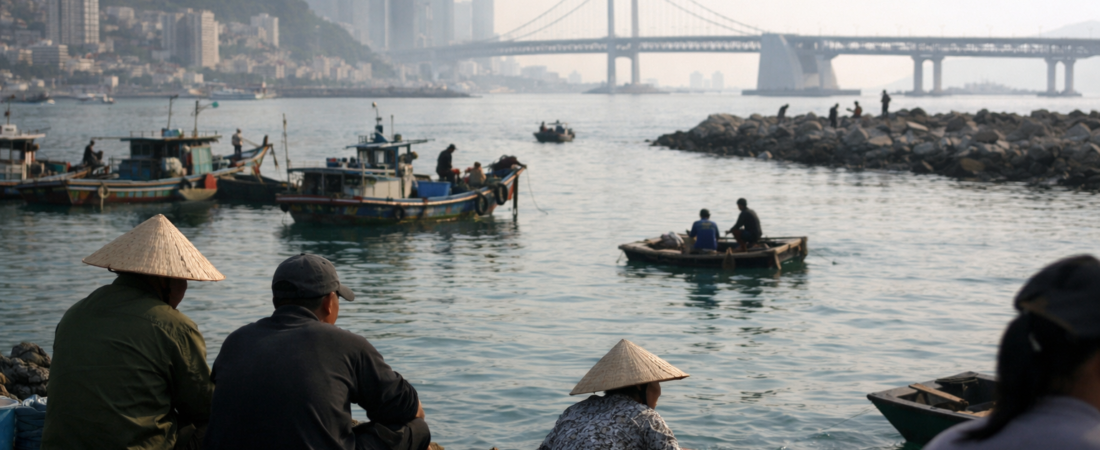
Tugboats are small but powerful. They pull massive cargo ships and barges many times their own size, and that mismatch creates constant strain on their structure.
Unlike larger vessels, tugboats sit low in the water and have a narrow stability margin. A sudden shift in cargo, a strong wave, or an unexpected tow-line tension can tip them within moments. That is exactly why accidents in Busan coastal waters and similar port zones tend to escalate so fast.
Busan is one of the busiest port cities in the world, ranking among the top container hubs globally. More traffic means more tugboats working around the clock. You might picture calm harbor water, but Busan coastal waters see constant crossing patterns, strong currents, and unpredictable wind funneling between the hills — think of it as a maritime intersection with no traffic lights.
Migrant Seafarers and Korea’s Fishing Industry
Indonesian sailors, like the ones rescued this week, form a significant part of Korea’s maritime workforce. Many foreign crew members work on tugboats, fishing vessels, and cargo support ships throughout Busan coastal waters and other Korean ports.
Why does Korea rely so heavily on foreign seafarers? The answer is demographic and economic. Younger Koreans increasingly avoid physically demanding sea work, so shipping companies recruit from Indonesia, Vietnam, and the Philippines to fill the gap.
This reliance creates real benefits and real tension at the same time. Foreign crews keep Korea’s massive shipping and fishing industries running, and many workers send wages home to support families across Southeast Asia. Yet language barriers, unfamiliar safety protocols, and cultural distance can also leave these workers more exposed during emergencies, especially in fast-moving accidents like the one in Busan coastal waters.
That tension does not have a simple fix, but it does have a direction. Korean maritime authorities have expanded multilingual safety training programs in recent years, and some shipping companies now pair experienced Korean crew with newer foreign hires for exactly this reason. Progress is uneven, but it is real, and it points toward a system slowly learning to protect the people it depends on.
How Rescue Systems Respond in Busan Coastal Waters
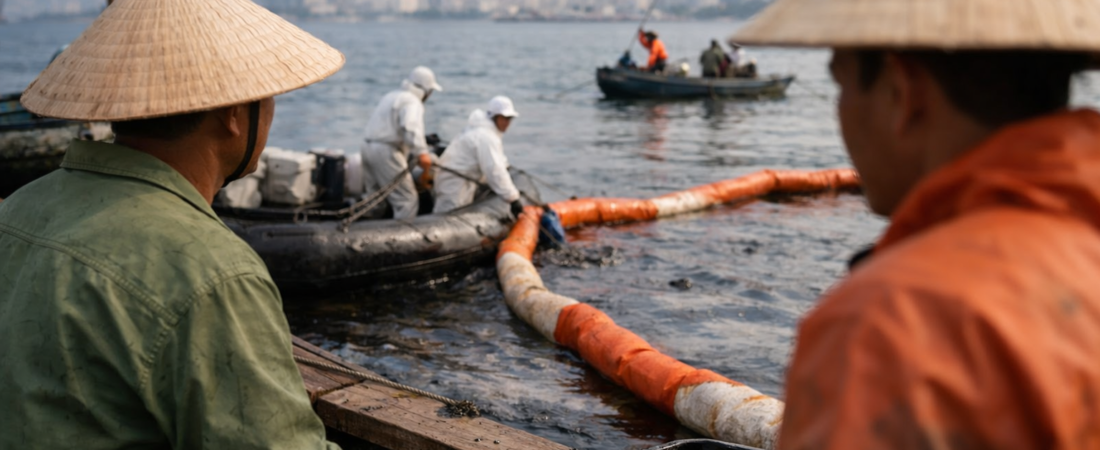
Korea’s coast guard maintains a rapid response network across major ports, and Busan is no exception. When the tugboat capsized, patrol boats and rescue teams reached the site within minutes, pulling survivors from cold water before hypothermia became a serious threat.
Fast response matters enormously in accidents like this. Every minute in open water increases risk, so the coordination between coast guard units, port authorities, and nearby vessels often determines whether a story ends in tragedy or relief.
For readers outside Korea, this case offers a useful lens. You can learn more about maritime accident patterns and safety protocols through Yonhap News Agency, which regularly covers incidents across Korean waters. Understanding how one country handles maritime emergencies helps travelers, workers, and policymakers compare standards globally.
What can travelers and workers take away from all this? If you ever board a vessel in Busan coastal waters, whether for work, fishing, or a harbor tour, ask about life vest locations and emergency exits before departure. It sounds simple, but that one habit has saved lives in accidents just like this one.
Looking Ahead for Maritime Safety
Human resilience shows up clearly in stories like this rescued sailor’s escape. His instinct to run, jump, and survive reflects something admirable about people under pressure. Yet that same resilience can mask a harder truth: many workers on these vessels operate with less protection, less language support, and less institutional voice than they deserve.
Honoring survival stories should not stop at admiration. It should also push shipping companies and regulators to close the gaps that make survival necessary in the first place. Real hope here looks like better training, clearer emergency protocols in multiple languages, and continued investment in coast guard readiness across Busan coastal waters and beyond.
Accidents at sea will likely never disappear completely, but the systems around them can keep improving. Busan coastal waters will remain busy, unpredictable, and economically vital for years to come. What do you think Korea should prioritize next to protect the sailors who keep its ports running?
AI-Generated Photorealistic Image — All people, scenes, and details in this image are entirely AI-generated and fictional. Not a real photograph of an actual person or event. 이 이미지는 AI로 생성된 가상 이미지입니다.

Leave a Reply