Table of Contents
Generative AI now creates battle scenes and face replacements for hit Korean dramas like SBS’s “Kim Bu-jang” and KBS’s upcoming “Munmu.” Production teams use it to cut costs and shoot flashback scenes safely. This shift is no longer experimental — it is becoming standard practice across Korean broadcasting.
Think about the last Korean historical drama you watched. Did you notice anything odd about a sweeping battle scene, or a flashback that looked slightly too smooth? You might have been watching generative AI at work, and you probably had no idea.
AI Is Already on Your TV Screen
Korean television production has quietly crossed a threshold. Generative AI is no longer a side experiment used for marketing gimmicks or fan-made content. It now sits inside real production pipelines for top-rated shows.
SBS’s “Kim Bu-jang” used generative AI to recreate a flashback scene featuring actor So Ji-sub’s younger face. The show became one of the highest-rated dramas of its run. KBS’s “Munmu,” premiering next month, reportedly uses generative AI for large-scale battle sequences that would otherwise require hundreds of extras and weeks of filming.
Korea is not alone in this trend. In China, broadcasters have already aired content that is 100 percent AI-generated, start to finish. That is a striking benchmark, and it raises an obvious question for Korean producers watching from next door.
If a neighboring industry can finish a full show with generative AI, how long before Korean studios attempt the same? The technology keeps closing gaps in realism every few months. What once looked uncanny now often passes without the audience noticing at all.
How Generative AI Entered Korean Drama Sets
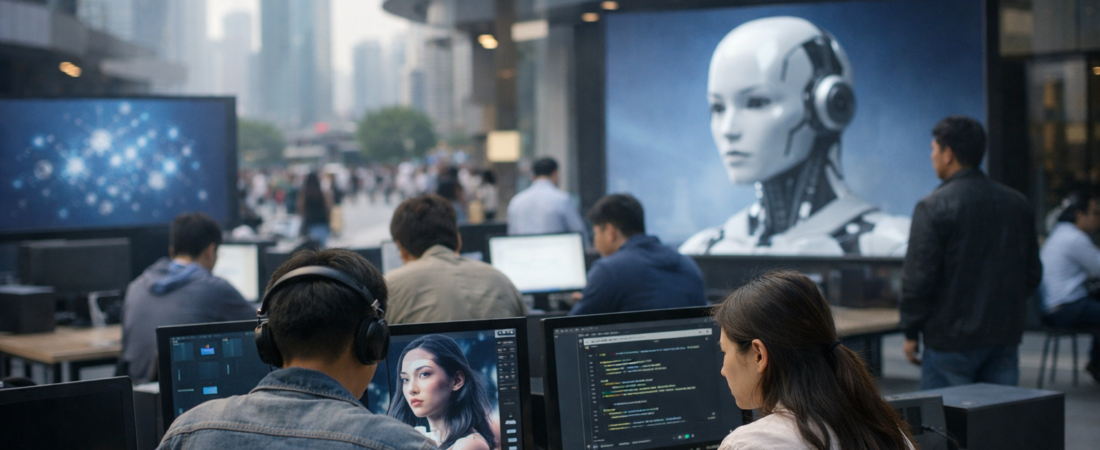
Generative AI entered Korean production through practical problems, not creative ambition. Historical dramas, known in Korea as sageuk, traditionally need massive battle scenes, period costumes, and large crowds. These scenes are expensive, dangerous, and logistically painful to film.
Generative AI solves several of these headaches at once. It can generate convincing crowd scenes without hiring hundreds of extras. It can de-age or alter an actor’s face for flashback sequences without complex makeup or reshoots years apart.
Safety is another major driver. Stunt-heavy battle sequences carry real injury risk for performers and crew. Replacing some of that physical choreography with AI-rendered footage reduces danger on set, and insurance costs tend to follow that logic closely.
Korean producers take their action sequences seriously. Replacing a sword fight with a few lines of code is either terrifying or oddly fitting, depending on your view of progress. For more on how Korean broadcasters are navigating this shift, you can read coverage from The Kyunghyang Shinmun.
This is not a fringe trend confined to low-budget productions. Major networks with reputations to protect are adopting generative AI for flagship shows. That signals confidence, or perhaps necessity, given shrinking production budgets across the industry.
Generative AI and the Future of Acting Jobs
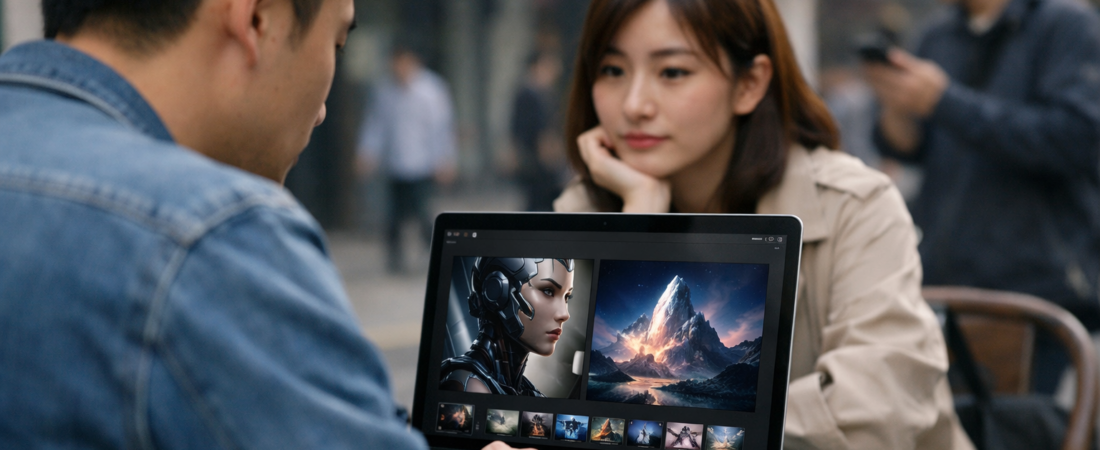
Here is where the story gets uncomfortable. Generative AI threatens the smallest, least visible jobs first. Background actors and stunt performers, the people who fill battle scenes and crowd shots, are the most exposed group.
A single battle sequence used to require dozens of extras working long hours for modest pay. Now a production team can generate that same scene digitally, with no catering, no insurance claims, and no scheduling conflicts. For studios watching budgets shrink, that math is hard to ignore.
There is also a quieter legal issue brewing beneath the surface. When an actor’s face or movement data gets fed into an AI model, who actually owns that performance afterward? Korean actors’ unions have started raising concerns about consent and compensation for this kind of data use.
So does convenience always come at someone else’s expense? Not entirely, and that is worth sitting with for a moment. Korean film and drama history is full of moments where new technology threatened to replace human labor, from early CGI in the 1990s to digital color correction replacing physical film processing, and performers adapted rather than disappeared.
The honest picture includes both sides. Yes, generative AI is already shrinking opportunities for extras and junior stunt performers, and that loss is real for people trying to build a career. At the same time, some actors and smaller studios are using the same tools to produce independent work that would have been financially impossible before, opening a different kind of door even as another one closes.
That tension will not resolve cleanly. Industry groups in Korea are beginning conversations about fair compensation frameworks for performance data, similar to debates happening in Hollywood after the 2023 SAG-AFTRA strikes. Whether Korean unions can secure similar protections before the technology outpaces negotiation remains an open question, but the fact that the conversation has started at all is itself a hopeful sign.
What This Means for Global K-Drama Fans
International viewers might assume this is purely an internal Korean labor issue. It is not. Generative AI changes what you, the viewer, are actually watching when you stream a Korean historical drama on a global platform.
Scenes once built from real locations, real costumes, and real stunt coordination may now be partly synthetic. Does that change how you experience the story? Many viewers say no, as long as the emotional core stays intact, but others feel uneasy once they learn the truth behind the screen.
Korean dramas built their global reputation partly on meticulous production values, elaborate sets, and committed performances. Generative AI threatens to standardize some of that distinctiveness if every studio reaches for the same digital shortcuts. At the same time, it could free smaller production houses to tell ambitious historical stories they never had the budget for.
Korean broadcasters are moving fast on this because competition is intense, and global streaming deals reward speed and visual spectacle. Expect generative AI credits to become more common in Korean production notes over the next two years. Whether Korean audiences, and international fans watching on Netflix or Viki, will demand more transparency about AI use remains to be seen.
Where does this leave the industry a decade from now? Generative AI will likely keep expanding into bigger roles, but Korean actors, unions, and regulators still have time to shape the rules before the technology fully settles in. What do you think — should Korean dramas be required to disclose when generative AI replaces real performers on screen?
AI-Generated Photorealistic Image — All people, scenes, and details in this image are entirely AI-generated and fictional. Not a real photograph of an actual person or event. 이 이미지는 AI로 생성된 가상 이미지입니다.
Leave a Reply