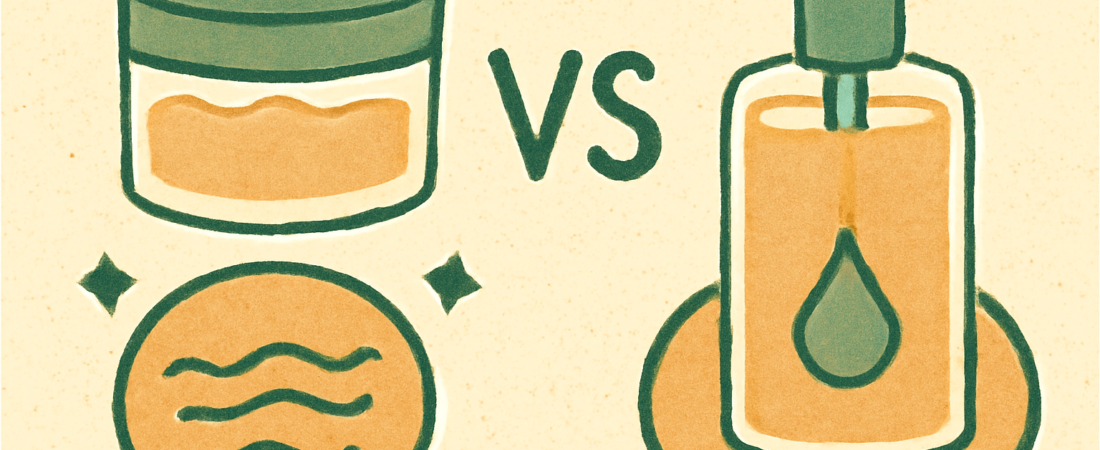
Choose a cleansing balm if your skin is dry, mature, or you wear heavy sunscreen and makeup. Choose a cleansing oil if you are oily, combination, or acne-prone and want a lighter feel. Both melt oil-based products. Always follow with a water-based cleanser. Patch test any new product first.
Last checked: 2026-11-06
- Why oil cleansing is step one in Korean routines
- Cleansing balm vs oil: the real differences
- Which one suits your skin type
- How to use either one, step by step
- Buying tips and typical prices
- FAQ
- Sources
- Related guides
Why oil cleansing is step one in Korean routines
Many Korean routines start with an oil-based cleanser. This is the first half of what people call double cleansing.
The idea is simple. Oil dissolves oil. Sunscreen, makeup, and sebum are all oil-friendly. A foaming cleanser alone may not lift them fully.
So the first step uses an oil-based product to melt these away. The second step uses a water-based cleanser to wash off what is left.
Two forms dominate this first step: the cleansing balm and the cleansing oil. They do the same job. They feel quite different on the skin.
This guide answers one question. Which one should you pick? We go step by step, so you can decide in a few minutes.
A note on scope. This is general beauty information, not medical advice. If you have a skin condition, ask a dermatologist before changing your routine.
Cleansing balm vs oil: the real differences
What a cleansing balm is
A balm is a solid or semi-solid product. It usually comes in a tub with a small spatula. You scoop it out and warm it between your fingers.
As it warms, it melts into a silky oil. You then massage it over dry skin.
Balms tend to feel richer and more cushioned. Many people like the slow, massage-style feel.
What a cleansing oil is
A cleansing oil is a liquid. It usually comes in a pump bottle. You press out a few pumps and apply it to dry skin.
Oils tend to feel lighter and more slippery. They spread quickly and rinse in a short time.
The shared rules
Both products work best on dry skin and dry hands. Water too early can weaken the melting effect.
Both should be emulsified before rinsing. That means adding a little water and massaging until the product turns milky.
Both should be followed by a gentle water-based cleanser. This second step is part of the method.
Side-by-side comparison
Prices vary widely by brand, size, and retailer. The ranges below are rough, typical figures for orientation only. Check the brand or retailer for current prices.
| Feature | Cleansing balm | Cleansing oil |
|---|---|---|
| Texture | Solid, melts when warmed | Liquid, pump or bottle |
| Feel on skin | Rich, cushiony, slow massage | Light, slippery, quick spread |
| Best for | Dry, mature, or dehydrated skin; heavy makeup | Oily, combination, or acne-prone skin; light makeup and sunscreen |
| Rinse feel | Can feel slightly richer after rinsing | Usually rinses off lighter |
| Hygiene | Tub needs a clean spatula or dry fingers | Pump keeps product cleaner |
| Travel | Can soften in heat; tubs can leak | Easy to pump; bottles can leak if not sealed |
| Typical price range | About $12-$25 / 16,000-33,000 KRW | About $10-$25 / 13,000-33,000 KRW |
The price ranges above are broad estimates, not quotes. Sizes differ, so compare price per milliliter when you shop.
Which one suits your skin type
Skin is personal. Treat the guidance below as a starting point, not a rule.
Dry or dehydrated skin
A balm is often a good first try. Its richer texture can feel more comforting on tight skin.
Look for a formula that feels cushiony but rinses clean. If your skin feels tight after the second cleanse, try a gentler water-based step.
Oily skin
A light cleansing oil is a common pick. It spreads easily and tends to rinse off with a lighter feel.
Some people with oily skin worry that oil will make things worse. In practice, many find an oil-based first step helps their routine feel cleaner. Your own response is the real test.
Combination skin
Either can work. Many people with combination skin like an oil for daily use because it feels balanced.
If your cheeks are dry and your T-zone is oily, try an oil first. Switch to a balm if you feel dry after rinsing.
Acne-prone or breakout-prone skin
Choose with care. Rinse thoroughly, and follow with a water-based cleanser.
Some people prefer to check ingredient lists for fragrance and heavy additives. Others avoid products that leave a film. We cannot say what will suit your skin. A dermatologist can give personal advice.
Sensitive skin
Patch test first. Apply a small amount on the inner arm or behind the ear. Wait at least a day.
Fragrance and essential oils bother some people. Check the full ingredient list on the brand’s official site or the packaging.
Mature skin
Many people with mature skin like the richer feel of a balm. It can feel less stripping.
That said, a gentle oil also works well. Pick by feel rather than by age.
Heavy makeup or waterproof sunscreen wearers
A balm is often favored for stubborn waterproof products. Its thicker texture gives a longer, more thorough massage.
An oil can also handle these. You may just need a second pump and a longer massage.
Eye makeup
Be careful near the eyes. Many oil-based cleansers are not meant for the eye area. Check the label.
If you want to remove eye makeup, a dedicated eye makeup remover is often the safer choice.
How to use either one, step by step
The method is nearly the same for both. Follow these steps in order.
- Start with dry hands and a dry face. Water too early can reduce how well oil-based products melt makeup.
- Take the right amount. For an oil, use a few pumps. For a balm, scoop with the spatula. Follow the brand’s directions for amount.
- Warm the balm. Rub it between your palms until it turns to oil. Skip this step for liquid oil.
- Massage gently. Use soft circles over the whole face. Spend extra time on the nose, chin, and any areas with sunscreen or makeup. Keep it to about one minute.
- Emulsify with a little water. Wet your fingers and keep massaging. The product should turn milky and feel lighter.
- Rinse with lukewarm water. Very hot water can feel harsh on skin. Rinse until the slippery feel is gone.
- Follow with a water-based cleanser. Lather it in your hands, cleanse gently, and rinse again.
- Pat dry. Use a clean towel. Continue with your usual toner, serum, moisturizer, and sunscreen in the morning.
Common mistakes to avoid
- Skipping the emulsifying step. This can leave a greasy film.
- Rinsing too quickly. Take time to remove all the product.
- Scrubbing hard. Gentle massage is enough.
- Using wet hands at the start. Dry hands give a better result for most formulas.
- Skipping the second cleanse. The two-step method is the point.
How often to use it
Many people use an oil-based cleanser in the evening, when sunscreen and makeup need to come off. In the morning, a gentle water-based cleanse or a simple water rinse is common.
If you do not wear sunscreen or makeup, you may not need an oil-based step every day. Use what suits your skin and your day.
Buying tips and typical prices
Many Korean brands sell both balms and oils. You can find them in Korean beauty shops in Korea, in online stores, and in some international shops.
Read the label, not just the front
Check three things before you buy:
- The full ingredient list. Look for fragrance or botanical oils if your skin is reactive.
- Whether it is meant for eye makeup. Many are not. The label should say.
- Whether it needs a second cleanse. Most do, and this is normal.
Check the official brand site
Ingredient lists can change between batches or markets. The brand’s official site is the most reliable source for the current list. If your packaging looks different from photos online, trust the packaging and the official site.
Price expectations
Prices differ by brand, size, and where you buy. As a rough guide, many cleansing balms and oils fall between about $10 and $25 / 13,000 and 33,000 KRW. Some premium formulas cost more. Some travel sizes cost less.
Tourists in Korea sometimes see tourist-targeted bundles or promotions. These change often. Check the shop or the brand’s official page for current offers rather than relying on a price you read online.
Avoiding counterfeit or expired products
Buy from official brand stores or well-known retailers. Check the expiry date or the period-after-opening symbol on the packaging. If a deal seems too good to be true, be cautious.
Traveling with it
Liquid oils count as liquids for air travel rules. Rules differ by country and airline, so check your airline and airport authority before you fly. Balms in tubs may also be treated as gels or creams in some places. Check the official rules.
FAQ
Is a cleansing balm better than a cleansing oil?
Neither is better in every case. A balm often suits dry or mature skin and heavy makeup. An oil often suits oily or combination skin and light sunscreen. Choose by how your skin feels after the full routine.
Do I still need a second cleanser after a balm or oil?
Most routines say yes. The oil-based step melts sunscreen and makeup. The water-based step removes the remaining residue and the cleanser itself. Follow the brand’s directions for your specific product.
Can oily or acne-prone skin use a cleansing oil or balm?
Many people with oily skin use them without problems, but results vary. Rinse thoroughly and follow with a water-based cleanser. If you are prone to breakouts or have a skin condition, ask a dermatologist for personal advice.
Can I use a cleansing balm or oil on my eyes?
Only if the label says it is safe for the eye area. Many are not intended for eye makeup removal. When unsure, use a dedicated eye makeup remover and check the packaging.
Sources
- Ministry of Food and Drug Safety (MFDS), Korea: official regulator for cosmetics
- American Academy of Dermatology: general skin care information
- U.S. Food and Drug Administration: cosmetics information
- Transportation Security Administration: liquids and travel rules
For ingredient lists and current product details, check the official website of the specific brand you are buying.

Leave a Reply