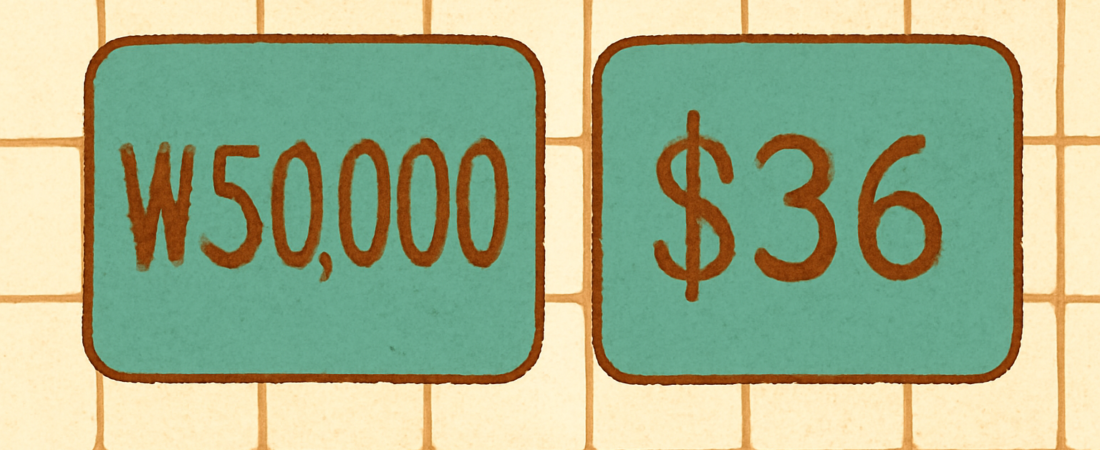
K-beauty staples often cost less in Korea than in the US, but the gap varies by product and shop. Sunscreens, sheet masks and cleansers show the clearest savings, while some imported brands cost more. Prices change with sales, exchange rates and taxes, so always compare current numbers before you buy.
Last checked: 2026-11-06
- Why Korean and US prices differ
- Where Korean price data comes from
- Same product, two prices
- How to check current prices yourself
- Smart buying tips for visitors and online shoppers
Why Korean and US prices differ
Many readers ask the same question. Is skincare really cheaper in Korea? The honest answer is: often, but not always.
Several things shape the gap. Understanding them helps you judge any price you see.
First, shipping and import costs. A product made in Korea and sold in the US travels a long way. Importers, distributors and retailers each add a margin. That raises the shelf price abroad.
Second, sales tax and VAT. Korean shelf prices usually include value-added tax. US prices usually do not include sales tax. That means the US price at the register can be higher than the tag suggests.
Third, the exchange rate. The dollar and the won move against each other every day. A product that looks cheap one month may look average the next. This guide uses a rough rate of 1 USD to 1,300 KRW for easy math. The real rate will differ, so check a current converter.
Fourth, competition. Korea has a very crowded beauty retail scene. Stores compete hard, and discounts are common. That can pull everyday prices down.
Finally, product versions. Some items sold abroad are slightly different from the Korean versions. Sizes, packaging and even formulas can vary. So two products with the same name are not always an exact match.
Where Korean price data comes from
Good price research starts with the right sources. Here are the types of Korean data worth knowing about.
Official retailer websites. Large Korean beauty retailers publish live prices and sale tags. These show what shoppers in Korea see right now. They are the best starting point for current numbers.
Brand official stores. Most Korean brands run their own online shops. List prices there act as a useful baseline. Sales and bundles change often, so compare the sale price and the regular price.
Price comparison services. Korea has well-known comparison engines that collect prices from many sellers. They show a range, not a single number. That range is more honest than any one tag.
Government consumer data. Korea publishes official consumer price statistics through its national statistics office. These track broad categories over time. They do not list individual serums, but they show general price direction.
Consumer protection agencies. Korea’s consumer agency publishes guidance and sometimes price surveys. These can help you understand fair pricing and refund rules.
None of these will give you a perfect single answer. Prices shift week by week. So treat any number in an article as a snapshot, and confirm it on the source itself.
Same product, two prices
The table below shows typical price ranges for common K-beauty product types. These are illustrative ranges, not quotes from a named brand or store. Real prices depend on the brand, size, retailer and sale timing. The US column shows USD and KRW together. KRW figures use the rough 1 USD to 1,300 KRW rate and are rounded.
| Product type | Typical price in Korea | Typical price in the US | What to know |
|---|---|---|---|
| Sunscreen (50 ml tube) | $8-$15 / 10,000-20,000 KRW | $14-$26 / 18,200-33,800 KRW | One of the biggest gaps. Check the size and SPF rating. |
| Sheet mask (single) | $1-$2 / 1,300-2,600 KRW | $2-$5 / 2,600-6,500 KRW | Boxes of ten are often a better deal in Korea. |
| Foam or gel cleanser (150 ml) | $7-$13 / 9,000-17,000 KRW | $12-$22 / 15,600-28,600 KRW | Large drugstore-style chains run frequent sales. |
| Toner (200 ml) | $10-$20 / 13,000-26,000 KRW | $16-$30 / 20,800-39,000 KRW | Compare by milliliter, not by bottle. |
| Serum or ampoule (30-50 ml) | $12-$25 / 15,600-32,500 KRW | $18-$38 / 23,400-49,400 KRW | Range is wide. Premium lines cost much more. |
| Cushion compact | $15-$30 / 19,500-39,000 KRW | $22-$40 / 28,600-52,000 KRW | Refills are cheap in Korea. Shade ranges differ by market. |
| Lip tint | $5-$12 / 6,500-15,600 KRW | $8-$18 / 10,400-23,400 KRW | Shades can differ between markets. |
Treat these as rough guides only. Some US retailers run deep discounts that close the gap. Some Korean premium brands cost the same or more at home.
What the pattern shows
The savings tend to be largest on everyday items. These are sunscreen, cleansers, toners and sheet masks. These products sell in huge volume in Korea, so competition is fierce.
Imported Western brands tell the opposite story. In Korea, they carry import costs too. A US drugstore moisturizer can cost more in Seoul than in New York.
How to check current prices yourself
Do not rely on any article for live numbers, including this one. Here is a simple routine you can follow in about ten minutes.
- Pick one product. Note the brand, exact name and size in milliliters or grams.
- Find the Korean price. Check the brand’s official Korean store or a large Korean beauty retailer. Write down the sale price and the regular price.
- Find the US price. Check the brand’s US site and one major US retailer. Include shipping if you are buying online.
- Convert the won. Use a current exchange rate from your bank or a trusted converter.
- Compare cost per unit. Divide the price by the milliliters or grams. This avoids being fooled by different sizes.
- Add tax. Korean tags usually include VAT. US tags usually do not include sales tax.
This method works for any product. It also protects you from fake bargains.
Watch for look-alike products
Some brands sell different versions in different countries. The Korean tube may have a different size, texture or ingredient list. Always read the label before you assume two products match.
Smart buying tips for visitors and online shoppers
If you are visiting Korea, a few habits help your money go further.
Compare before you buy. Beauty shops cluster together in busy districts. Prices for the same item can differ from shop to shop. A quick look at two or three stores is worth it.
Ask about tax refunds. Korea runs a tax refund program for tourists on eligible purchases. Rules, minimum spend and procedures change. Check the official Korean tourism or customs website before you go.
Check expiry dates. Skincare has a shelf life. Look at the date printed on the box, especially on heavily discounted items.
Mind your luggage rules. Liquids in carry-on bags face limits. Pack larger bottles in checked luggage. Confirm the rules with your airline and the airport security authority.
If you are shopping from abroad, keep a few cautions in mind.
Include shipping and duties. A cheap item can lose its advantage after shipping. Import duties and taxes may apply to your order. Check your own country’s customs rules.
Buy from official sellers. Counterfeits exist. Choose official brand stores or well-known authorized retailers.
Do not stock up blindly. A big haul can expire before you use it. Buy what you will realistically finish.
Finally, remember that price is only one factor. Your skin type, comfort and the product’s fit matter more than a discount. This article offers no medical advice. If you have a skin condition or sensitive skin, ask a qualified professional before trying new products.
FAQ
Is skincare really cheaper in Korea than in the US?
Often yes, especially for everyday items like sunscreen, cleansers and sheet masks. But the gap varies by brand and sale timing. Some imported or premium products cost the same or more. Compare current prices before you decide.
What exchange rate should I use to compare prices?
Use a current rate from your bank or a trusted converter. This guide uses about 1 USD to 1,300 KRW only for easy math. The real rate moves daily, so your numbers may differ.
Do Korean prices include tax?
Korean shelf prices usually include value-added tax. US shelf prices usually do not include sales tax. Tourists may qualify for a tax refund on eligible purchases. Check the official Korean tourism or customs website for current rules.
Are products sold in Korea the same as those sold abroad?
Not always. Brands sometimes change sizes, packaging, shades or formulas between markets. Read the label and ingredient list. Do not assume two products with the same name are identical.
Sources
- Statistics Korea (KOSTAT), national consumer price statistics: https://kostat.go.kr/
- Korea Consumer Agency, consumer guidance and surveys: https://www.kca.go.kr/
- Korea Customs Service, tourist tax refund and import rules: https://www.customs.go.kr/
- Korea Tourism Organization, visitor shopping information: https://english.visitkorea.or.kr/
- Bank of Korea, official exchange rate information: https://www.bok.or.kr/
Leave a Reply