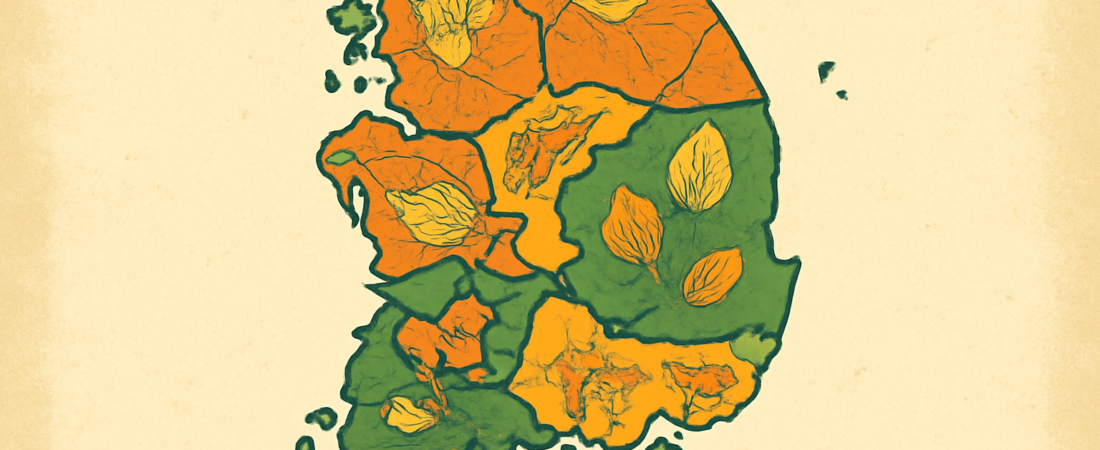
Korean autumn color moves from north to south and from high to low. Seoraksan peaks first, often in late September to mid October. Seoul and Gyeongju usually peak from late October to mid November. Jeju’s lowland maples come last. Check the Korea Forest Service foliage forecast for current dates.
Last checked: 2026-11-07
- How foliage moves across Korea
- What people in Korea check right now
- Region-by-region best weeks
- Comparison table: timing and costs
- Planning tips for visitors
- FAQ
- Sources
- Related guides
How foliage moves across Korea
Korea’s autumn color follows two simple rules. It travels from north to south. It also travels from high ground to low ground.
The first color appears on the highest peaks in the Taebaek Mountains. Seoraksan, in the northeast, is the classic example. The color then slides down the slopes and spreads toward the south and the coasts.
Cities come later than mountains. Seoul’s palaces and parks usually reach their best color weeks after the high peaks. Southern and island areas, like Jeju’s lowlands, often peak last.
Dates shift every year. A warm September can delay color. A sudden cold snap can speed it up. Heavy rain or strong wind can strip leaves early. Treat every date in this guide as a typical window, not a promise.
Koreans have a useful term for the leading edge of color. Newspapers and weather programs often talk about the “foliage line” moving south. Once you know this idea, the forecast maps make more sense.
What people in Korea check right now
Locals do not guess. They check forecasts and live reports, and you can do the same.
Here are the types of Korean data sources worth knowing:
- National foliage forecasts. The Korea Forest Service publishes an annual foliage outlook. It usually includes the expected start date of color and the expected peak for major mountains.
- National park updates. The Korea National Park Service posts foliage progress for each park. Some parks share a “percent colored” style update. Format varies, so read the notes on the page.
- Weather agency forecasts. The Korea Meteorological Administration shows temperature and rain. Cold nights and dry days tend to make stronger color.
- Tourism organization pages. The Korea Tourism Organization runs the official visitor site, Visit Korea. It lists seasonal events and regional highlights.
- Local city and park pages. Seoul, Gyeongju and Jeju each publish event and closure notices. These matter for palace hours and festival dates.
Search habits also tell a story. In October and November, Korean portals and map apps fill with foliage queries. People search for “단풍” (danpung, meaning autumn foliage) plus a place name. You can copy this trick. Type 단풍 and the place name into a Korean map app to see recent photos and reviews.
I cannot give you exact search numbers or rankings. Those change daily. Check the current trend pages on Korean portals if you want live figures.
Region-by-region best weeks
These are typical windows based on general patterns. Always confirm against the current forecast before booking.
Seoraksan and Gangwon (northeast)
Seoraksan is often the first big name to turn. Color usually starts on the highest ridges in late September. The strongest weeks tend to fall in early to mid October.
The peak areas get very crowded on weekends. Weekday mornings are calmer. The park also has cable car and trail options, so check current hours and weather closures on the national park site.
Naejangsan and Jeolla (southwest)
Naejangsan is famous for its maples along the entrance path. It usually peaks later than Seoraksan, often from late October into early November.
Because the color is lower on the slope, you can enjoy it without a hard hike. That makes it popular with day trippers and families.
Seoul and the capital area
Seoul’s color is easy to reach by subway. The royal palaces are favorites, including Gyeongbokgung, Changdeokgung and Deoksugung. Ginkgo trees turn yellow, while maples turn red.
Typical peak weeks run from late October to mid November. Ginkgo-lined streets can peak a little later than maples. Palace hours, closed days and ticket rules change, so check each palace’s official page before you go.
Gyeongju (southeast)
Gyeongju is a historic city with royal tombs, temples and old stone paths. Its color usually peaks from early to mid November. Many visitors like it because the history and the leaves share the same frame.
Entrance fees here are small. Major sites like Bulguksa Temple and Donggung Palace and Wolji Pond typically charge about $5 / 6,500 KRW per adult at the time of writing, though fees and ticket rules can change. Verify the current price on the official Gyeongju or site page.
Jeju Island
Jeju has a different rhythm. Hallasan’s upper slopes can color in October. Lowland maples and the famous silver grass fields often peak later, into November.
Flights and hotels can get pricey on holiday weekends. Check prices early and compare dates.
Comparison table: timing and costs
The table below gives typical windows and a rough sense of cost. Prices are examples, not guarantees. Confirm every figure on the official page before you travel.
| Region | Typical best weeks | Typical entry or fee example | Good for |
|---|---|---|---|
| Seoraksan (Gangwon) | Early to mid October | Park entry has been free in recent years; cable car about $11 / 15,000 KRW (verify) | Mountain views and hiking |
| Naejangsan (Jeolla) | Late October to early November | Park entry has been free in recent years; check shuttle or parking fees | Easy walks under maples |
| Seoul palaces | Late October to mid November | About $2 / 3,000 KRW for Gyeongbokgung (verify) | City trips with history |
| Gyeongju | Early to mid November | About $5 / 6,500 KRW per adult at major sites like Bulguksa Temple (verify) | Temples, tombs and slow walks |
| Jeju | Late October to mid November | Many nature areas free; some paid sites vary, so check each one | Coastal and island scenery |
Exchange rates move. The USD figures here are rough conversions. Use a current rate when you plan your budget.
Planning tips for visitors
Start with the forecast. Check the Korea Forest Service outlook a few weeks ahead. Check it again a few days before you travel.
Be flexible. If you have a fixed week, choose a region that matches it. A mid-October trip suits Gangwon. A mid-November trip suits Gyeongju or Seoul.
Go early. Popular spots fill by mid-morning on weekends. Korean holidays and long weekends can be extra busy. Book trains, buses and hotels early if your dates are fixed.
Pack for changing weather. Autumn mornings can be cold, and afternoons can be mild. Layers, comfortable shoes and a light rain jacket are sensible.
Use Korean map apps. Navigation apps made for Korea often work better for walking and transit than some global apps. Search for 단풍 with the place name to see recent photos.
Respect the sites. Stay on marked paths. Do not pick leaves or climb trees for photos. Follow the rules at palaces and temples.
FAQ
When is the best time to see autumn leaves in Korea?
It depends on the region. Mountains like Seoraksan peak first, often in early to mid October. Seoul and Gyeongju usually peak from late October to mid November. Check the official foliage forecast for the current year.
Which Korean data sources should I check for current foliage?
Use the Korea Forest Service for the national foliage outlook. Use the Korea National Park Service for park updates. Use the Korea Meteorological Administration for weather. Visit Korea, run by the Korea Tourism Organization, is useful for events and general planning.
Are the prices in this guide guaranteed?
No. Fees, hours and ticket rules can change. The examples here are rough and were checked only at a general level. Always confirm the current price on the official site of each park, palace or attraction.
Is Seoul a good choice for first-time visitors who want fall color?
Yes. Seoul is easy to reach and has palaces, parks and tree-lined streets. The best weeks usually fall in late October to mid November. Check each palace’s official page for hours and closed days.
What does 단풍 mean?
단풍 (danpung) means autumn foliage in Korean. It is useful in map apps and search engines. Add a place name to find recent photos and visitor reviews.
Sources
- Korea Forest Service (official foliage outlook): https://www.forest.go.kr/
- Korea National Park Service (park updates and fees): https://www.knps.or.kr/
- Korea Meteorological Administration (weather forecasts): https://www.kma.go.kr/
- Korea Tourism Organization, Visit Korea (official visitor site): https://english.visitkorea.or.kr/
- Korea Heritage Service (palace hours and ticket rules): https://www.khs.go.kr/


Leave a Reply