
Table of Contents
Card payment data from 120 million transactions shows AI subscription fee spending jumped 18% in just one year in Korea. Services like ChatGPT have quietly become a fixed monthly cost, sitting right alongside rent, utilities, and content subscriptions. For many office workers, that monthly fixed spending now tops 400,000 won.
As of this week, Korean social media can’t stop discussing a strange new money habit. People are canceling Netflix to save cash, but they refuse to touch their ChatGPT subscription. Why does one subscription feel disposable while the other feels essential?
AI Subscription Fees Are Reshaping Korean Budgets
A 38-year-old office worker known only as Mr. Lee recently reviewed his monthly card statement. He found something surprising: his AI subscription fee had quietly become untouchable. Netflix, on the other hand, felt like the first thing he could cut.
This pattern isn’t just one person’s story. Analysts reviewed 120 million card transactions and found AI-related payments grew 18% year over year. That growth outpaces almost every other subscription category tracked in the same period.
You might assume entertainment subscriptions would always come first in a budget. But the data tells a different story now. AI tools have moved from “nice to have” into “cannot work without it” territory for a growing number of Korean professionals.
Why Canceling Netflix Is Easy, But ChatGPT Isn’t
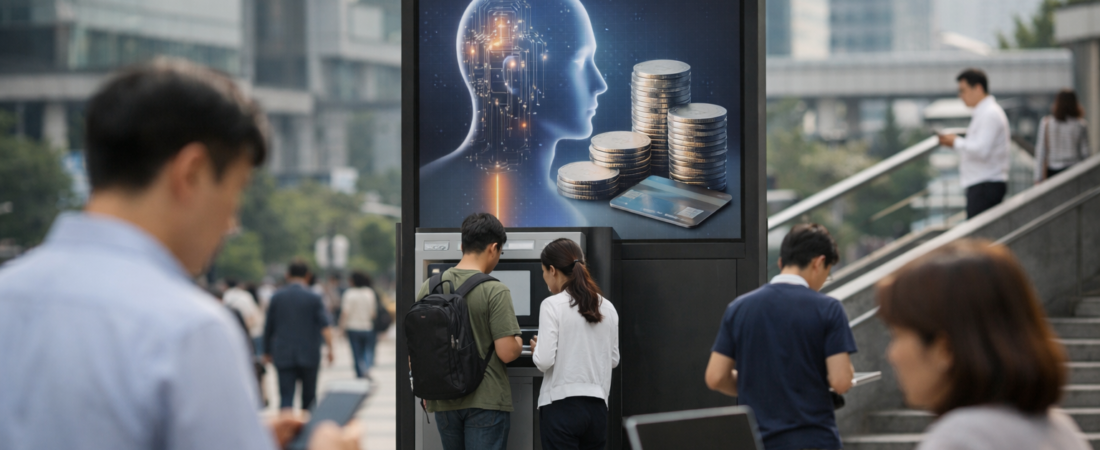
Think about how you actually use these two services. Netflix gives you entertainment during downtime. ChatGPT, for many workers, now handles emails, reports, research, and even coding tasks.
That difference changes how people value the AI subscription fee compared to other monthly charges. One is leisure spending. The other feels like a tool tied directly to income and productivity.
Koreans take their productivity tools seriously — perhaps more seriously than their weekend drama binges. This shift mirrors what happened years ago with smartphones, when a device once seen as a luxury became a basic requirement for daily life.
Workers increasingly describe their AI subscription fee as nonnegotiable, even when they’re actively cutting other costs. Is this really so different from how previous generations treated their first data plans? The pattern of “new technology becomes invisible fixed cost” keeps repeating itself in Korean consumer behavior.
The Rising Weight of Fixed Monthly Costs

Here’s where the numbers get harder to ignore. Many Korean households already juggle building management fees, utility bills, and multiple subscriptions each month. Add a rising AI subscription fee on top, and some workers now report fixed monthly spending above 400,000 won.
That’s a meaningful chunk of a typical monthly paycheck. And unlike groceries or transportation, these costs don’t shrink easily when income drops.
Financial researchers, cited by Maeil Business Newspaper, point to a broader trend: digital subscriptions overall are becoming structurally sticky. Once a service integrates into daily work habits, canceling it feels like losing a skill, not just losing an app.
So what happens when every household stacks five or six of these “essential” subscriptions? The math adds up quickly, and budgeting gets more complicated than it used to be.
What This Means for Korea’s Economy Going Forward
Rising AI subscription fee spending isn’t just a personal budgeting issue. It signals a shift in how Korean consumers value digital tools versus entertainment. That shift could reshape spending patterns across the entire subscription economy in the coming years.
There’s a real tension worth naming here. Household fixed costs are climbing, and that squeeze falls hardest on younger workers already stretched thin by rent and loan payments. At the same time, this trend also reflects something hopeful: Koreans adapting quickly, learning new tools, and investing in their own productivity rather than resisting change.
The challenge ahead is balance, not rejection of these tools. Companies offering AI subscription fee tiers could build more flexible pricing for individual users, not just enterprise clients. Consumers, meanwhile, are already getting smarter about auditing which subscriptions truly earn their place in a monthly budget.
For global readers watching Korea’s digital economy, this trend offers an early signal. Korea often adopts new technology habits faster than other markets, and those patterns tend to spread outward. If AI subscription fee spending keeps climbing here, similar shifts may soon appear in household budgets well beyond Korea.
What does your own subscription list look like these days? Would you cancel Netflix before giving up your AI tools?
AI-Generated Photorealistic Image — All people, scenes, and details in this image are entirely AI-generated and fictional. Not a real photograph of an actual person or event. 이 이미지는 AI로 생성된 가상 이미지입니다.



Leave a Reply