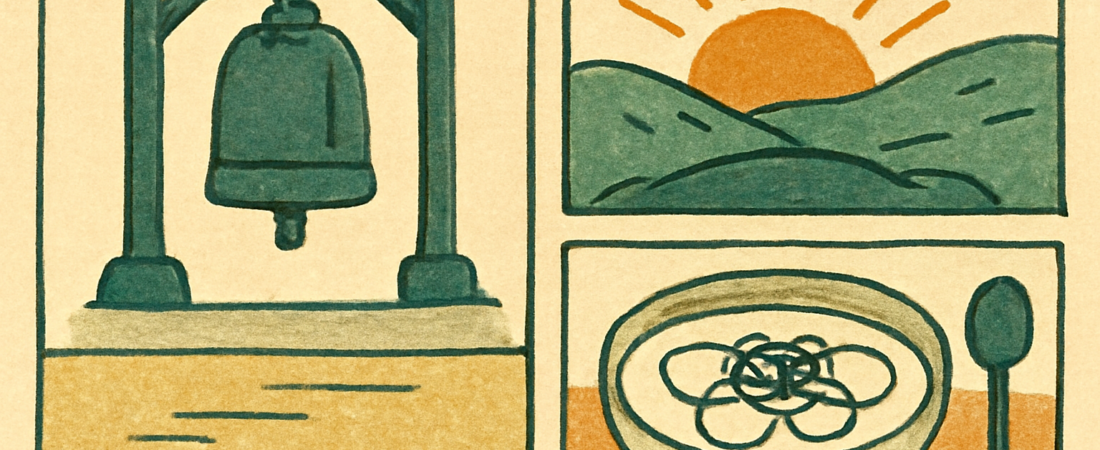
Koreans mark New Year twice: the solar date on January 1 and Seollal, the Lunar New Year. Many people watch sunrise at the coast or a mountain, hear the Bosingak bell ring in Seoul at midnight, and eat tteokguk, a rice cake soup, on Seollal morning. Check official sources for current crowds, prices and schedules.
Last checked: 2026-11-27
- Two New Years, two moods
- Bell ringing at midnight
- Chasing the first sunrise
- Tteokguk and the age-counting joke
- What people buy and where the data comes from
- FAQ
- Sources
- Related guides
Two New Years, two moods
Korea celebrates the new year twice. The two days feel very different.
January 1 is the solar new year. It is a public holiday, but it is mostly a day for friends, couples and countdown events. People go out at night. They watch fireworks, ring bells and climb hills at dawn.
Seollal is the Lunar New Year. It is the big family holiday. Its date changes each year, usually falling in late January or February. The holiday normally runs for three days, and the government sometimes adds a substitute day. Check the official public holiday calendar for the exact dates.
Think of it this way. The solar new year is for wishes and fresh starts. Seollal is for family, ancestors and food.
Many people take the first one lightly. Others take both seriously. A student might attend a countdown concert on December 31. The same student will still dress up and bow to grandparents on Seollal.
For readers abroad, this matters when you plan a trip. January 1 is lively but fairly easy to join as a visitor. Seollal can be quiet in cities, because many residents travel to their hometowns. Some shops and restaurants close for a few days, and transport is crowded.
Bell ringing at midnight
The best-known countdown ritual is the bell ringing at Bosingak in central Seoul. This is a pavilion that holds a large bell. At midnight on December 31, invited guests and public figures strike the bell 33 times. The ceremony is organized by the Seoul city government and is usually shown live on Korean television.
The number 33 has historical roots. It is linked to a traditional Buddhist belief and to the way the bell was once used to mark time. Details of the history are explained on official Seoul and cultural heritage pages, so check those if you want exact background.
Here is what to expect if you go.
- The area around Jonggak Station gets very crowded.
- Police and city staff often control the flow of people. Some roads close.
- Entry can be limited at peak moments. In some years the city has changed the format for safety reasons.
- It is cold. Late December in Seoul is often below freezing.
Seoul has changed how it runs this event in different years. Some years it was open to the public. Other years it was limited or held in a reduced form. Because of that, do not rely on old blog posts. Check the Seoul city government announcement for the current year.
Other cities hold their own events too. Busan, Jeju and several smaller towns host countdown shows and fireworks. Check each local government website for plans.
Many Koreans do not go out at all. They watch the ceremony on television at home, often with family. That is a very normal way to enjoy it. If crowds worry you, this is a fine plan for visitors too.
Chasing the first sunrise
The first sunrise of the year is a major tradition. Koreans call it haedoji, which means roughly “sunrise” or “sun rising.” People travel to the east coast, hills and mountains to see it. They make wishes and take photos.
The east coast is popular because the sun rises over the sea. Gangneung, Sokcho and Pohang are often mentioned. Homigot in Pohang and Ulsan’s Ganjeolgot are also well known for early sunrises on the mainland. Each local tourism office usually publishes its own event plans.
Seoul has options too. Many people climb Namsan, Achasan or Bukhansan. Others go to the Han River parks. These places get busy before dawn. Some mountain trails are closed or restricted, especially in bad weather. Check the Korea National Park Service for trail status.
A few practical tips for visitors:
- Sunrise times change by location. Check the Korea Astronomy and Space Science Institute for exact times.
- Book trains, buses and hotels early. East coast rooms can sell out.
- Dress in layers. Wind at the sea is very cold.
- Bring a hat, gloves and a small flashlight if you plan to hike in the dark.
- Have a backup plan. Clouds can hide the sun, and nobody can control the weather.
Some local governments hand out free hot drinks or rice cake soup at big viewing spots. This is not guaranteed every year. Treat it as a bonus, not a plan.
One cultural note. People often say a short wish out loud when the sun appears. Common wishes are for health, a good job, exam success or a happy family. If you join in, you will fit right in.
Tteokguk and the age-counting joke
Tteokguk is a clear soup with thin oval slices of rice cake. It is usually made with beef or anchovy broth. Common toppings are egg strips, sliced beef, seaweed and green onion. It is eaten on Seollal morning, and some families also eat it on January 1.
The white color stands for a clean, fresh start. The coin-like shape of the rice cake slices suggests wealth. Cooks and families may explain these meanings a little differently, so treat them as common beliefs, not strict rules.
There is also a famous saying. Eating a bowl of tteokguk means you get one year older. Koreans often say this as a joke. It comes from the traditional way of counting age, where everyone gained a year at the new year.
Korea changed its legal and administrative age system in June 2023. Official documents now use the international “year” age. Casual talk can still mix older habits with the new system. So the joke lives on, even though the age rules have moved on. If you are unsure which age applies in a form or service, check the official guidance from the relevant ministry.
Where can a visitor try tteokguk? Many Korean restaurants that serve everyday dishes, called bunsik or hansik places, offer it. Some stay open on January 1 but close for Seollal. Opening hours vary a lot. Check the restaurant’s own page or map listing before you go.
If you cook at home, tteokguk tteok is sold in supermarkets, often in the refrigerated or frozen section. Check the label for ingredients and allergens. The soup base often contains beef, egg, soy and wheat. Vegetarian versions exist, but you should ask or read labels carefully.
What people buy and where the data comes from
This is where numbers help. But I cannot give you exact current figures, because they change every year and I have not verified this season’s data. What I can do is tell you which Korean data sources to look at, and what each one measures.
These are the main types of Korean data sources you can use.
- National statistics office. Statistics Korea publishes household spending, consumer price and population data. Its portal is called KOSIS. You can search for holiday-related price items and monthly spending.
- Consumer price tracking. The Korea Consumer Agency publishes price information on daily goods. Around Seollal and Chuseok, it often shares reports on the cost of holiday food baskets. Check its site for the latest report.
- Agricultural price data. The Korea Agro-Fisheries and Food Trade Corporation, known as aT, shares prices for fruit, meat, fish and vegetables. These matter because holiday tables use many fresh items.
- Transport data. The Ministry of Land, Infrastructure and Transport, plus Korail and the Korea Expressway Corporation, publish holiday travel forecasts. These show how many people travel and which days are busiest.
- Tourism data. The Korea Tourism Organization shares visitor and domestic travel data.
Here is a simple way to read the data. Look at the month-on-month change, not only the total. Holiday prices often rise before Seollal. Then they settle. A single number without context can mislead you.
Here is a quick comparison of the three main ways Koreans spend the start of the year. Prices below are rough, typical ranges meant only to give you a feel. They are not official figures and change by place and season. Always check current prices.
| Activity | Typical vibe | Rough cost range (per person) | What to check first |
|---|---|---|---|
| Bell ringing at Bosingak (Seoul) | Crowded, festive, short | Free to watch; transport about $1-3 / 1,400-4,000 KRW | Seoul city announcement for the current format |
| Sunrise trip to the east coast | Early, cold, scenic | Train or bus about $20-50 / 27,000-68,000 KRW round trip; hotel varies widely | Sunrise time, transport booking, room availability |
| Tteokguk meal at a restaurant | Warm, simple, family-friendly | About $6-12 / 8,000-16,000 KRW per bowl | Restaurant hours and holiday closures |
| Home-cooked tteokguk | Cozy, traditional | About $5-10 / 7,000-13,500 KRW for a small batch of ingredients | Current supermarket prices and ingredient labels |
The exchange rate used here is roughly 1 USD to 1,350 KRW. This is only an estimate for easy comparison. Rates change daily, so check a current converter before you budget.
Also note what you will see in shops near Seollal. Gift sets are very common. Department stores and supermarkets sell boxed sets of fruit, ham, cooking oil, traditional sweets and health food. Prices run from affordable to very high. I will not quote a specific price, because it depends on the brand and year. For current numbers, check the store’s own website or the Korea Consumer Agency report.
Another thing to watch is the cash envelope tradition. On Seollal, children bow to elders and often receive money called sebaetdon. The amount varies a lot by family and age. There is no official rule. Do not assume a number.
FAQ
Is January 1 or Seollal the bigger holiday in Korea?
Seollal is the bigger family holiday. January 1 is a public holiday too, but it is more about countdowns and sunrise trips. Seollal usually brings long travel days and many closures. Check the official public holiday calendar for exact dates each year.
Can visitors attend the Bosingak bell ringing?
It depends on the year. Seoul has changed the format at times for safety and crowd reasons. Some years allow public viewing, and others limit access. Check the Seoul city government announcement before you plan your night.
Do I need to book anything for a sunrise trip?
Yes, book early if you can. East coast trains, buses and hotels can fill up fast around January 1. Local events and trail access also change. Check transport operators, local tourism offices and the Korea National Park Service for updates.
Is tteokguk suitable for vegetarians?
Not always. Traditional tteokguk often uses beef or anchovy broth, and toppings may include egg. Some places offer vegetarian versions, but it is not guaranteed. Ask the restaurant directly and check labels if you buy packaged versions.
Sources
These are official or primary sources. Use them to check current dates, prices and rules.
- Statistics Korea (KOSTAT) and KOSIS: https://kostat.go.kr
- Korea Consumer Agency: https://www.kca.go.kr
- Korea Agro-Fisheries and Food Trade Corporation (aT): https://www.at.or.kr
- Korea Tourism Organization (Visit Korea): https://english.visitkorea.or.kr
- Seoul Metropolitan Government: https://english.seoul.go.kr
- Korea National Park Service: https://www.knps.or.kr
- Korea Astronomy and Space Science Institute (KASI): https://www.kasi.re.kr
- Korail: https://www.letskorail.com
- Ministry of the Interior and Safety (public holiday information): https://www.mois.go.kr
Some of these sites have English pages and some are Korean only. A browser translation tool can help. Numbers in this article are general ranges, not official statistics.
Leave a Reply