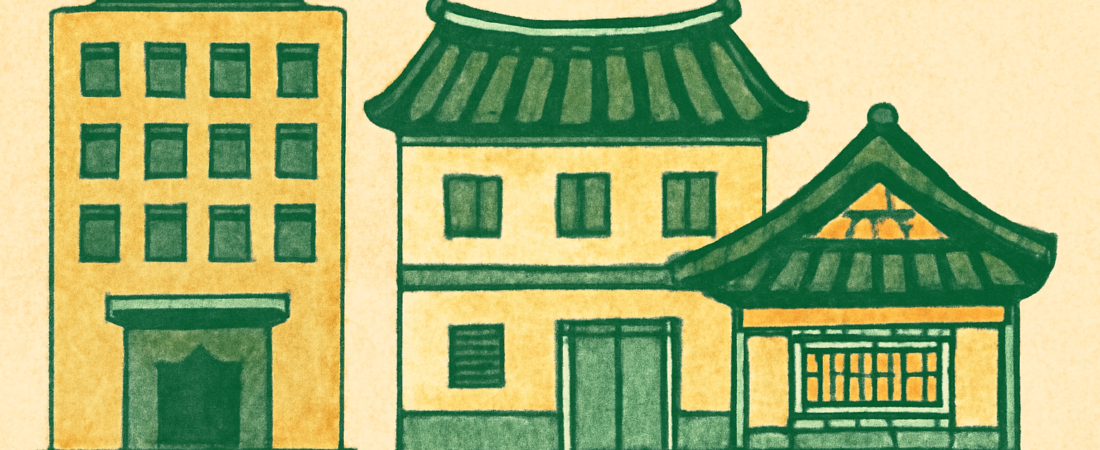
Hotels in Korea offer front desks, daily housekeeping and private bathrooms. Guesthouses are cheaper and social, with shared spaces and often shared bathrooms. Hanoks are traditional houses with floor bedding and ondol heating, so expect less soundproofing but more atmosphere. Prices vary widely by season and district, so check live rates before booking.
Last checked: 2026-11-17
- What the data shows about how people stay
- Hotels: what you get
- Guesthouses: what you get
- Hanok stays: what you get
- Side-by-side comparison
- How to choose for your trip
- FAQ
- Sources
- Related guides
What the data shows about how people stay
Lodging in Korea is tracked more closely than most travelers expect. Several official bodies publish numbers. You can use them to see how Korean and foreign travelers actually book.
The first source is the Korea Tourism Organization (KTO). It publishes visitor surveys and its Korea Tourism Data Lab. These show which regions and neighborhoods are busy, and what visitors say about their trips.
The second source is the Ministry of Culture, Sports and Tourism. It sets the rules for hotel grades and tourist lodging categories. It also publishes yearly tourism statistics.
The third source is Statistics Korea (KOSTAT), which runs the national statistics portal. It carries household and accommodation-industry data.
I am not quoting exact percentages or ranking numbers here. They change every quarter, and I cannot verify the latest figures from here. Open the sources listed below and filter for the most recent release.
Still, some patterns are well known and stable.
- Seoul concentrates most foreign visitors, especially areas like Myeongdong, Hongdae and Gangnam.
- Domestic travelers lean toward pensions, condos and resorts for family or group trips.
- Foreign solo travelers and young groups often pick guesthouses or small hotels near subway lines.
- Hanok stays are a small but popular niche, clustered in Jeonju, Gyeongju and Seoul’s Bukchon and Ikseon-dong areas.
One practical tip: the legal category matters. In Korea, “hotel,” “guesthouse” and “hanok” can be official lodging types. Each has its own registration. A registered business is easier to verify if something goes wrong.
Hotels: what you get
Korean hotels range from large international chains to small “business hotels.” Most have a front desk and a private bathroom. Housekeeping is standard.
Here is what is typical.
- Rooms: Western-style beds, a desk, a TV and a kettle. Some budget rooms are compact, so check the room size on the booking page.
- Bathrooms: Private, with a shower. Bathtubs are not guaranteed in cheaper rooms.
- Amenities: Toothbrush and toiletries are often provided. Policies have been shifting toward less single-use plastic, so bring your own to be safe.
- Languages: Larger hotels usually have English-speaking staff. Smaller ones may rely on a translation app.
- Extras: Luggage storage, breakfast options and airport transport help are common.
Check-in is usually mid-afternoon and check-out late morning. Exact times differ by property, so confirm them in your booking.
Many hotels will ask for your passport at check-in. This is normal. Keep it handy.
Hotels suit travelers who value predictability, safety and service. They also work well for late arrivals, since a staffed desk makes that easier.
Guesthouses: what you get
Korean guesthouses are budget-friendly stays, often run by small owners. Many welcome foreign travelers and have a friendly, social feel.
Typical features include the following.
- Room types: Dorm beds, private rooms or both. Always check which one you are booking.
- Bathrooms: Often shared in dorms. Some private rooms include a bathroom, but not all.
- Shared spaces: A kitchen, a lounge or a small common area. Some offer simple breakfast.
- Staff: Often one owner or a small team. They are good sources of local tips.
- Atmosphere: Quieter at night in some places, livelier in others. Read recent reviews about noise.
Women traveling alone often look at two things: female-only dorms and clear lock policies. Many guesthouses offer both. Message the host before booking if you want to confirm.
Be aware that “guesthouse” can mean different things. Some are polished boutique stays. Others are basic. Photos and recent reviews tell you more than the name does.
Guesthouses suit travelers who want lower prices, local tips and easy conversation. They are less ideal if you need total privacy or a quiet room for work.
Hanok stays: what you get
A hanok is a traditional Korean house. Many are wood-framed, with tiled roofs and a small courtyard. Some are centuries old. Others are modern rebuilds that follow the same style.
Staying in one feels different from a hotel. Here is what to expect.
- Floor bedding: Many hanoks use a yo, a thin sleeping mat on the floor. Some offer beds as well. Check before you book if you have back concerns.
- Ondol heating: A traditional floor-heating system. In winter, the floor can feel warm and cozy. In summer, rooms may feel warmer, so look for air conditioning.
- Sound: Wooden walls and sliding doors let sound travel. Light sleepers should read reviews carefully.
- Bathrooms: Some hanoks have modern private bathrooms. Others have shared or separate ones. Confirm this in the listing.
- Setting: A courtyard, tea space or traditional breakfast may be part of the stay. Not every hanok offers these.
Rules can be stricter than in a hotel. Shoes come off at the door. Some hosts ask guests to keep voices low after a set hour. Follow house rules, since many hanoks sit in residential neighborhoods.
Hanok stays suit travelers who want atmosphere and a cultural experience. They are a weaker fit for anyone who needs strong soundproofing, step-free access or a very modern bathroom.
Side-by-side comparison
Prices below are rough ranges for planning only. They shift with the season, weekday, district and local events. Exchange rates also move, so the USD figures are approximate. Always check live prices on the booking page before you decide.
| Feature | Hotel | Guesthouse | Hanok stay |
|---|---|---|---|
| Typical nightly range (verify live) | About $60-$250 / 80,000-330,000 KRW, higher for luxury | About $20-$80 / 26,000-105,000 KRW | About $80-$300 / 105,000-400,000 KRW |
| Bed type | Western bed | Bunk, bed or floor mat | Often floor mat; some beds |
| Bathroom | Private | Shared or private | Varies; check listing |
| Front desk | Usually staffed | Owner or small staff | Host, sometimes by appointment |
| Soundproofing | Generally good | Varies widely | Often limited |
| English support | Common in larger hotels | Often friendly, varies | Varies; confirm ahead |
| Social atmosphere | Low | High | Low to medium |
| Best for | Comfort, late arrivals, work | Budget, solo travel, meeting people | Culture, couples, a memorable stay |
Treat these ranges as a starting guide. Peak seasons, such as cherry blossom time and autumn foliage, can push rates up. Weekends in popular districts often cost more than weekdays.
How to choose for your trip
Start with what you need most. Then match it to the stay type.
If you want comfort and ease, pick a hotel. You get a private bathroom, a staffed desk and fewer surprises. This helps on a short trip.
If you want to save money, look at guesthouses. Even a private room can cost much less than a hotel. The trade-off is less privacy and sometimes less soundproofing.
If you want a cultural experience, try one night in a hanok. Many travelers mix stay types. They book a hotel for most nights, then add one hanok night for the experience.
A few checks apply to every type.
- Read the most recent reviews, not just the overall score.
- Check the exact location relative to the nearest subway station.
- Look at the cancellation policy before paying.
- Confirm check-in hours if you arrive late at night.
- Look at luggage storage, especially if your flight leaves late.
For hills and stairs, note that many hanok neighborhoods, like parts of Bukchon, are steep. Rolling a large suitcase there can be hard. Ask the host about the best drop-off point.
Also check how the stay handles safety and registration. Choose properties that list a clear address, a contact method and a verifiable business listing. If a deal looks too cheap or vague, be cautious.
Finally, remember that rules and prices change. Official tourism sites and the property’s own page are the best final check.
FAQ
Is a hanok stay comfortable for people used to Western beds?
It can be, but it differs. Many hanoks use floor bedding with a thin mat. Some offer beds or extra padding. Check the listing or message the host before booking if comfort matters.
Are guesthouses safe for solo women travelers?
Many solo women stay in guesthouses without trouble. Look for female-only dorms, lockable rooms and recent positive reviews. Contact the host in advance to confirm the setup. Judge each property individually.
Do I need to speak Korean to book these stays?
No. Major booking platforms work in English, and many hotels and guesthouses have English-speaking staff. Smaller hanoks may rely more on translation apps. Confirm check-in details in writing before you arrive.
Which option is cheapest in Korea?
Guesthouses, especially dorm beds, are usually the cheapest. Prices still vary by season and location. Compare live rates, since a small hotel can sometimes match a private guesthouse room.
Where can I check current lodging data and rules?
Use the Korea Tourism Organization and the Ministry of Culture, Sports and Tourism for official tourism information. Statistics Korea publishes national data. Always check the latest releases, since numbers update regularly.
Sources
- Korea Tourism Organization (KTO), official site: https://english.visitkorea.or.kr
- Korea Tourism Data Lab (KTO): https://datalab.visitkorea.or.kr
- Ministry of Culture, Sports and Tourism: https://www.mcst.go.kr
- Statistics Korea (KOSTAT): https://kostat.go.kr
Homepage-level links are used because deep pages change often. Search each site for accommodation, tourism statistics and lodging category rules.


Leave a Reply