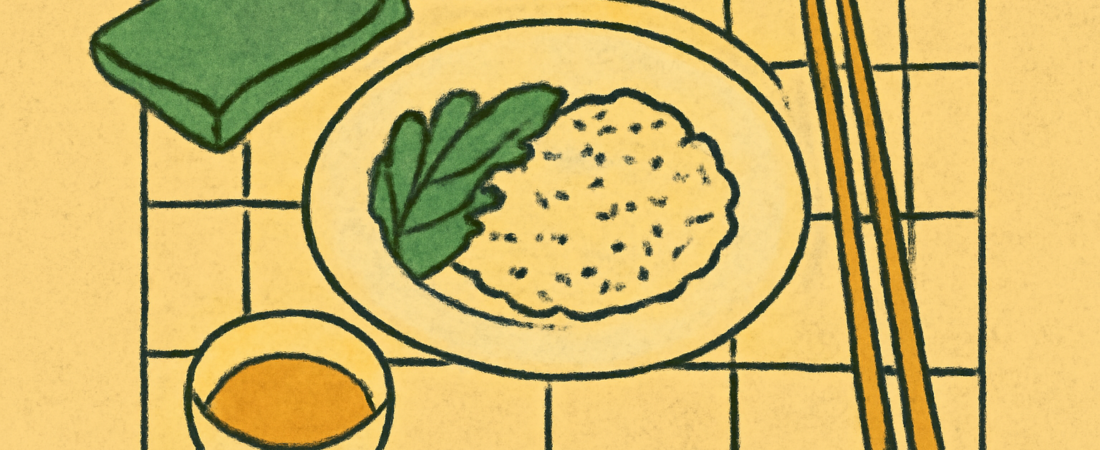
Koreans say “jal meokgesseumnida” (잘 먹겠습니다) before a meal, meaning “I will eat well.” After eating, they say “jal meogeosseumnida” (잘 먹었습니다), meaning “I ate well.” Both thank the host or the person paying. In casual speech, friends often shorten them to “jal meokgesseoyo” and “jal meogeosseoyo.”
Last checked: 2026-11-28
- Before the meal: jal meokgesseumnida
- After the meal: jal meogeosseumnida
- Choosing the right level of politeness
- What the data says about table manners
- Comparison of meal phrases
Before the meal: jal meokgesseumnida
“Jal meokgesseumnida” is said just before the first bite. The word “jal” means “well.” The verb “meokda” means “to eat.”
The ending “-gesseumnida” shows a future or intention. So the phrase means “I will eat well.”
Most people say it to the host, the cook or whoever is paying. At a restaurant, you may say it to your group. A quiet nod works too.
Many learners hear it as “thank you for the meal.” That is a useful way to remember it. The literal meaning is a little different.
After the meal: jal meogeosseumnida
When you finish, say “jal meogeosseumnida.” The ending “-eosseumnida” is past tense. It means “I ate well.”
This is your thanks for the food and the effort behind it. If someone treated you, say it clearly and add a smile. Many people also say “gamsahamnida” (thank you).
If you paid, the other person will usually say it to you. A simple “cheonmaneyo” (you’re welcome) is a polite reply. Say it softly and without fuss.
Some cooks and hosts reply “mani deuseyo” (please eat a lot) before the meal. You can answer that with “jal meokgesseumnida.”
Choosing the right level of politeness
Korean has speech levels. The same idea changes shape depending on who you speak to.
- Formal polite: jal meokgesseumnida / jal meogeosseumnida. Safe with elders, bosses and strangers.
- Standard polite: jal meokgesseoyo / jal meogeosseoyo. Friendly and common in daily life.
- Casual: jal meokgesseo / jal meogeosseo. Only for close friends or younger people.
As a visitor, the formal polite form is the safest choice. You will rarely offend anyone by being too polite.
Pronunciation tip: “meokgesseumnida” sounds like “mok-geh-ssum-ni-da.” The “k” sound is soft. Listen to a native speaker and repeat slowly.
What the data says about table manners
I cannot give you exact numbers here, and I will not guess. But you can look at real data yourself. The type of source to check is a national language-use survey or a public-opinion survey on dining etiquette.
The National Institute of Korean Language (국립국어원) runs language surveys and publishes research on everyday expressions. Its online dictionary also lists the verb forms used in these phrases. Statistics Korea (KOSTAT) publishes social surveys on lifestyle and eating habits.
Search those sites for terms such as “식사 예절” (meal etiquette) or “언어 예절” (language etiquette). Survey wording and results change by year. Please check the current figures on the official sites before you quote them.
What you can see in daily life needs no survey. In many Korean restaurants, offices and family homes, people say these phrases routinely. They are habits, not strict rules. Habits also vary by age, region and setting.
Comparison of meal phrases
| Phrase | Korean | When to say it | Politeness |
|---|---|---|---|
| Jal meokgesseumnida | 잘 먹겠습니다 | Before eating | Formal polite |
| Jal meogeosseumnida | 잘 먹었습니다 | After eating | Formal polite |
| Jal meokgesseoyo | 잘 먹겠어요 | Before eating | Standard polite |
| Jal meogeosseoyo | 잘 먹었어요 | After eating | Standard polite |
| Mani deuseyo | 많이 드세요 | Host says this to guests | Polite |
| Gamsahamnida | 감사합니다 | Thanks, any time | Formal polite |
None of these phrases involves a price. A typical casual meal in Korea varies widely by city and restaurant type. Check current menu prices on the restaurant’s own listing or sign.
FAQ
Do I have to say it at every meal?
No. It is a polite habit, not a law. It matters most when someone cooked for you, hosted you or paid. Among close friends, many people skip it or say it casually.
Is jal meokgesseumnida the same as “bon appétit”?
Not exactly. “Bon appétit” is said to the other person. The Korean phrase is said by the eater. It thanks the host and expresses your intention to enjoy the food.
What do I say if I am the one who cooked or paid?
You can say “mani deuseyo,” meaning “please eat a lot.” After the meal, reply to thanks with “cheonmaneyo.” Tone matters more than perfect grammar here.
Can tourists use these phrases?
Yes. Staff and hosts usually appreciate the effort. Use the formal polite forms to be safe. A small bow or smile adds warmth.
Where can I check current usage and spelling?
Use the official dictionary of the National Institute of Korean Language. It is the standard reference for spelling and meaning. Check it for the latest entries.
Sources
- National Institute of Korean Language (국립국어원): https://www.korean.go.kr/
- Statistics Korea, KOSTAT (통계청): https://kostat.go.kr/

Leave a Reply