Table of Contents
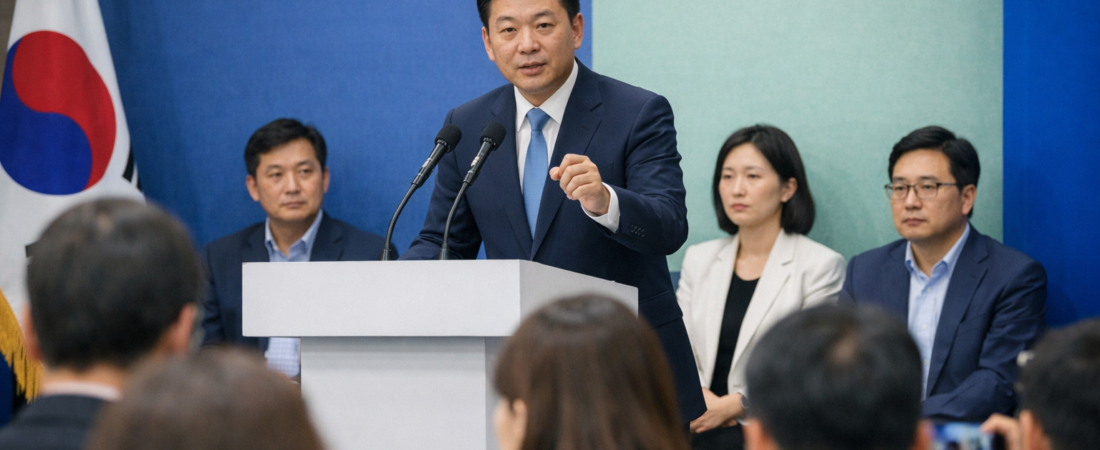
Can a single election reshape an entire political party? That question hangs over the Democratic Party of Korea right now. Its upcoming National Convention will decide not just a leader, but which faction controls the party’s direction for years to come.
Three heavyweight candidates are fighting for the chairmanship. Behind them, entire factions are mobilizing votes like never before. This isn’t just an internal party matter — it’s a preview of Korea’s political future.
Why the Democratic Party’s Leadership Race Matters
Every few years, the Democratic Party holds a National Convention to choose its top leadership. This time, the stakes feel higher than usual. Whoever wins won’t just lead a party — they’ll shape strategy heading into future elections.
Why does this matter beyond party insiders? Because the Democratic Party currently holds significant power in the National Assembly. Its internal direction affects legislation, coalition strategy, and how Korea’s ruling structure evolves.
Think of it like choosing a ship’s captain right before a long voyage. The captain doesn’t just steer — they decide the crew, the course, and who gets credit if the ship arrives safely. That’s essentially what’s happening inside the Democratic Party today.
Party members aren’t just picking a chairperson. They’re also selecting Supreme Council members, the smaller leadership group that shapes daily decisions. This dual structure means factions want more than one seat — they want the whole table.
Three Candidates, Three Factions
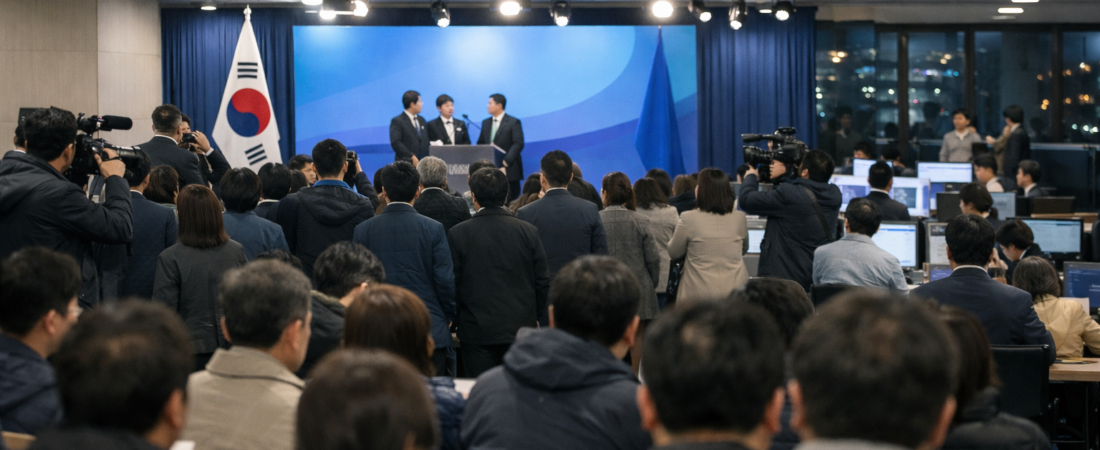
Three names dominate the race: Jung Chung-rae, Kim Min-seok, and Song Young-gil. Each represents a distinct faction within the Democratic Party, and each is targeting a different base of loyal supporters.
Jung Chung-rae draws strength from what insiders call the “pro-Jung” faction. His camp emphasizes continuity with his own political brand, built over years of vocal, combative leadership inside the party.
Kim Min-seok represents the “pro-Lee Jae-myung” faction, often shortened to “pro-Myung” in Korean political shorthand. This group aligns closely with the party’s most influential current figure, giving Kim significant institutional backing.
Song Young-gil, meanwhile, is courting the Honam region — the southwestern area long considered the historic heartland of the Democratic Party. Honam voters have shaped party leadership races for decades, and Song is betting that regional loyalty still carries weight.
So what happens when three strong factions collide in one race? Things get personal, fast. Each camp has been making pointed remarks aimed at rival factions, not just promoting their own candidate.
This isn’t simple campaigning — it’s strategic positioning. Every public statement doubles as a warning shot to competing factions inside the same party.
The “Birthday Vote” Strategy and Organized Mobilization
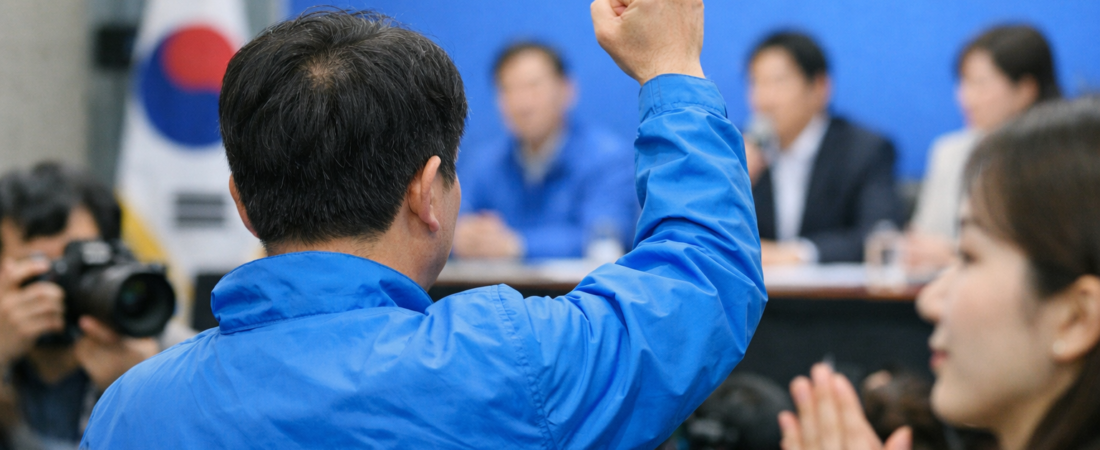
Here’s where the race gets interesting — and a little unusual. Reports describe a tactic nicknamed the “birthday vote,” where supporters organize voting efforts timed around a candidate’s birthday to boost turnout and visibility.
Why would a birthday matter in a leadership election? It doesn’t, literally — but symbolically, it creates a rallying moment. Factions use these moments to mobilize members, generate social media buzz, and signal strength to rivals.
This kind of organized push isn’t new to Korean party politics, but its intensity this cycle stands out. Factions aren’t just backing a chairperson candidate anymore.
They’re also trying to fill Supreme Council seats with allies from the same camp. If one faction wins the top job and also controls the council, opposing voices inside the Democratic Party could get squeezed out entirely.
Is that healthy for internal party democracy? That’s a fair question worth asking. When one faction sweeps every leadership position, dissenting opinions have fewer places to be heard.
Critics argue this concentration of power risks turning the party into an echo chamber. Supporters counter that unified leadership means faster decision-making and less internal gridlock.
Either way, party members and outside observers are watching closely. For more background on Korea’s evolving party structures, resources like Yonhap News Agency offer useful context on how these dynamics have developed over time.
What This Means for the Democratic Party’s Future
Let’s zoom out for a moment. Why should anyone outside Korea care about an internal party leadership vote? Because the Democratic Party isn’t just any party — it’s one of the two dominant forces shaping Korean democracy.
Whoever emerges as chairperson will influence how the party negotiates with the ruling administration. They’ll also shape candidate selection for future National Assembly and local elections.
Factional dominance today often becomes electoral strategy tomorrow. If the pro-Lee Jae-myung faction secures both the chairmanship and the Supreme Council, expect policies closely aligned with his political vision to dominate party messaging.
If Jung Chung-rae’s camp prevails instead, the party’s public tone may lean more combative and independent. A Song Young-gil victory could signal renewed emphasis on regional coalition-building, particularly around Honam voters who have historically anchored the party’s base.
History offers a useful lesson here. Korean political parties have shifted direction dramatically based on single leadership races before, sometimes triggering splits or new party formations entirely.
The Democratic Party itself emerged through mergers and rebrandings over past decades, proof that internal power struggles can reshape entire political identities. This convention could be another turning point in that long history.
What should you watch for next? Keep an eye on how Supreme Council seats get distributed, not just the chairperson result. A single-faction sweep would signal a more centralized, less pluralistic Democratic Party moving forward.
A more balanced outcome, spread across factions, would suggest internal checks remain strong. Either path will shape how the Democratic Party governs, campaigns, and represents its base in coming years.
Korean politics often moves in cycles of consolidation and fragmentation. This leadership race feels like an early signal of which direction the pendulum swings next.
So here’s the real question worth sitting with: does concentrated faction power make a party stronger, or does it just delay an eventual internal reckoning? The Democratic Party’s next chapter may answer that for us.
What do you think about the Democratic Party’s approach to internal leadership competition?
AI-Generated Photorealistic Image — All people, scenes, and details in this image are entirely AI-generated and fictional. Not a real photograph of an actual person or event. 이 이미지는 AI로 생성된 가상 이미지입니다.


Leave a Reply