Table of Contents
Inside the Democratic Party National Convention Showdown
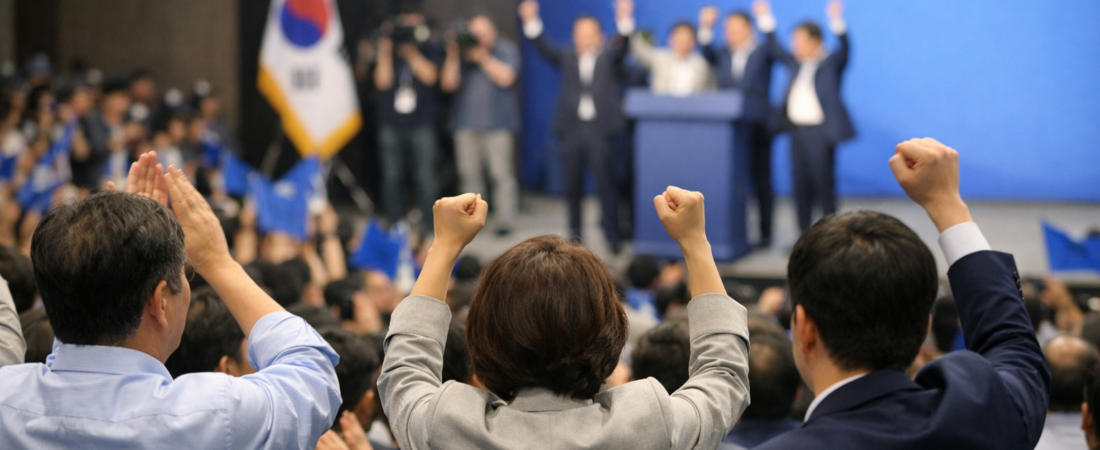
Can a religious group really tip the scales of a political party’s leadership race? That question is exactly what’s rattling the Democratic Party National Convention this season. The main race for party leadership has just been finalized, and it’s already messy.
Two rival camps are now facing off in the open. On one side stands the pro-Lee Jae-myung faction, loyal to the party’s most powerful figure. On the other side stands a rival bloc built around lawmaker Jeong Cheong-rae, often called the pro-Jeong faction.
This kind of factional split isn’t new in Korean party politics. But the timing here matters. The Democratic Party National Convention arrives at a moment when public trust in party institutions is already fragile.
Every internal election shapes who leads the party heading into future national votes. That’s why this particular convention has drawn so much attention. It’s not just about picking a chairperson — it’s about who controls the party’s direction for years to come.
Pro-Lee Jae-myung vs. Pro-Jeong Cheong-rae: A Factional Battle
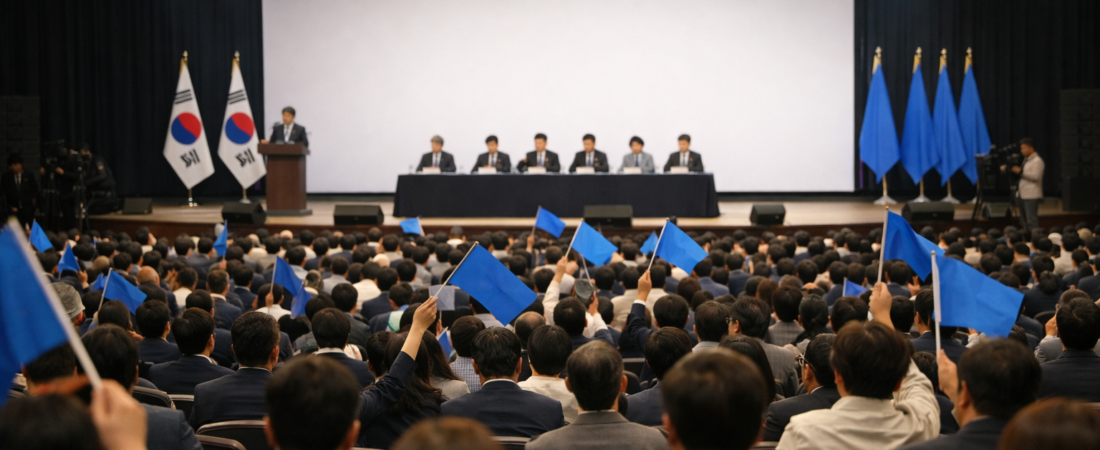
Why do factions matter so much in Korean party politics? Because in Korea, a party leader controls candidate nominations, campaign funding, and organizational power. Winning the top seat at the Democratic Party National Convention means winning influence over the entire party machine.
The pro-Lee Jae-myung faction represents the party’s dominant wing. Lee Jae-myung remains the single most influential figure in the Democratic Party of Korea today. His supporters control much of the party’s grassroots network and hold significant sway among sitting lawmakers.
The rival camp, built around Jeong Cheong-rae, positions itself as a check on that dominance. Supporters argue the party needs more internal balance. They worry that one faction holding too much power could weaken the party’s long-term credibility.
This tension isn’t just personal rivalry — it reflects a deeper structural question. Should one leader’s network control the party’s future, or should power stay distributed among competing voices? The Democratic Party National Convention has become the stage where this debate plays out publicly.
Factional politics in Korea often trace back decades, to the era when party leaders built loyalty through personal networks rather than formal institutions. That history still shapes how modern conventions unfold. You can see echoes of past leadership battles within the Democratic Party of Korea in this very race.
What makes this year’s convention different, though, is how openly the conflict has spilled into public view. Instead of quiet backroom negotiations, both camps are trading accusations in front of cameras. That shift alone tells you how high the stakes have become.
The Sincheonji Controversy Shaking the Convention
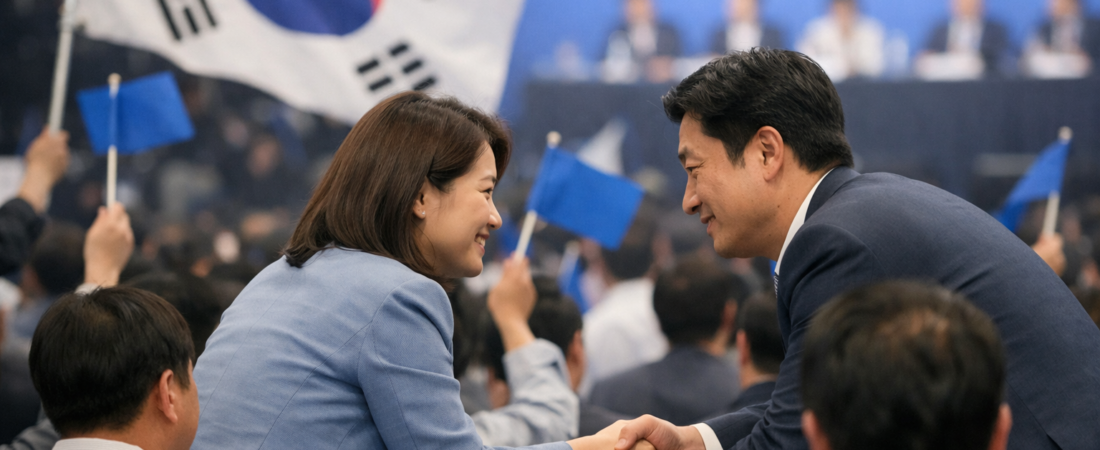
Here’s where things get genuinely strange. Reports have surfaced alleging that members of Sincheonji, a controversial religious movement, joined the Democratic Party of Korea in unusually large numbers. Both factions are now accusing each other of benefiting from this alleged mass enrollment.
Why would this matter for an internal party election? In Korea, new party members can vote in leadership races almost immediately after joining. If thousands of new members join right before a vote, they can meaningfully shift the outcome.
That’s exactly the concern driving this controversy. Some party officials suspect that Sincheonji members enrolled specifically to influence the Democratic Party National Convention results. Others argue the allegations are exaggerated, used as political ammunition against rival factions.
The joint investigation task force of prosecutors and police has now stepped into the situation. Officials confirmed they’re examining whether some Sincheonji members joined the party under coordinated instructions. They’re also investigating whether this activity was designed to interfere with the internal convention vote.
This isn’t the first time Sincheonji has drawn government scrutiny in Korea. The group became a household name during the early COVID-19 outbreak, when a cluster linked to its Daegu congregation triggered nationwide public health concern. That history means any new controversy involving Sincheonji tends to attract instant public attention.
For readers outside Korea, this might sound unusual. But religious organizations engaging in coordinated political activity isn’t unheard of globally. What makes the Korean case notable is how quickly it became a partisan weapon inside the Democratic Party National Convention itself.
According to reporting from Yonhap News Agency, both major factions have publicly demanded transparency about the alleged enrollment pattern. Neither side wants to appear responsible for benefiting from it. That mutual finger-pointing has only intensified public curiosity about what investigators will ultimately find.
If the investigation confirms coordinated interference, the implications go beyond this one convention. It would raise serious questions about how easily outside groups can influence internal party democracy in Korea. That’s a concern lawmakers from both factions should probably take seriously, regardless of who benefits politically.
What Comes Next for Korean Politics
So where does this leave the Democratic Party of Korea? The party now faces a credibility test at exactly the wrong moment. Internal division combined with an active criminal investigation is not a good look heading into any election cycle.
Party leadership races are supposed to demonstrate internal democracy in action. Instead, this Democratic Party National Convention risks becoming a symbol of institutional vulnerability. Voters watching from outside may reasonably ask whether the party can manage its own house before asking to manage the country.
Both factions now face a strategic choice. They can keep attacking each other over the Sincheonji allegations, deepening public distrust. Or they can push for a transparent, fully cooperative investigation that restores confidence in the process.
History suggests Korean parties often choose the first path before eventually being forced into the second. Public pressure tends to build until party leaders have no choice but to address controversies directly. The coming weeks will show which path the Democratic Party of Korea chooses this time.
There’s also a broader lesson here about party membership rules. Should Korea’s political parties tighten how quickly new members gain voting rights? That question will likely resurface in policy discussions long after this particular convention ends.
For global observers, this story offers a useful window into how democratic institutions function under pressure. Party conventions aren’t just ceremonial events — they’re contested battlegrounds where power, loyalty, and public trust collide. Korea’s Democratic Party National Convention this year captures that reality in sharp detail.
What do you think — should outside religious or civic groups be allowed to influence internal party elections through mass membership drives?
AI-Generated Photorealistic Image — All people, scenes, and details in this image are entirely AI-generated and fictional. Not a real photograph of an actual person or event. 이 이미지는 AI로 생성된 가상 이미지입니다.
Leave a Reply