Table of Contents
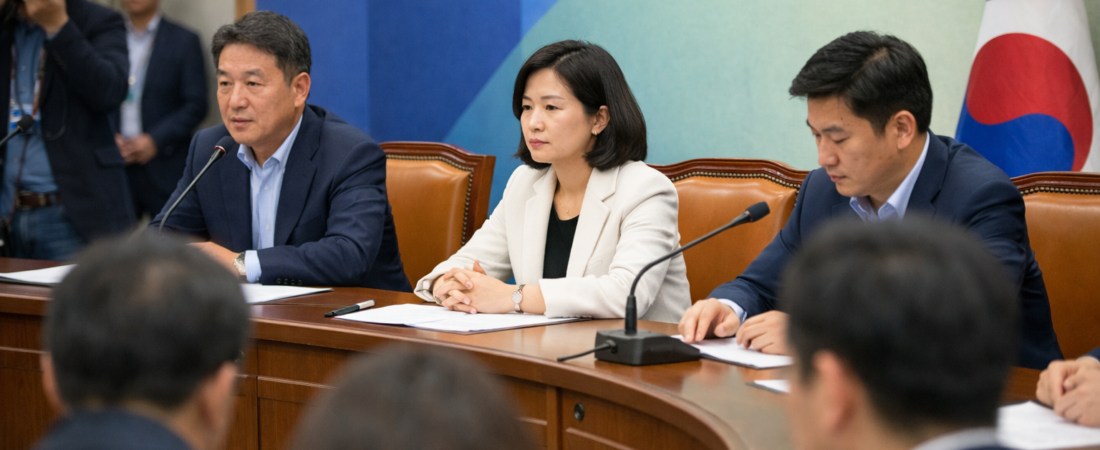
Ever wonder what happens when a political party turns its energy inward? That’s exactly what’s unfolding inside the Democratic Party of Korea right now. As the party gears up for its national convention, internal rivalries are heating up fast.
Three candidates. Two rival camps. One high-stakes race for leadership. The battle for control of the Democratic Party of Korea has become a window into how Korean politics really works behind closed doors.
What’s Happening Inside the Democratic Party of Korea
The Democratic Party of Korea is preparing for a major event: its national convention. This gathering will decide who leads the party next. But leadership races rarely stay simple, do they?
Party members will choose a new party leader and several Supreme Council members. These roles matter because they shape party strategy heading into future elections. Whoever wins gains enormous influence over policy direction and candidate selection.
This time, the competition has split along factional lines. Supporters aligned with different camps are pushing hard for their preferred candidates. Some groups have even started coordinating votes for Supreme Council seats, not just the top leadership post.
Why does this matter to outside observers? Because the Democratic Party of Korea currently holds significant power in Korean politics. Whoever controls this party effectively shapes national policy debates for years to come.
Meet the Key Players: Jung, Kim, and Song
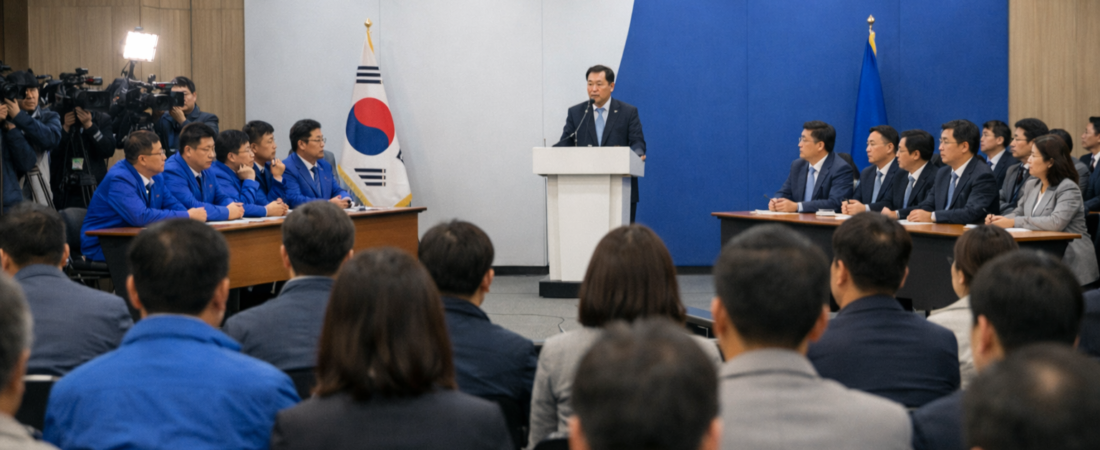
Three names dominate this race: Jung Cheong-rae, Kim Min-seok, and Song Young-gil. Each candidate represents a different vision for the party’s future. Each also carries the weight of a specific support base.
Jung Cheong-rae draws strength from his own loyal following within the party. His supporters have rallied hard, framing him as a steady hand for turbulent times. Rhetoric from his camp often targets rival factions directly, a common tactic in Korean party politics.
Kim Min-seok and Song Young-gil, meanwhile, lean on their connections to the pro-Lee Jae-myung wing of the party. This faction remains one of the most influential blocs inside the Democratic Party of Korea today. Their backing can make or break a candidate’s chances.
Here’s an interesting wrinkle: it’s not just about the top leader anymore. Supporters are also fighting over Supreme Council seats. Some groups openly encourage members to vote as a bloc, ensuring their entire slate wins together rather than splitting votes across camps.
Does this remind you of any political system you know? Factional coordination isn’t unique to Korea, but it plays out with particular intensity here. Understanding these dynamics helps explain why Korean party conventions can feel more like battles than elections.
Why Factional Battles Define the Democratic Party of Korea
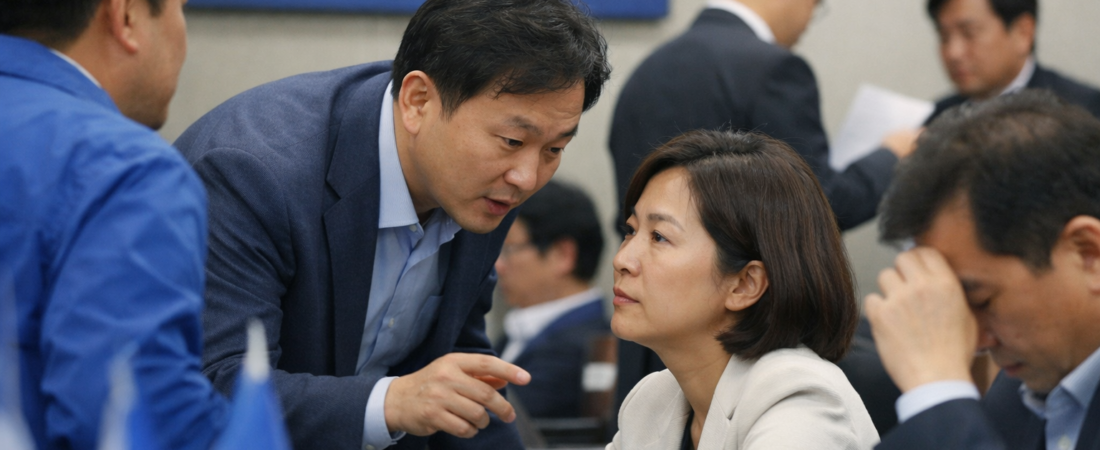
Factional politics aren’t new to Korea. In fact, they trace back decades, rooted in personal loyalty networks that formed around specific political figures. The Democratic Party of Korea has long struggled with this internal dynamic.
Think about it this way: Korean political parties often function less like unified organizations and more like coalitions. Different factions coexist under one party name, but they compete fiercely for control. This creates constant tension between unity and internal rivalry.
The current race between Jung Cheong-rae, Kim Min-seok, and Song Young-gil reflects this exact pattern. Pro-Jung supporters rally around a candidate seen as independent from other power centers. Pro-Lee Jae-myung supporters, by contrast, prioritize loyalty to the party’s most dominant recent leader.
This isn’t just personality conflict, though. It’s about control over resources, candidate nominations, and policy direction. Whoever wins this convention decides who runs in future elections under the Democratic Party of Korea banner.
Korean media outlets have covered this competition extensively, and you can read more detailed coverage through sources like Yonhap News Agency. Understanding this context helps global readers see why Korean party conventions attract so much domestic attention. It’s rarely just about one election.
So why should this matter beyond Korea’s borders? Political scientists often study factional systems to understand how democracies manage internal disagreement. Korea offers a compelling case study, especially given how quickly power can shift between camps within a single party.
What This Power Struggle Means for Korea’s Future
Let’s zoom out for a moment. Why should anyone outside Korea care about an internal party leadership race? The answer lies in what this party actually controls.
The Democratic Party of Korea currently holds substantial influence over the National Assembly. Its decisions ripple into economic policy, foreign relations, and domestic reforms. A change in leadership can shift priorities almost overnight.
Consider the stakes here. If Jung Cheong-rae wins, he may pursue a more independent path, less tied to any single power broker. If Kim Min-seok or Song Young-gil wins instead, expect stronger continuity with the party’s dominant recent leadership approach.
Either outcome affects how the Democratic Party of Korea positions itself ahead of future elections. It also shapes how the party balances internal unity against factional loyalty. These aren’t small questions for a party this influential.
There’s also a broader lesson here about democratic institutions generally. Internal party competition, even when messy, often reflects healthy democratic pluralism. Isn’t a little internal conflict better than forced unanimity?
At the same time, excessive factionalism carries risks. It can distract from policy work and erode public trust. Voters watching this convention will judge whether the Democratic Party of Korea can manage its internal disputes without losing focus on governance.
Looking ahead, expect this factional dynamic to persist well beyond the convention itself. Korean political parties rarely resolve these tensions permanently. Instead, they tend to resurface around each major election cycle, whether presidential, parliamentary, or local.
The real test for the Democratic Party of Korea will come after the convention ends. Can the winning candidate unite competing camps? Or will today’s rivalry simply set the stage for tomorrow’s conflict?
What do you think about how factional politics shape party leadership races like this one inside the Democratic Party of Korea?
AI-Generated Photorealistic Image — All people, scenes, and details in this image are entirely AI-generated and fictional. Not a real photograph of an actual person or event. 이 이미지는 AI로 생성된 가상 이미지입니다.


Leave a Reply