Table of Contents
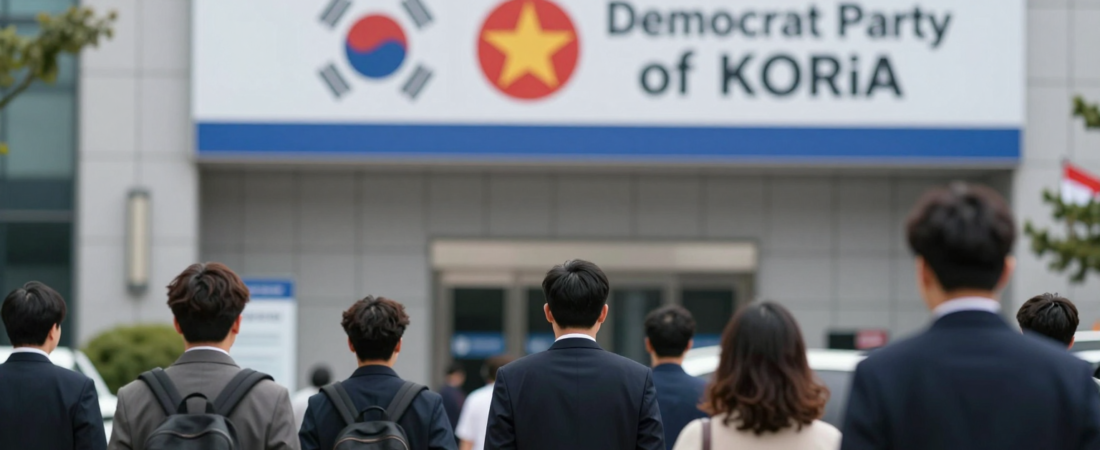
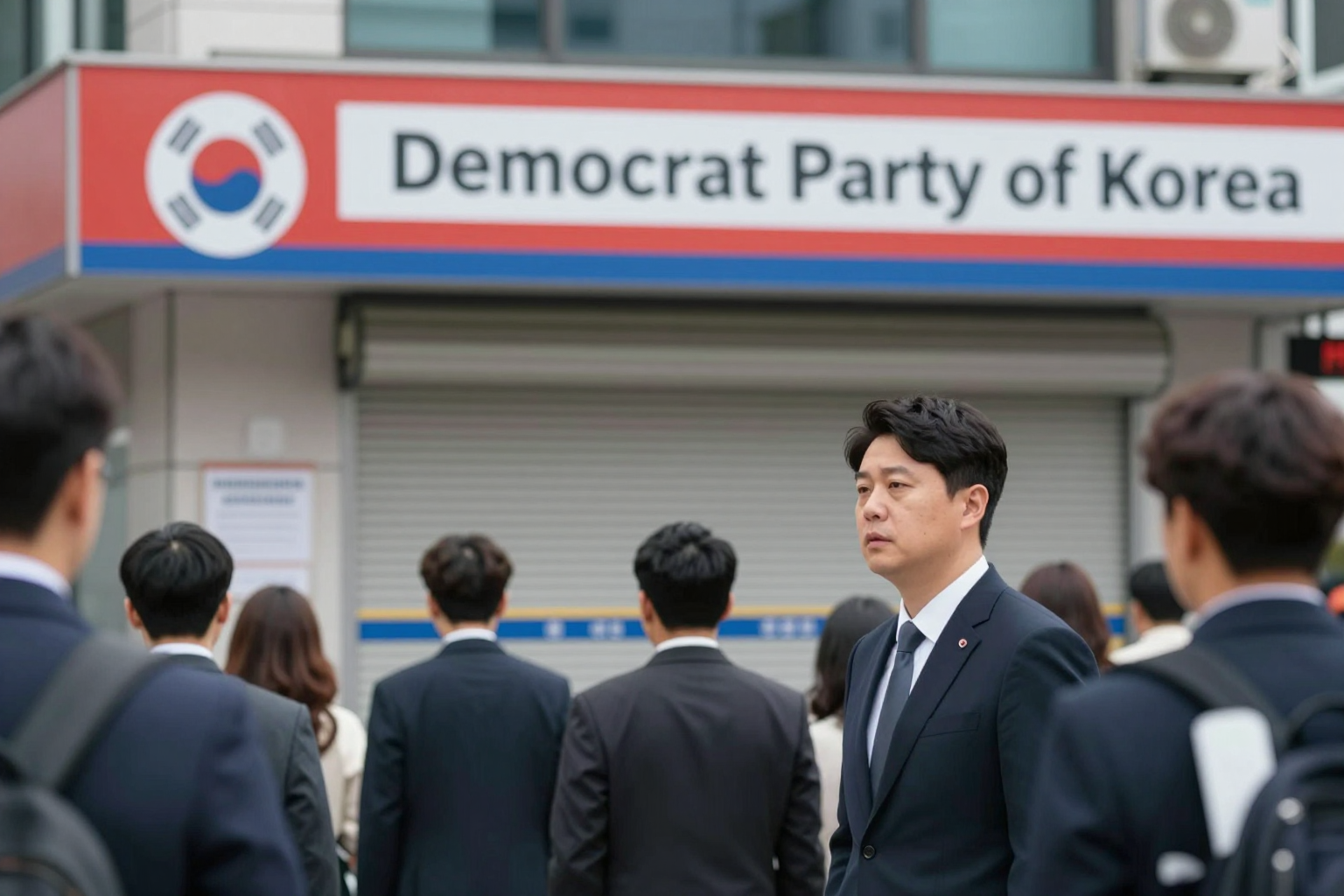
Ever wonder how a political party actually picks its own leader in South Korea? It’s not one simple vote. The Democratic Party of Korea uses a mix of delegate votes, rank-and-file member ballots, and public opinion polls, all rolled into one final number.
That system recently played out in dramatic fashion at a leadership convention in Daejeon, where three candidates — Kim Min-seok, Jung Cheong-rae, and Song Young-gil — made their final appeals. Understanding how this works helps you make sense of Korean party politics for years to come, not just for one election cycle.
Why Party Conventions Matter in Korea
Korean political parties hold national conventions to elect their top leadership. These events decide who speaks for the party in parliament, who negotiates with the president’s office, and who sets strategy before the next general election.
For the Democratic Party of Korea, this matters even more right now. The party controls a majority in the National Assembly and works closely with President Lee Jae-myung’s administration, so its internal leadership choice ripples through national governance.
Think of it like choosing a team captain right before a championship season. The stakes are high, and every vote counts toward who leads the roster.
Conventions like this one also double as public spectacles. Thousands of delegates and members gather in one venue, cheering, chanting candidate names, and sometimes creating unexpected drama — this particular event was briefly paused after a citizen climbed onto broadcast equipment (fire officials handled it calmly, with a safety mat already in place, just in case).
Inside the Democratic Party of Korea Race
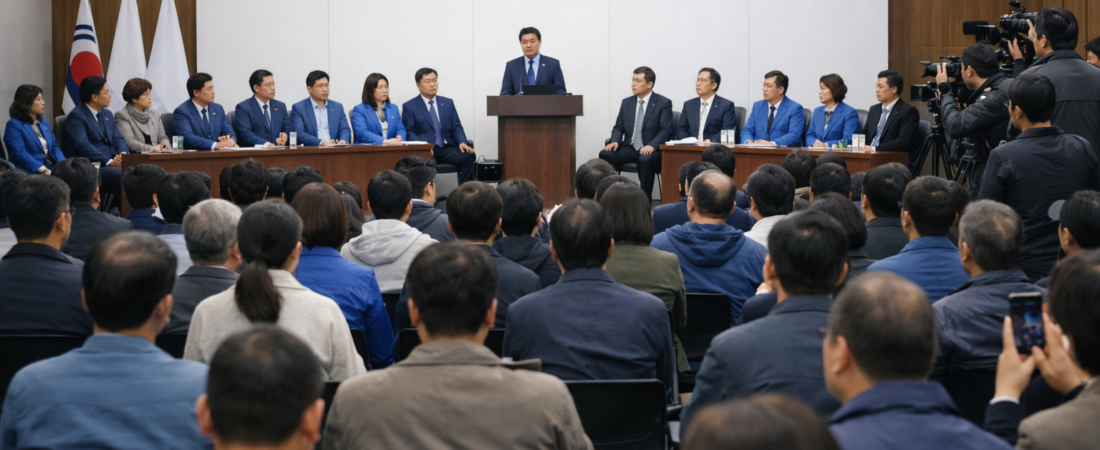
At the Daejeon Convention Center, roughly ten thousand delegates and party members gathered despite rainy weather. Each candidate used their final speech to make a distinct pitch.
Kim Min-seok focused on stability. He argued that the Democratic Party of Korea needs a decisive majority to steady itself, the government, and the relationship between party and administration.
He also pledged to root out what he called “fake party members,” saying a special investigation could even target groups like Shincheonji or the Unification Church if needed to protect fair internal elections.
Jung Cheong-rae took a different angle, highlighting legislative achievements. He noted that more than a thousand bills passed the National Assembly during his tenure as party leader, crediting cooperation between party, government, and the presidential office.
He pushed back against attacks on reform credentials, naming several allied candidates directly and calling for unity ahead of future elections. Song Young-gil, meanwhile, questioned whether prosecutorial reform talk had run its course, suggesting the party needed fresh direction rather than repeating past leadership.
Each candidate entered the stage with a chosen theme song, a small but telling detail about how modern Korean political conventions borrow energy from concerts and rallies.
How Factions Shape the Democratic Party of Korea
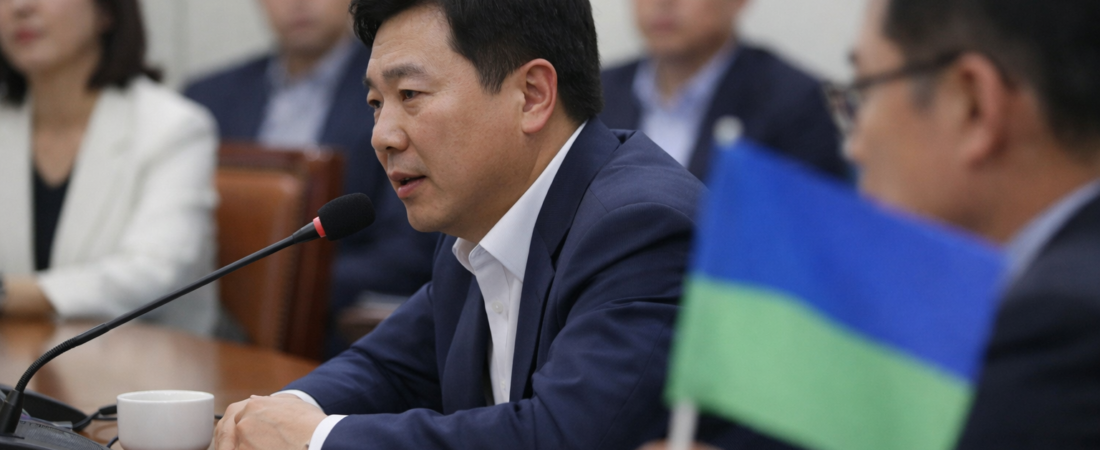
Behind the top race, a second contest unfolded among candidates for supreme council seats. Members aligned with Jung Cheong-rae — Choi Min-hee, Lee Seong-yun, and Han Min-soo — competed against members aligned with President Lee Jae-myung’s camp, including Park Sun-won, Seo Mi-hwa, and Kim Yong.
Why do factions matter so much inside one party? Because they determine which policy priorities get pushed forward once the convention ends, and who gets access to key committee assignments.
Two candidates, Lim Mi-ae and Kim Young-ho, withdrew the day before the final vote and threw their support behind Kim Yong. That move triggered sharp exchanges, with rival candidates calling it backroom dealmaking rather than open competition.
Lee Seong-yun and Han Min-soo, locked in a tight battle for fifth place with around thirteen percent support each, openly criticized the timing of those endorsements. Kim Yong responded by framing himself as carrying the hopes of both withdrawn candidates forward.
You can read more background on how these leadership contests unfold through outlets like SBS News, which covered the convention floor in detail.
This kind of factional maneuvering isn’t unique to Korea, but it does have a distinctly Korean flavor, shaped by personal loyalty networks that often trace back decades. Understanding these networks gives outside observers a clearer lens for reading future party decisions.
What This Means for Korean Politics Going Forward
So what should you take away from all this, even months or years after this specific convention ends? Party leadership races inside the Democratic Party of Korea tend to follow a repeating pattern: stability messaging versus reform messaging, with faction loyalty deciding many close outcomes.
That pattern isn’t going away. If you’re trying to understand Korean politics long-term, watching how the Democratic Party of Korea balances internal factions will tell you a lot about upcoming legislative priorities and its relationship with the presidential office.
It’s easy to look at internal party fighting and see only division. But there’s another way to read it — competition inside a party, even messy competition, is often a sign that internal accountability still exists rather than one voice controlling everything unchecked.
The tension between unity and fair competition isn’t a flaw unique to Korean politics; it shows up in democratic parties everywhere people care enough to argue about direction. What matters is whether disagreement stays tied to shared purpose, or hardens into permanent suspicion between factions.
Looking ahead, keep an eye on how the winning leadership handles internal party membership verification, a concern candidates raised repeatedly during this cycle. That issue alone could shape how much trust members place in future conventions.
What do you think about how the Democratic Party of Korea balances internal competition with the need for unity before national elections?
AI-Generated Photorealistic Image — All people, scenes, and details in this image are entirely AI-generated and fictional. Not a real photograph of an actual person or event. 이 이미지는 AI로 생성된 가상 이미지입니다.
Leave a Reply