Table of Contents
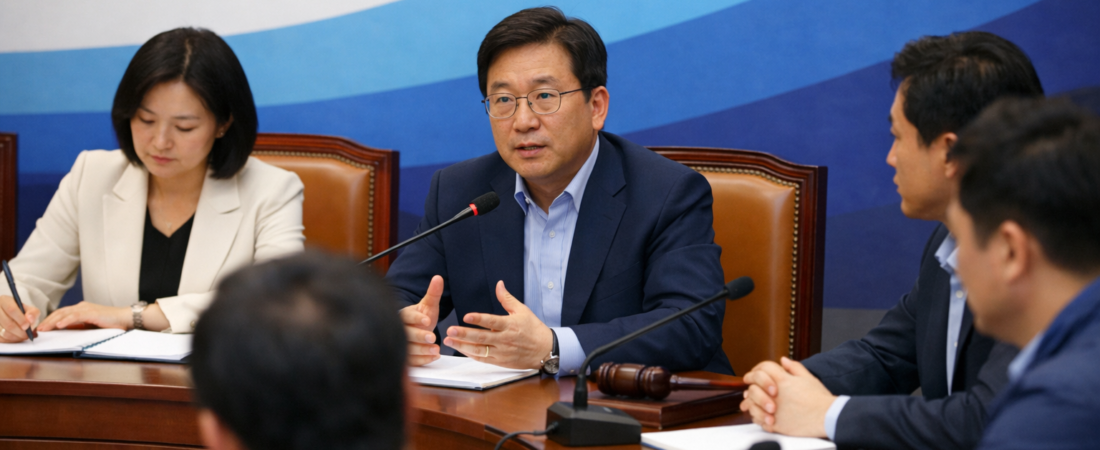
Can money decide who gets to lead a political party? That question is now front and center inside the Democratic Party of Korea. A rising deposit fee for convention candidates has sparked real anger, and party leaders are scrambling to respond.
This week, the party announced a new meeting to revisit the issue. The goal? Find a way to ease the financial burden on young candidates before it’s too late.
Why Are Young Candidates Struggling to Run?
Running for office costs money. That’s true almost everywhere, but in Korea, party conventions add another layer of expense through mandatory deposit fees.
These fees exist to filter out candidates who aren’t serious. But when the amount jumps too high, they end up filtering out something else entirely: young people.
Think about it. A recent college graduate or a first-time candidate in their 30s rarely has access to large sums of cash.
Meanwhile, veteran politicians with decades of fundraising networks barely notice the increase. Doesn’t that seem backwards for a party that claims to represent ordinary citizens?
The Democratic Party of Korea now faces this exact criticism. Party insiders say the fee hike was meant to ensure commitment from candidates.
Critics argue it accidentally built a wall around leadership positions, keeping out the very voices the party says it wants to hear.
The Deposit Controversy Inside the Democratic Party of Korea
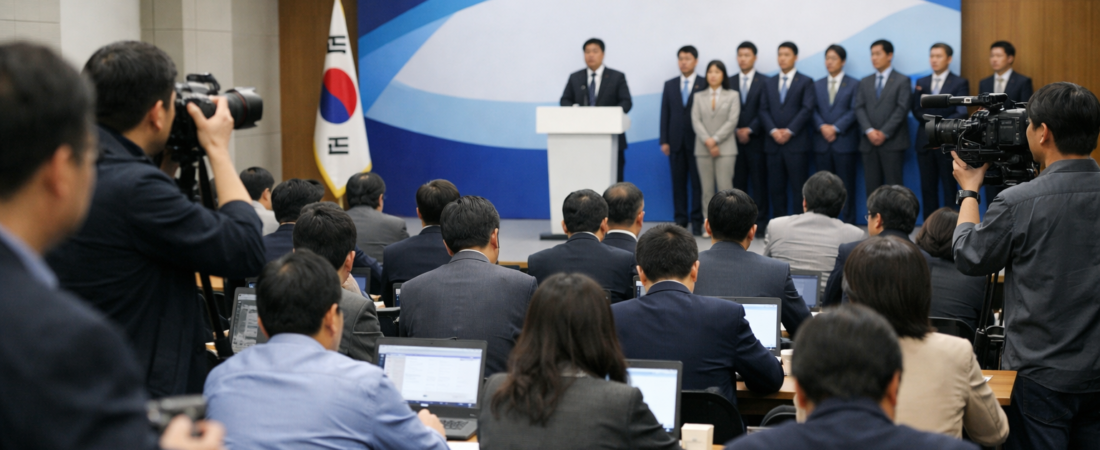
Let’s break down what actually happened. As convention season approached, the Democratic Party of Korea raised the required deposit for candidates seeking party leadership roles.
The increase wasn’t small, and it caught many younger members off guard. Social media reaction was swift, with numerous party members and supporters questioning the fairness of the new rule.
Why does this matter so much? Because deposit requirements directly shape who feels comfortable running in the first place.
A young activist with strong grassroots support but limited savings faces a real barrier. A well-connected politician with corporate backing does not.
In response to the growing backlash, the Democratic Party of Korea confirmed it will hold a full meeting of its Central Party Election Management Committee. This meeting will specifically discuss reducing deposit costs for young candidates.
Two main options are reportedly on the table. First, the party could raise the discount rate already given to younger candidates.
Second, the party itself could cover part of the deposit cost directly, easing the burden without lowering the official fee. Both options try to solve the same underlying problem: making the Democratic Party of Korea more accessible to newer voices.
For readers unfamiliar with Korean party structures, these deposits function similarly to filing fees in other democracies. You can learn more about how Korean political parties structure their internal elections through outlets like Yonhap News Agency, which has covered similar internal party debates in recent years.
What Leaders Are Saying — And Why It Matters
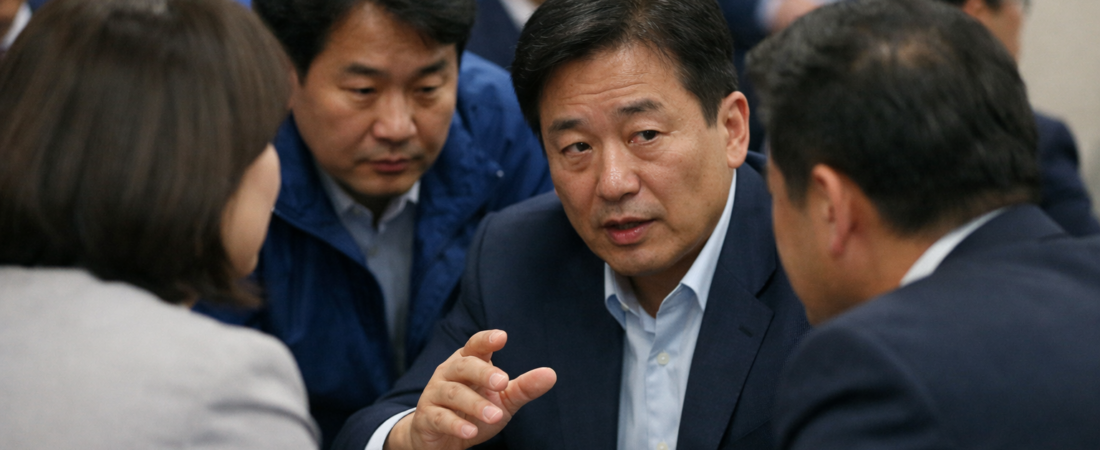
This isn’t just a backroom policy dispute. Some of the most powerful figures in Korean politics have weighed in directly.
President Lee Jae-myung has publicly acknowledged that the deposit burden on young and disabled candidates has become excessive. That’s a significant statement, given his position atop the party’s political hierarchy.
Former Prime Minister Kim Min-seok echoed similar concerns. He specifically called for concrete action, not just sympathetic words.
When two of the most influential figures in the Democratic Party of Korea speak out together, party officials tend to listen. Their comments suggest this issue has moved beyond internal grumbling.
It has become a matter of party identity and public image. Should a party that campaigns on equal opportunity allow its own internal rules to favor the wealthy and well-connected?
That’s the uncomfortable question hanging over this entire debate. The involvement of both a sitting president and a former prime minister signals that the Democratic Party of Korea leadership understands the reputational stakes here.
Korean political parties often face criticism for being dominated by older, established figures. Younger citizens increasingly demand representation that reflects their generation’s economic realities, not just their elders’ comfort with the status quo.
A Turning Point for the Democratic Party of Korea?
So what happens next? The Central Party Election Management Committee meeting will likely produce one of two outcomes.
Either the discount rate for young candidates increases substantially, or the party agrees to subsidize costs directly. Both paths would represent a meaningful shift in how the Democratic Party of Korea treats new entrants to political leadership.
This moment carries weight beyond a single fee schedule. Korea’s political landscape has long struggled with generational turnover.
Younger politicians often wait years, sometimes decades, before gaining real influence within established parties. A friendlier deposit policy alone won’t fix that entirely, but it removes one concrete barrier.
It’s a small step, but small steps matter when structural change feels slow. Consider the broader historical context here too.
South Korea’s party system developed rapidly after democratization in 1987, often prioritizing stability and experienced leadership over rapid generational change. That legacy still shapes internal party rules today, including deposit requirements originally designed to prevent frivolous candidacies.
The current debate inside the Democratic Party of Korea reflects a broader tension in Korean democracy. How do you balance institutional seriousness with genuine accessibility?
Set the bar too low, and conventions risk becoming chaotic with dozens of unserious candidates. Set it too high, and you accidentally silence exactly the voices your party claims to champion.
Finding that balance isn’t easy, and the Democratic Party of Korea now has a real chance to demonstrate it can adapt. If the party successfully lowers barriers for young and disabled candidates, it could set a precedent other Korean parties feel pressure to follow.
Political competition often works that way. One party’s reform becomes another party’s talking point, especially during election cycles when voter perception matters intensely.
For international observers, this story offers a useful lens into Korean democracy’s ongoing evolution. Political systems everywhere struggle with the tension between experience and access, and Korea’s current moment illustrates that struggle vividly.
The outcome of this Central Party Election Management Committee meeting will tell us something important. Will the Democratic Party of Korea match its public rhetoric about generational change with actual policy action?
Or will this controversy fade quietly, leaving the underlying inequality intact? Only the coming weeks will reveal the answer, but the pressure from both President Lee Jae-myung and former Prime Minister Kim Min-seok suggests real change may be coming.
What do you think? Should political parties actively subsidize costs for young and disabled candidates, or does that create a different kind of unfairness?
AI-Generated Photorealistic Image — All people, scenes, and details in this image are entirely AI-generated and fictional. Not a real photograph of an actual person or event. 이 이미지는 AI로 생성된 가상 이미지입니다.



Leave a Reply