Table of Contents
Gangdong-gu hosts an annual children’s play festival at Amsa History Park, letting kids show off games they invented themselves. It’s a joint celebration for children and teens, built entirely around creativity rather than adult-designed activities. This guide explains what the festival is, why it happens here, and how you can experience it.
What Is Gangdong-gu’s Play Festival
The Gangdong Play Festival is a community event organized by the Gangdong-gu district office in Seoul. Unlike typical festivals planned entirely by adults, this one centers on games children themselves have designed and refined.
Local kids and teenagers submit their own play ideas ahead of time. Organizers then turn the best of these into hands-on booths and activity zones the whole community can try.
Why does that matter? Because it flips the usual script — instead of adults deciding what fun looks like, children get to define it themselves. That small shift changes everything about how the day feels.
Why Amsa History Park Matters
Gangdong-gu holds this festival at Amsa History Park, home to one of Korea’s most significant Neolithic settlement sites. Archaeologists have uncovered pit-house remains here dating back thousands of years, making it a rare place where prehistoric heritage meets modern family life.
Picture archaeologists carefully excavating ancient pit-houses, and then imagine children racing across that same ground playing tag. That contrast is part of what makes Amsa History Park special.
Choosing this site is not an accident. Gangdong-gu consistently uses the park for public events, linking historical education with everyday community activities.
You get a two-in-one experience: a walk through ancient Korean history, plus a lively, modern children’s festival. Few districts in Seoul offer that kind of layered cultural experience in a single afternoon.
The Culture Behind Child-Led Play
Korean cities have increasingly invested in child-centered public programming over the past decade. Gangdong-gu’s approach reflects a broader shift in how local governments think about youth participation.
Have you ever noticed how few public spaces actually ask children what they want? Most playgrounds and festivals get designed top-down, with adults guessing at what kids enjoy. Gangdong-gu flips that model by asking children to submit and shape the games themselves.
This matters beyond just one weekend event. When communities listen to children’s own ideas, kids learn their voices carry real weight in shared public life.
Still, it’s worth being honest about the limits of this model. Not every child feels comfortable submitting ideas publicly, and shy kids can get overlooked even in well-meaning programs.
The encouraging part is that Gangdong-gu frames this as a community-wide festival, not a competition, which lowers the pressure to perform. That balance — inviting participation without demanding it — is what makes child-led events sustainable rather than exhausting for young participants.
A Visitor’s Guide to Gangdong-gu
If you’re planning a family trip to Seoul, Gangdong-gu deserves a spot on your list. The district sits in eastern Seoul, easily reachable by subway, and blends quiet residential neighborhoods with genuine historical sites.
Amsa History Park works well as a year-round destination, even outside festival dates. You can explore reconstructed pit-houses, walk trails along the Han River, and check community event calendars for upcoming children’s programs.
For the latest schedule and details on community events like this, check local coverage such as Yonhap News Agency. Local district offices in Korea often post event calendars months in advance, so a quick search before your trip pays off.
Gangdong-gu also connects easily to other family-friendly spots nearby, including riverside parks and bike paths. Combining a festival visit with a broader day trip makes the most of your time in this part of Seoul.
So what does Gangdong-gu’s approach tell us about the future of community events in Korea? It suggests a growing appetite for programming that treats children as creators, not just spectators. Will other districts follow this same child-first model?
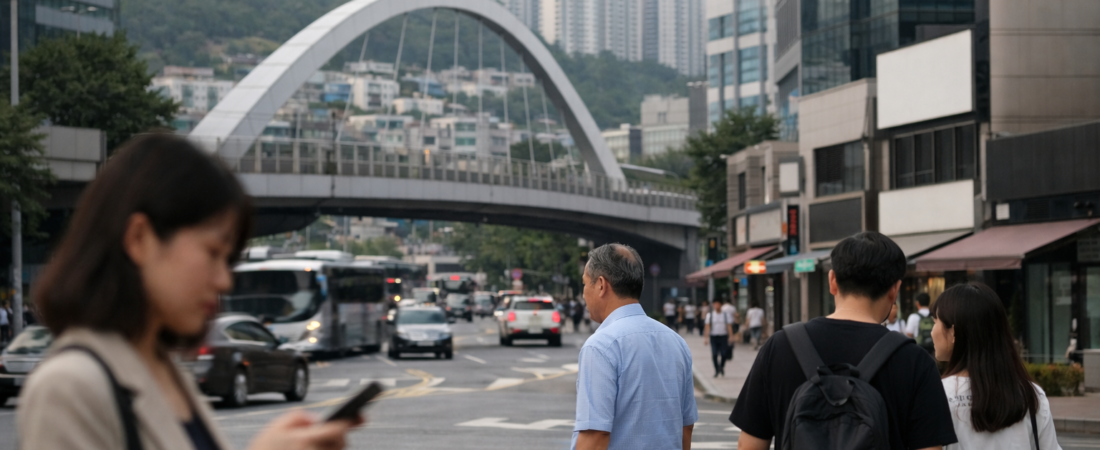
AI-Generated Photorealistic Image — All people, scenes, and details in this image are entirely AI-generated and fictional. Not a real photograph of an actual person or event. 이 이미지는 AI로 생성된 가상 이미지입니다.


Leave a Reply