Table of Contents
Would you trust a leaked phone call recording without knowing who made it? That’s the question swirling around actor Hwang Jung-min right now. A private conversation went public, sparking a wave of speculation about his personal life.
His agency stepped in fast. And their explanation points to something far darker than gossip.
What Sparked the Hwang Jung-min Privacy Controversy
On July 29, a private phone recording tied to Hwang Jung-min began circulating online. The clip included claims about meeting the actor, and it spread quickly across social media. Within hours, the story turned into a full-blown privacy controversy.
Hwang Jung-min is one of Korea’s most respected actors. He currently stars in the film “Hope,” playing the character Beomseok, distributed by Plus M Entertainment. His career spans decades, and his public image has always centered on quiet professionalism rather than tabloid drama.
That’s exactly why this controversy caught so many people off guard. Fans wondered how a private call ended up online at all. Who recorded it, and why did it surface now?
Sam Company’s Response: Naming a Stalking Suspect
Hwang Jung-min’s agency, Sam Company, didn’t stay quiet for long. On the same day the controversy broke, the agency posted an official statement on Instagram. Their message was direct and serious.
Sam Company stated that the person behind the malicious post is a suspect in an ongoing stalking crime case. According to the agency, this individual has repeatedly harassed Hwang Jung-min over time. The recent phone call disclosure, they said, is just one part of a longer pattern of harassment.
This changes the entire framing of the story. What looked like a private life scandal is actually connected to a criminal stalking case. Sam Company confirmed it will take strong legal action against false and malicious content targeting Hwang Jung-min.
The agency’s language was firm, not defensive. They didn’t ask for sympathy — they announced consequences. According to reporting by Kyunghyang Shinmun, the statement specifically labeled the posts as fabricated content designed to damage Hwang Jung-min’s reputation.
Why Celebrity Stalking Remains a Deep Problem in Korea
Is this an isolated incident? Unfortunately, no. Korean celebrities have faced escalating stalking cases for years, and the Hwang Jung-min situation fits a troubling pattern.
South Korea passed its first dedicated anti-stalking law in 2021, decades after similar laws appeared in other countries. Before that, stalking behavior often fell into legal gray zones, treated as a minor nuisance rather than a serious crime. The law finally gave victims — including public figures like Hwang Jung-min — real legal tools to fight back.
But having a law on paper is different from stopping harassment in practice. Obsessive fan behavior, leaked recordings, and fabricated stories still spread fast online, often before anyone can verify the facts. Anonymous accounts make it easy to publish harmful claims with little accountability, and platforms remove content slowly, if at all.
So where does that leave someone like Hwang Jung-min? Caught between real privacy rights and a digital culture that rewards speed over truth. This is the tension worth sitting with, because it doesn’t have an easy villain or an easy fix.
The instinct to blame “online culture” broadly misses something important. Most fans who follow actors like Hwang Jung-min express genuine admiration, not obsession. The warmth Korean audiences show toward artists — sending support, celebrating milestones, showing up for premieres — reflects real communal care, the kind that makes an entertainment industry feel personal rather than distant.
Yet that same closeness carries a shadow side. When admiration tips into entitlement, some individuals begin to believe they deserve access to a celebrity’s private life. The line between fan and stalker is thinner than people assume, and Hwang Jung-min’s case shows what happens when someone crosses it repeatedly. The hopeful part is that Korea is responding structurally, not just emotionally — stronger stalking legislation, faster agency legal action, and growing public awareness that harassment disguised as fandom is still harassment.
What Comes Next for Hwang Jung-min
Legal cases involving stalking allegations rarely resolve overnight. Sam Company has signaled it will pursue formal legal steps against the person behind the malicious posts. That process will likely take months, not days.
In the meantime, Hwang Jung-min continues promoting “Hope,” his current film project. Will this controversy affect how audiences view his upcoming work? Possibly in the short term, but his decades-long reputation gives him a strong foundation to stand on.
There’s also a broader industry lesson here. Entertainment agencies increasingly need clear protocols for responding to leaked content and harassment claims quickly. Sam Company’s rapid, specific response — naming the situation as a stalking case rather than staying vague — may become a model for how other agencies handle similar crises involving artists like Hwang Jung-min.
For international fans following Korean entertainment, this story is a reminder that celebrity privacy battles aren’t unique to any one country. But Korea’s legal and cultural response to cases like Hwang Jung-min’s is evolving in real time, shaped by both painful precedent and genuine reform.
What do you think — should agencies name stalking suspects publicly, like Sam Company did for Hwang Jung-min, or does that risk more harm than good?
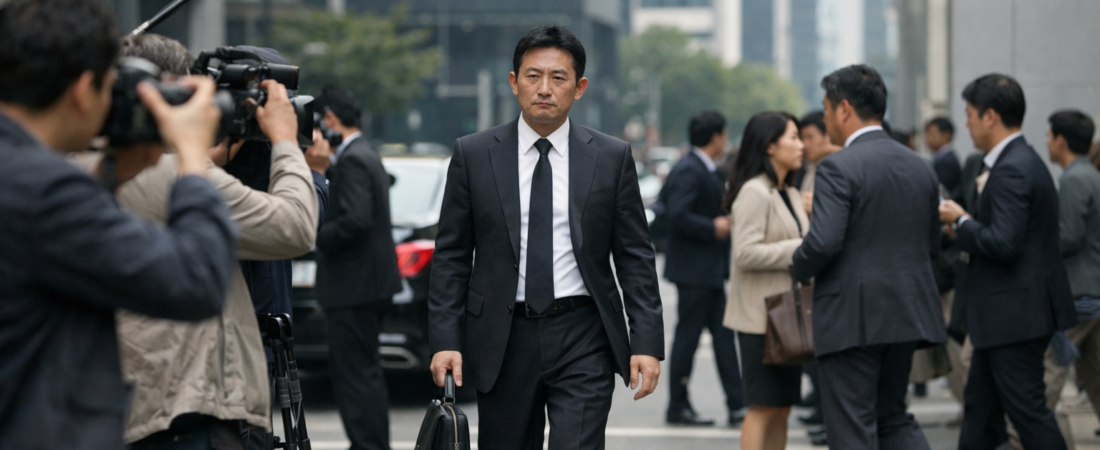
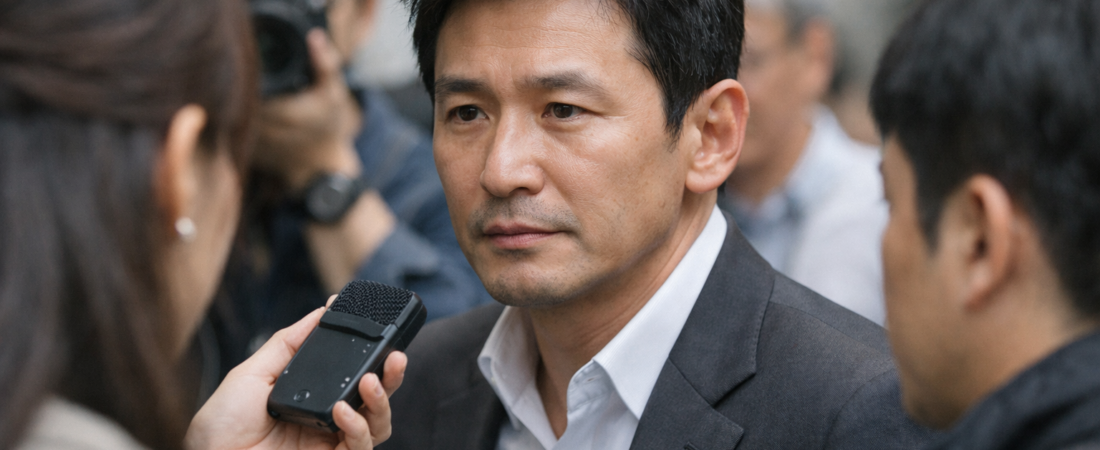
AI-Generated Photorealistic Image — All people, scenes, and details in this image are entirely AI-generated and fictional. Not a real photograph of an actual person or event. 이 이미지는 AI로 생성된 가상 이미지입니다.