Table of Contents
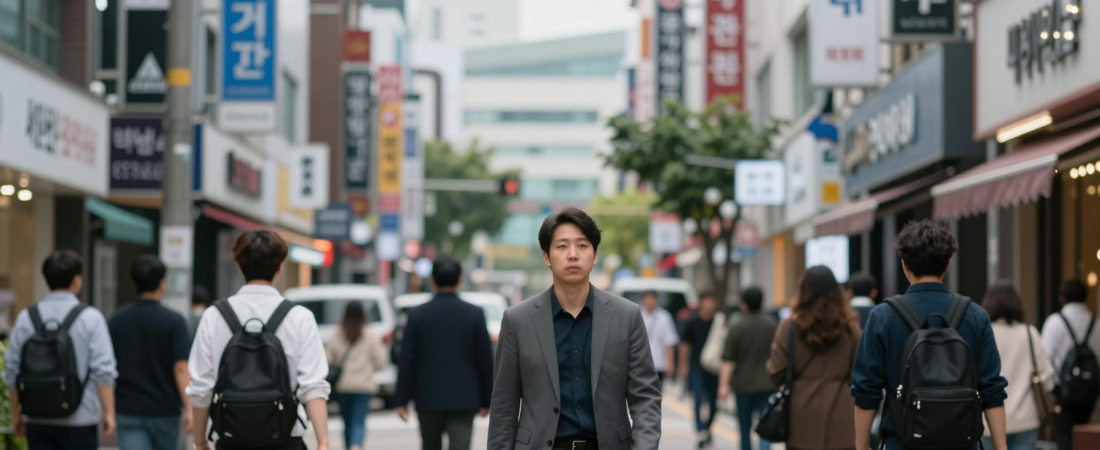
What happens when a famous island runs out of room to grow the old way? That’s the question facing Jeju today. For decades, Jeju built its economy on one simple formula: more visitors, more spending, more growth.
But that formula is starting to show cracks. Scholars and business leaders now say Jeju needs a different kind of engine — one built on water, talent, and infrastructure, not just tourist headcounts.
Why Jeju Can’t Rely on Tourist Numbers Forever
Think about it this way: can any place keep growing just by counting heads at the airport? Jeju has tried that approach for years, and it worked for a while. Tourism brought jobs, hotels, and global attention to this volcanic island off Korea’s southern coast.
But quantity has limits. More tourists mean more traffic, more strain on water supplies, and more pressure on local infrastructure that wasn’t built for endless expansion.
At the Korean Academic Society of Business Administration’s recent convergence conference, held under the theme “Public Livelihood Vitality, Asking Business Administration for Answers in Jeju,” experts made this point clearly. Jeju, they argued, should stop measuring success by visitor volume alone.
Instead, the island needs to ask a harder question: what does sustainable growth actually look like here? That question matters not just for Jeju, but for any tourism-dependent economy watching from the sidelines.
Water, Talent, and Infrastructure: Jeju’s Hidden Assets
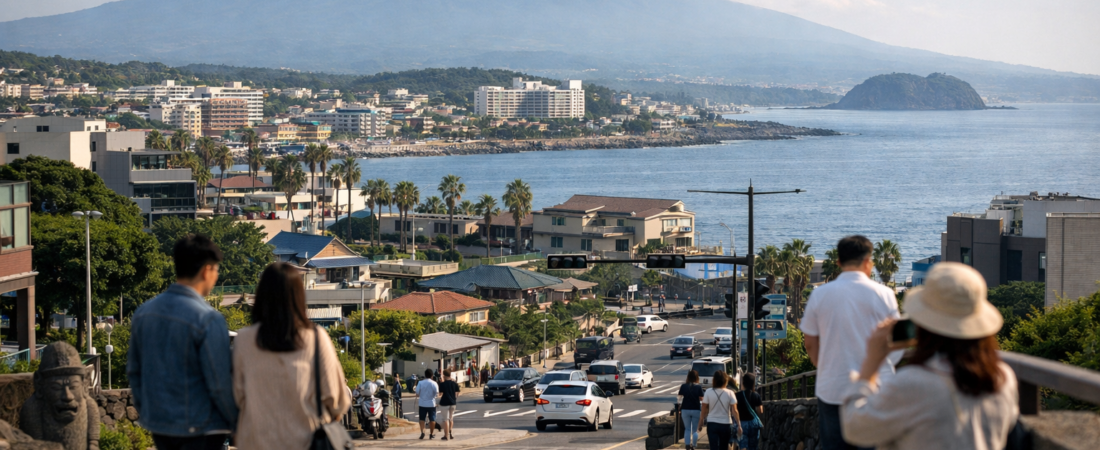
Here’s something most visitors never think about: Jeju sits on a massive natural water resource, filtered through volcanic rock over centuries. That water isn’t just for drinking — it’s an economic asset waiting to be developed further.
Jeju’s groundwater already supports a global bottled water industry, but experts say there’s room to connect this resource to higher-value sectors like biotechnology and cosmetics. Why let a natural gift stay a side business when it could anchor an entire industry cluster?
Talent is the second piece of the puzzle. Jeju has struggled to keep young, skilled workers from moving to Seoul or abroad — a challenge many regional economies in Korea share.
Building better local job opportunities in research, technology, and green industries could change that pattern. Infrastructure is the third leg of this stool, and it’s the one Jeju arguably needs most.
Roads, digital networks, energy systems, and port facilities all need upgrades to support any pivot away from pure tourism. Without solid infrastructure, even the best water resources and brightest talent pool won’t translate into lasting growth for Jeju.
What Experts Are Saying About Jeju’s Growth Strategy
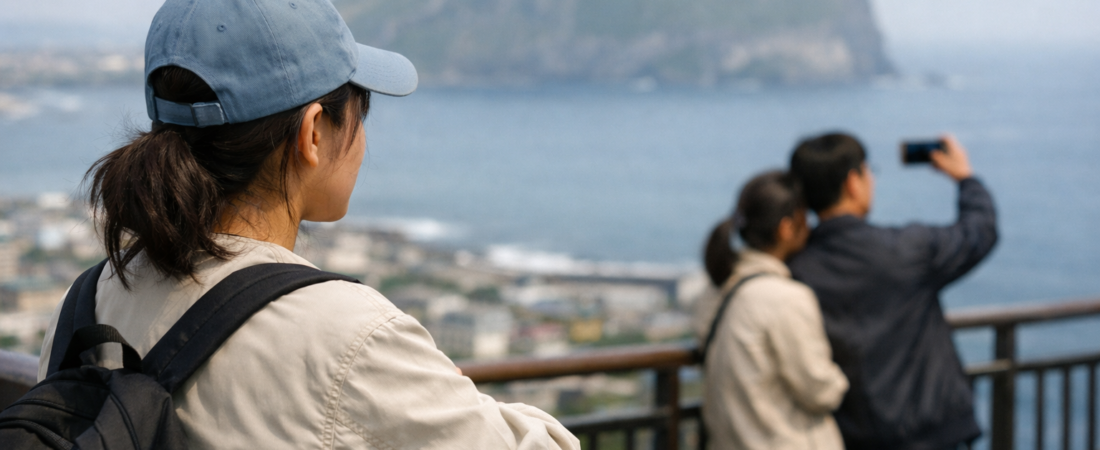
Business scholars at the conference didn’t just criticize the old model — they proposed a clearer path forward. The consensus was straightforward: Jeju’s natural resources need to connect with higher-value industries, not just serve as tourist attractions.
That means treating water as an industrial input, not only a scenic backdrop for beach photos. It means treating local knowledge and culture as intellectual property, not just a folk tale for guidebooks.
You could say Jeju’s tangerines and black pork have had their moment in the spotlight — now it’s time for water and talent to get equal billing (yes, even the pigs need a rebrand). Discussions covered in outlets like Maeil Business Newspaper highlighted how academic and business voices are converging on this same message.
This shift from a tourism-first mindset to an innovation-and-infrastructure mindset isn’t unique to Jeju. Hawaii, the Canary Islands, and Bali have all wrestled with similar questions about over-reliance on visitor economies.
Jeju’s advantage is timing — it can learn from those examples before hitting a crisis point. That’s a rare position to be in, and it’s worth taking seriously.
Lessons for Anyone Watching Jeju’s Economic Future
So where does this leave Jeju five or ten years from now? The honest answer is: it depends on choices made today, not slogans repeated at conferences.
Regional economies across Korea — and frankly, across the world — often fall into a pattern where short-term numbers get all the attention. Visitor counts are easy to measure and easy to boast about, but they don’t always reflect real, lasting prosperity for the people who live there year-round.
That gap between visible success and quiet local hardship is real, and it deserves honest acknowledgment. At the same time, Jeju’s story also shows something hopeful: local scholars, businesses, and policymakers are actively working together to close that gap, not ignoring it.
The push toward water, talent, and infrastructure isn’t just theory — it’s a concrete alternative already being discussed in serious academic and business circles. That combination of honest critique and constructive direction is exactly what a maturing economy needs.
Jeju’s next chapter will likely look less like a postcard and more like a working economy — with research labs, water-tech startups, and better-paying local jobs. That’s a slower, less glamorous kind of growth, but it may prove far more durable.
What do you think — should tourism-dependent regions like Jeju prioritize slower, resource-based growth over quick visitor numbers?
AI-Generated Photorealistic Image — All people, scenes, and details in this image are entirely AI-generated and fictional. Not a real photograph of an actual person or event. 이 이미지는 AI로 생성된 가상 이미지입니다.


Leave a Reply