Table of Contents
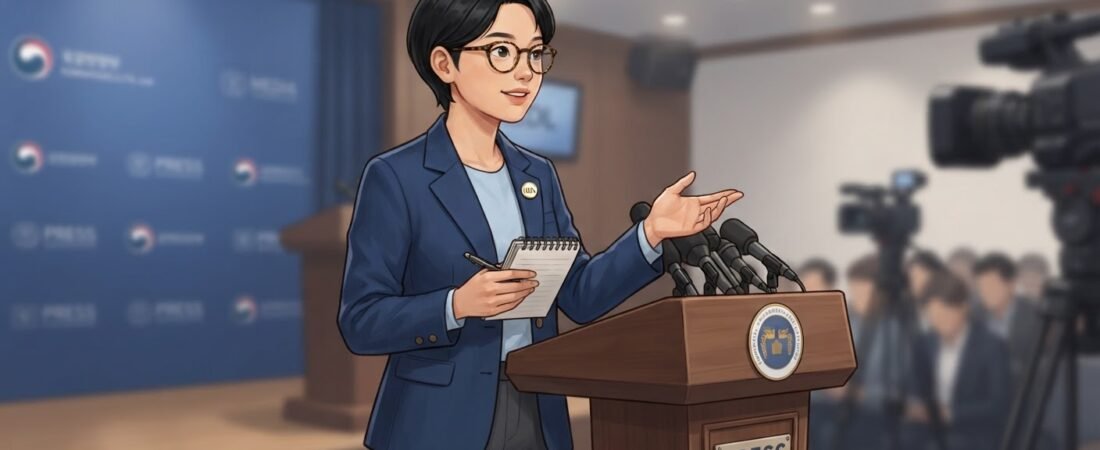
Can a party leader really run the show while also backing the president to the hilt? Jung Cheong-rae seems to think so. This week, the former Democratic Party of Korea leader officially announced his bid to serve a second term, and he’s betting everything on unity with President Lee Jae-myung.
That’s a bold move in Korean politics, where party leaders and presidents don’t always see eye to eye. Jung Cheong-rae wants to change that story. He’s framing his entire campaign around one idea: a true “one team” partnership with the Lee Jae-myung administration.
Jung Cheong-rae’s Bold Bid for a Second Term

Jung Cheong-rae isn’t a newcomer to party leadership. He already served as head of the Democratic Party once, and now he wants to do it again. Why run again so soon? Because he believes the party needs continuity, not disruption, while President Lee Jae-myung tackles a demanding legislative agenda.
His campaign message is simple but powerful. Jung Cheong-rae argues that a divided party weakens the presidency itself. Instead, he wants lawmakers, party officials, and the Blue House to move as a single unit toward shared policy goals.
This “one team” strategy isn’t just political branding. It reflects a real structural challenge inside Korean party politics. When a party leader and a sitting president clash, legislation stalls, and public trust erodes fast.
Jung Cheong-rae seems determined to avoid that trap. He’s positioning himself as the leader who will never let daylight show between the party and the presidential office. Is that a smart strategy, or does it risk making the party look like an extension of executive power rather than an independent political force?
That question matters more than it might seem. South Korea’s political history is full of examples where party leaders lost credibility by appearing too close to the president. Jung Cheong-rae will need to walk a careful line between loyalty and independence if he wants to convince skeptical voters.
The Rivals: Kim Min-seok and Song Young-gil Step Up
Jung Cheong-rae won’t have this race to himself. Two heavyweight figures have already responded to his announcement, and both bring serious political weight to the contest. Former Prime Minister Kim Min-seok is one of them.
Kim Min-seok has deep experience inside the government, having held one of the highest executive posts in the country. His entry into the leadership race signals that this contest will be far from a simple coronation for Jung Cheong-rae. Kim Min-seok brings executive credibility that Jung Cheong-rae, as a legislator, simply doesn’t have.
Then there’s former party leader Song Young-gil. He’s run the Democratic Party before, and he knows exactly what it takes to win an internal leadership vote. Song Young-gil’s return to the race adds another layer of complexity, especially since he represents a slightly different wing of party thinking.
So what does this three-way competition really mean? It means the Democratic Party’s internal politics are far from settled, even with a friendly president in office. Each candidate is making a distinct pitch to party members, and Jung Cheong-rae’s “one team” message is just one option on the table.
Kim Min-seok may appeal to members who want governing experience over party-machine loyalty. Song Young-gil, meanwhile, could attract members nostalgic for his earlier leadership style. Jung Cheong-rae has to convince voters that his brand of unity beats both alternatives combined.
Why the Preferential Voting System Is Causing Friction

Here’s where things get genuinely complicated. The Democratic Party hasn’t even finalized how this leadership election will work. At the center of the dispute sits something called the preferential voting system, a ranked-choice method for selecting the next party leader.
Under this system, party members would rank candidates in order of preference rather than picking just one name. Sounds fair, right? But not everyone inside the party agrees on whether this method actually produces a fair result.
Two internal factions have emerged around this debate. The pro-Lee Jae-myung faction favors one approach to the voting rules, while the pro-Jung Cheong-rae faction pushes for a different structure. This disagreement has delayed leadership consensus at exactly the moment the party needs clear direction.
Why does a voting method matter so much? Because in a three-way race like this one, the rules can decide the winner just as much as the candidates themselves. A ranked-choice system might favor a candidate with broad but shallow support over one with narrow but passionate backing.
Jung Cheong-rae has an obvious stake in how this plays out. If the preferential voting system benefits candidates seen as closest to President Lee Jae-myung, that could work in his favor given his “one team” pitch. But if rival factions successfully push for a different format, Jung Cheong-rae’s path back to the leadership seat becomes noticeably harder.
Political observers have been tracking this dispute closely, and outlets like Yonhap News Agency have noted how unusual it is for a governing party to still be negotiating basic election rules this close to a leadership vote. That delay itself tells you something important. It suggests the party’s internal factions remain more divided than the public “one team” messaging lets on.
What This Means for Lee Jae-myung and Korea’s Political Future
Step back for a moment. Why should any of this matter to someone outside Korea’s political bubble? Because the outcome of this leadership race will shape how effectively President Lee Jae-myung can govern for the rest of his term.
A unified Democratic Party under Jung Cheong-rae’s vision could mean smoother legislative cooperation. Bills move faster. Policy priorities align between the party and the Blue House. That’s the promise Jung Cheong-rae is selling to party members right now.
But a contested, drawn-out leadership battle could produce the opposite result. If Kim Min-seok or Song Young-gil wins instead, President Lee Jae-myung might face a party leadership less automatically aligned with his agenda. That doesn’t mean hostility, but it does mean less predictability.
Korean politics has seen this pattern before. Presidents who enjoy strong party unity early in their terms often lose momentum once internal leadership races produce rival power centers. Jung Cheong-rae clearly understands this risk, which is exactly why his entire campaign centers on preventing it.
There’s also a longer historical thread here worth noting. Korean political parties have swung between centralized, leader-driven structures and more decentralized, faction-based models for decades. The current fight over the preferential voting system is really a fight over which model the Democratic Party wants to become going forward.
Will Jung Cheong-rae’s “one team” message win over enough party members? Or will Kim Min-seok’s executive experience and Song Young-gil’s institutional history split the vote in unpredictable ways? Nobody can say for certain yet, and that uncertainty is exactly what makes this leadership race worth watching.
For readers outside Korea, this race offers a useful lens into how presidential systems and party structures interact in East Asian democracies. Jung Cheong-rae’s campaign shows how personal loyalty to a president can become a formal political strategy rather than just background sentiment. That’s a dynamic worth comparing to leadership contests in other democracies you might follow.
Looking ahead, the resolution of the preferential voting system dispute will likely determine much more than just who leads the party. It will signal whether the pro-Lee Jae-myung faction or the pro-Jung Cheong-rae camp holds greater sway over the party’s future direction. Jung Cheong-rae’s second-term bid, then, is really a test case for how party unity gets built, or broken, inside modern Korean politics.
What do you think about Jung Cheong-rae’s strategy of tying his leadership bid so closely to President Lee Jae-myung’s agenda?
Leave a Reply