
Table of Contents
What if a single Korean word could mean both “sweet candy” and “total disaster”? That’s exactly the trick behind Netflix Korea’s new romantic comedy. Jung Hae-in stars in “Our Sticky Love,” a drama whose Korean title turns a childhood snack into a punchline about love gone wrong.
The original title, “Ireon Yeot-gateun Sarang,” literally means “This Love Is Like Yeot.” Yeot is a traditional Korean taffy, sticky and slow to chew. But yeot also doubles as slang for something badly messed up, roughly like saying a situation is “screwed.”
A Title That Means Two Things at Once
Good wordplay rewards a second look, and this title delivers exactly that. On the surface, “This Love Is Like Yeot” sounds sweet, even nostalgic. Dig one layer deeper, and it becomes a wry joke about romance that never quite goes smoothly.
This double meaning isn’t a translation accident. Korean writers often lean on homonyms and slang layers to add humor without spelling anything out. Koreans take their wordplay seriously — this particular pun comes with a few thousand years of candy-making history built right in.
For English-speaking audiences, “Our Sticky Love” captures only half the joke. The word “sticky” hints at the candy but loses the slang punch entirely. That gap is worth noticing, because it says something bigger about how much cultural context lives inside everyday Korean speech.
Jung Hae-in Returns to Netflix

Jung Hae-in isn’t a stranger to Netflix success. His role in “D.P.” earned serious critical praise, showing a darker, more restrained side of his acting range. Now Jung Hae-in pivots back toward romance, a genre where he’s built much of his fan base over the years.
Alongside Ahn Ha-young, Jung Hae-in leads a cast built around comic timing and emotional swings. Romantic comedy demands a different muscle than military drama. Can an actor known for quiet intensity in “D.P.” also nail lighthearted chemistry? That’s the real question hanging over this project.
Jung Hae-in has actually moved between these tones before, and that flexibility is part of his appeal. Fans who followed his earlier hits remember him as warm, a little clumsy, and easy to root for. “Our Sticky Love” seems built to bring that side of Jung Hae-in back to the screen.
Netflix Korea clearly sees value in pairing Jung Hae-in with a title built on linguistic humor rather than a generic romance tagline. That choice signals confidence — both in Jung Hae-in’s drawing power and in global viewers’ willingness to sit with something culturally specific. You can read more background on the streamer’s original coverage via Korea Herald.
Why Korean Wordplay Is Hard to Translate

Translation always loses something, but Korean title puns lose more than most. Korean is packed with homonyms, words that sound alike but carry completely different meanings depending on context and tone. “Yeot” is a textbook example, sitting comfortably between a sweet treat and a curse word.
Think about how English handles similar tricks. A pun about “the last straw” works because English speakers instantly get both the literal and figurative meaning. Korean does this constantly, but the wordplay often depends on regional slang or generational usage that doesn’t map cleanly onto English at all.
This is why so many K-drama titles feel flatter once they cross into English. “Our Sticky Love” isn’t wrong, exactly — it’s just incomplete. Streaming platforms face a real dilemma here: stay literal and lose the joke, or get creative and risk losing the original meaning entirely.
Jung Hae-in’s drama becomes a useful case study for this exact problem. Global audiences are watching more Korean content than ever, yet the language barrier around humor remains stubbornly high. Isn’t it interesting that a single candy word can carry this much cultural weight?
What Our Sticky Love Tells Us About Modern Romance
Beyond the wordplay, “Our Sticky Love” taps into something familiar. Real relationships rarely feel like a clean fairy tale. They stick to you in good ways and bad ways, sometimes both at once, which is exactly what the Korean title is winking at.
Love that’s messy isn’t a flaw in the story — it might be the whole point. Modern romantic comedies increasingly admit that connection comes with friction, not despite it. Jung Hae-in’s character seems built around that same tension between sweetness and chaos.
There’s something honest in naming a love story after candy that’s hard to swallow. Relationships built on real intimacy often carry both comfort and complication in equal measure. The same closeness that feels warm on a good day can feel heavy on a hard one, and most people who’ve loved anyone deeply already know this without being told.
That honesty doesn’t have to end in cynicism, though. Plenty of long relationships find a quieter kind of repair — the awkward conversation that clears the air, the small apology that resets everything, the choice to stay curious about someone instead of giving up on them. “Our Sticky Love” seems to be betting that audiences want stories that admit love is complicated, then still choose to believe it’s worth it.
Jung Hae-in’s career has quietly tracked this same pattern, moving between heavy drama and lighter romance without losing credibility in either. Maybe that’s the real appeal of “Our Sticky Love” — not a promise that love is simple, but a reminder that it’s worth showing up for anyway. Korean drama has always been good at holding both truths at once, and this title just says it out loud.
“Our Sticky Love” arrives at an interesting moment for Korean streaming content. Global viewers are growing more comfortable with cultural specificity instead of demanding everything get smoothed into universal appeal. Jung Hae-in’s return to Netflix might just prove that a good pun travels farther than anyone expects.
What do you think — can a joke about candy and chaos actually capture what real love feels like?
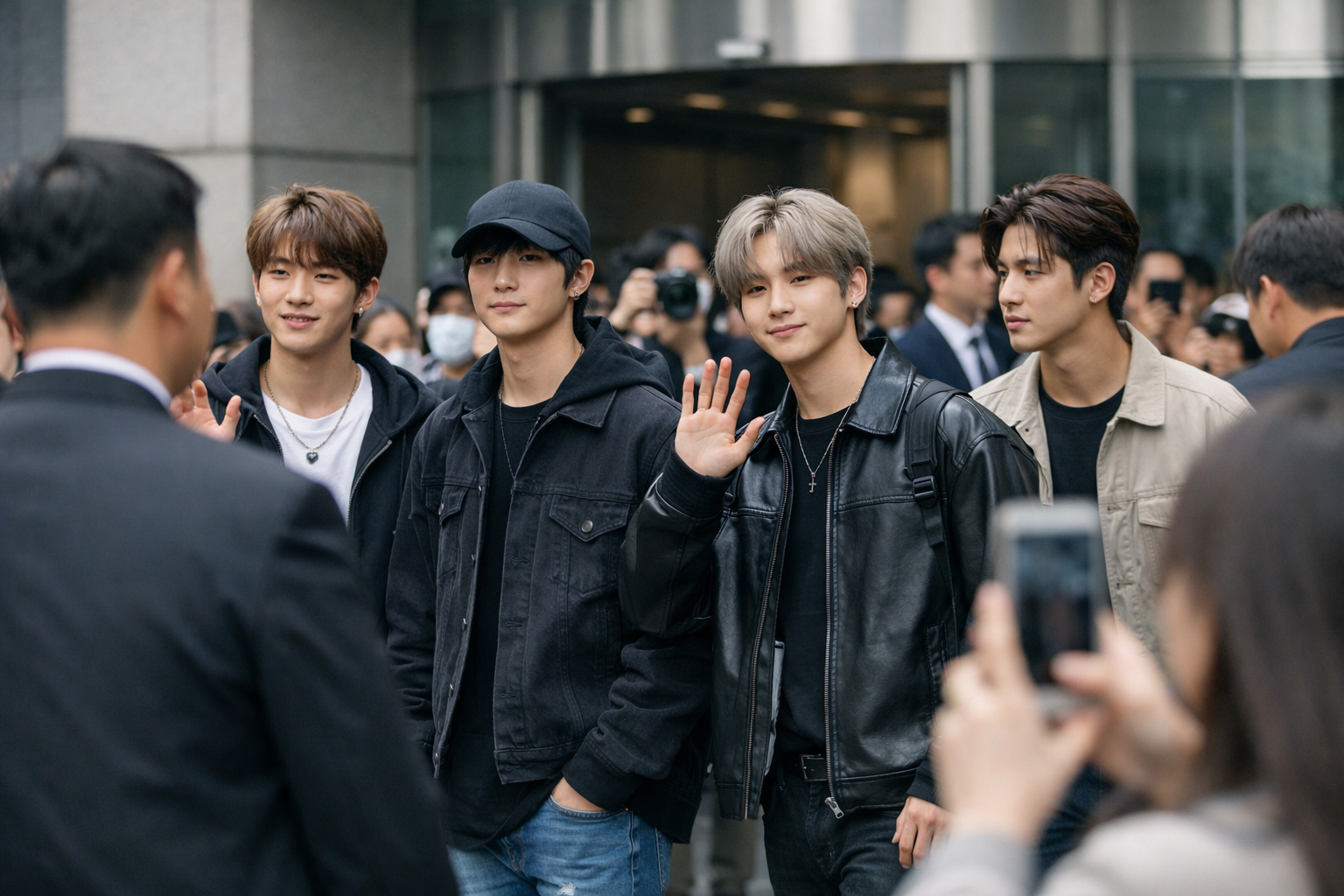
AI-Generated Photorealistic Image — All people, scenes, and details in this image are entirely AI-generated and fictional. Not a real photograph of an actual person or event. 이 이미지는 AI로 생성된 가상 이미지입니다.



Leave a Reply