
Table of Contents
Can a Netflix cartoon really turn into a stack of 13 books? For K-Pop Demon Hunters, the answer is yes, and it’s happening fast. Netflix already conquered your screen with this show. Now it wants a spot on your bookshelf too.
This animated series became a global sensation almost overnight. It blends idol culture with Korean folklore, giving viewers demon-slaying pop stars and a mythology rich enough to fill a library. And soon, that mythology will fill actual shelves in Korea.
Why Is a Cartoon Becoming a Bookshelf Staple?
Animated shows rarely make the leap from screen to print this quickly. But K-Pop Demon Hunters isn’t a typical animated show. It arrived with a built-in fanbase, thanks to its clever mix of K-pop spectacle and traditional Korean spirit-world themes.
Think about it: why do certain stories demand more than one format? Usually, it’s because the world inside them feels bigger than a single screen can hold. Fans want backstories, character details, and visual keepsakes they can hold in their hands.
That hunger is exactly what publishers are now racing to satisfy. Seoul Culture Publishing, a major Korean publishing house, confirmed on July 30 that it will release a Korean-language book series based on the franchise. The lineup includes storybooks, poster books, and other collectible formats, 13 titles in total.
Inside the K-Pop Demon Hunters Book Deal
Here’s how the deal came together. Random House US, one of the world’s largest trade publishers, partnered directly with Netflix on this book project. Seoul Culture Publishing then secured the rights to bring the Korean-language edition to local readers.
This isn’t a simple novelization of the plot you already watched. These 13 books function as extensions of the show’s universe, expanding its world beyond what fits in a 90-minute runtime. Storybooks will likely deepen character backgrounds, while poster books turn key art into something fans can display.
Why does this matter for the franchise? Because it signals real confidence in the property’s staying power. Publishers don’t commit to 13 separate titles unless they expect sustained demand, not just a passing viral moment.
You can read more about the global streaming and publishing partnership behind projects like this through The Kyunghyang Shinmun, which has tracked the show’s rise since its debut. The scale of this book rollout also tells you something about how Netflix now approaches its hit animated titles. A show is no longer just a show; it’s a launchpad for an entire product ecosystem.
The Bigger Picture: Korea’s IP Expansion Playbook

This isn’t the first time Korean content has jumped from screen to shelf, and it won’t be the last. Korea’s entertainment industry has become remarkably skilled at stretching a single hit across multiple formats. Music, drama, animation, webtoons, and now books all feed into the same expanding universe.
Consider how K-pop groups already release photobooks, concept books, and lyric essays alongside their music. That same instinct now applies to animated intellectual property. K-Pop Demon Hunters simply proves the model works even for a show built primarily for international streaming audiences.
Is this just clever marketing, or something more? Honestly, it’s both. The books extend engagement and revenue, yes, but they also let fans explore Korean mythology and folklore themes that the show introduced but couldn’t fully develop.
Traditional shamanic imagery, ancestral spirits, and protective deities all appear woven through the show’s premise. A poster book or storybook gives these cultural elements room to breathe outside the fast pace of a streaming episode. That’s a meaningful opportunity, not just a marketing footnote.
What This Means for Fans and for Korean Storytelling
So what should global fans expect next? Likely more merchandise waves, more spin-off content, and possibly international editions of these same 13 books. Korean IP no longer stays confined to its country of origin, and K-Pop Demon Hunters is a clear example of that shift.
Here’s a quieter question worth sitting with: does turning a story into a product line dilute its meaning, or does it help meaning travel further? There’s an honest tension here. When a beloved story becomes 13 separate items to purchase, something about its intimacy can feel stretched thin, commodified into shelf space rather than treasured as a single shared experience.
But that same expansion also gives a story more lives, more entry points, more chances for a reader in another country to discover Korean folklore for the first time through a poster book rather than a subtitle. The hope lies in how these formats are built. A storybook crafted with genuine care toward its mythological roots can teach readers something real about Korean spiritual tradition, even while selling copies.
That balance between commerce and cultural substance isn’t guaranteed, but it isn’t impossible either. It depends on whether writers and illustrators treat the source material as worth protecting, not just worth packaging. Readers, too, play a role by choosing books that honor the story’s depth over ones that merely chase the trend.
Where does this leave the franchise going forward? Expect K-Pop Demon Hunters to keep expanding into new formats as long as global interest holds steady. Whether that interest holds depends partly on whether these spinoffs stay true to what made the original story resonate in the first place.
What do you think — does a franchise like this gain more from expanding into books, or does something get lost along the way?
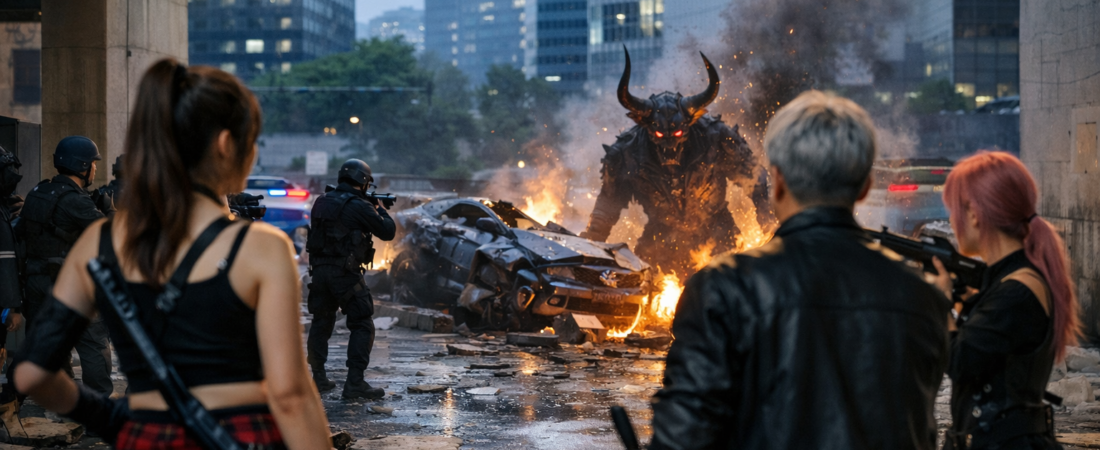
AI-Generated Photorealistic Image — All people, scenes, and details in this image are entirely AI-generated and fictional. Not a real photograph of an actual person or event. 이 이미지는 AI로 생성된 가상 이미지입니다.




Leave a Reply