Table of Contents
What happens when you merge three proud military academies into one? South Korea is about to find out.
The Ministry of National Defense and the Democratic Party of Korea have just finalized a plan to build a single Korea Armed Forces Academy. This new institution will replace the separate Army, Navy, and Air Force academies. It will be located at Jaundae, a military training district in Daejeon.
This is not a small administrative tweak. It touches identity, tradition, and how South Korea trains its future military leaders. Let’s break down what’s really going on.
What’s Happening: The Korea Armed Forces Academy Plan
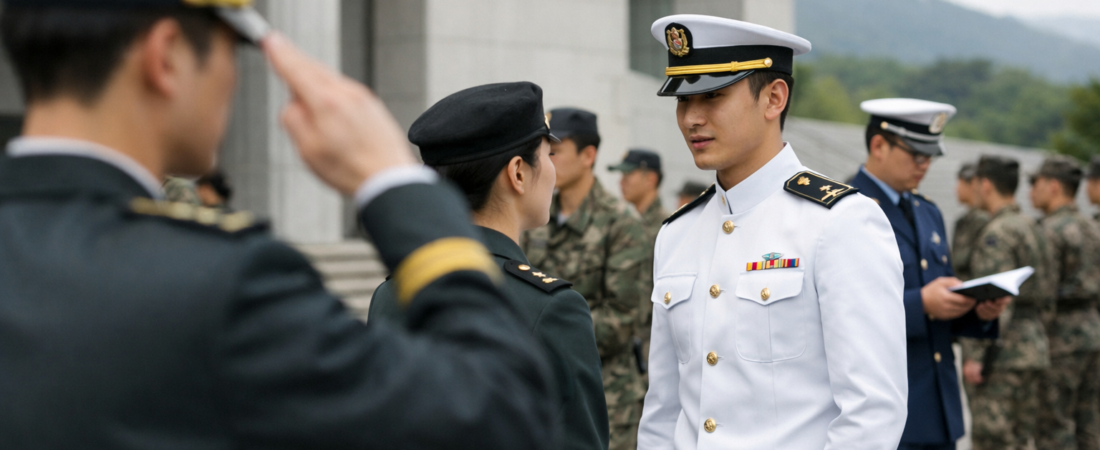
South Korea currently runs three separate service academies. The Army Academy, the Naval Academy, and the Air Force Academy each train officers independently. Each has its own campus, culture, and decades of tradition.
Under the new plan, all three will merge into one unified Korea Armed Forces Academy. Cadets will spend all four years of their education at this single institution in Daejeon. This marks a major shift from the current system, where each branch controls its own curriculum and campus life.
The Ministry of National Defense and ruling party lawmakers have already confirmed this basic framework. Detailed plans, however, are still being worked out. Officials say they will collect public opinion before finalizing specifics around October.
Why does the timeline matter? Because the gap between the “basic plan” and the “detailed plan” is exactly where controversy tends to grow. Many stakeholders, from active cadets to retired generals, are watching closely to see what changes and what stays the same.
The choice of Jaundae in Daejeon is also significant. This area already hosts several military training and command facilities. Building the new Korea Armed Forces Academy there signals a deliberate consolidation of military education infrastructure in one central location.
Why Merge Three Academies Into One?
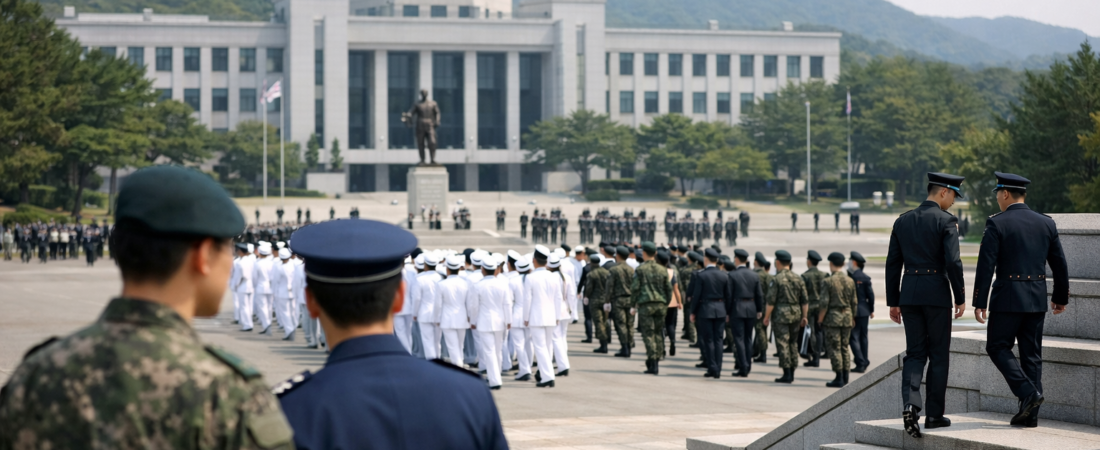
So why merge the academies now? South Korea faces shrinking birth rates and a smaller pool of young recruits. Fewer young people means fewer cadets, and running three separate academies becomes harder to justify financially and logistically.
A unified Korea Armed Forces Academy could reduce duplicate spending. Instead of three administrative systems, three sets of facilities, and three separate faculties, the country would maintain just one. That’s an attractive argument for budget planners inside the Ministry of National Defense.
There’s also a strategic logic here. Modern warfare increasingly blends land, sea, and air operations. Have you ever wondered why joint military exercises matter so much today? Because future conflicts rarely stay confined to a single domain.
Training future officers together, from day one, could build stronger cross-branch understanding. Graduates of the Korea Armed Forces Academy would share a common foundation before specializing in their chosen service. Supporters argue this creates more adaptable leaders for an era of joint operations.
Countries around the world have experimented with similar consolidation models, though results vary by national context. This isn’t an entirely unprecedented move in global military history. Still, South Korea’s specific mix of tradition, rivalry between service branches, and demographic pressure makes this case unique.
Alumni Backlash: History and Tradition at Stake
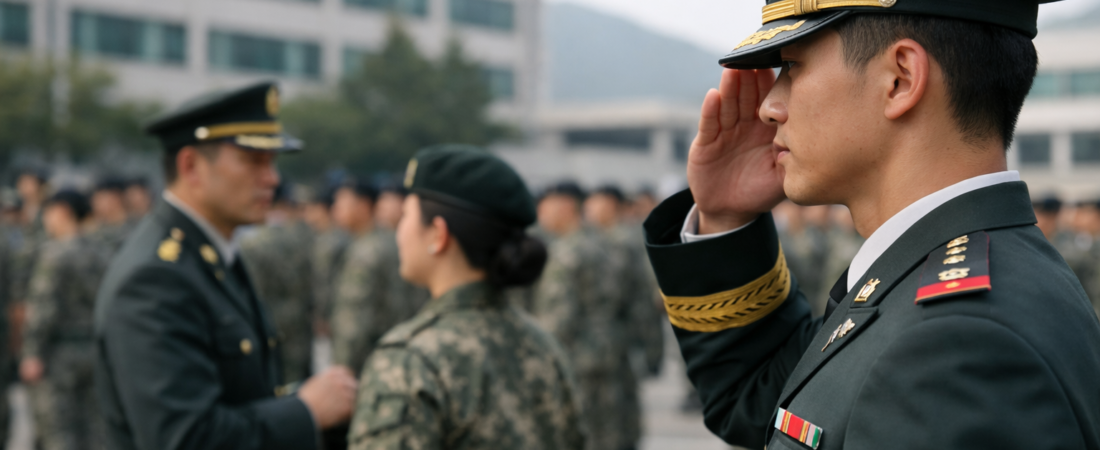
Not everyone welcomes this change. Alumni associations from the existing academies have pushed back hard against the Korea Armed Forces Academy plan. Their objection centers on one word: tradition.
Each academy carries decades, in some cases generations, of institutional identity. Graduates feel deep loyalty to their specific alma mater, its rituals, and its distinct culture. Merging everything into the Korea Armed Forces Academy, alumni groups argue, severs that historical thread permanently.
Is this resistance simply nostalgia, or does it point to something deeper? Military academies function almost like extended families. Shared training experiences, inside jokes, and hardship bonding create loyalty that lasts a lifetime.
Alumni total organizations have publicly stated that this move cuts off history and tradition. That’s strong language, and it reflects genuine anxiety about losing institutional memory. When you spend years building an identity around your academy, watching it dissolve into a single combined institution feels personal.
This tension between modernization and tradition isn’t new in Korean institutional history. You can find similar debates whenever government agencies restructure long-standing organizations. The Korea Armed Forces Academy case, though, carries extra emotional weight because it involves military honor and generational legacy.
For more background on how Korean defense policy debates typically unfold, readers can check Korea Daily for additional coverage.
What the Korea Armed Forces Academy Means for the Future
Where does this leave South Korea’s military education system going forward? The government plans to gather public and expert opinion through the coming months. A more detailed roadmap is expected around October, addressing curriculum design, faculty structure, and campus transition timelines.
Several practical questions remain open. Will existing academy names disappear completely, or will they survive as internal divisions within the Korea Armed Forces Academy? Will current cadets be grandfathered into their original academy’s system, or transitioned immediately?
These details matter enormously to families making decisions about military careers today. Parents and prospective cadets need clarity before committing years of their children’s lives to this path. Uncertainty during the transition period could actually hurt recruitment, ironically undermining one of the plan’s original goals.
There’s also a political dimension worth watching. The Democratic Party of Korea has taken a lead role in finalizing this plan alongside the Ministry of National Defense. Given how contested military policy can become in Korean politics, expect further debate as the October deadline approaches.
For global observers, this story offers a window into how Korea balances efficiency with heritage. Military academies everywhere face similar demographic and budgetary pressures. South Korea’s approach to consolidating its academies into one Korea Armed Forces Academy may become a case study for other nations facing the same choice.
The coming months will reveal whether this consolidation strengthens Korea’s defense education system or creates lasting institutional friction. Either way, the debate over the Korea Armed Forces Academy reflects a broader question every modernizing institution eventually faces. How do you honor the past while preparing for an uncertain future?
What do you think about merging Korea’s three military academies into a single Korea Armed Forces Academy?
AI-Generated Photorealistic Image — All people, scenes, and details in this image are entirely AI-generated and fictional. Not a real photograph of an actual person or event. 이 이미지는 AI로 생성된 가상 이미지입니다.



Leave a Reply