Table of Contents
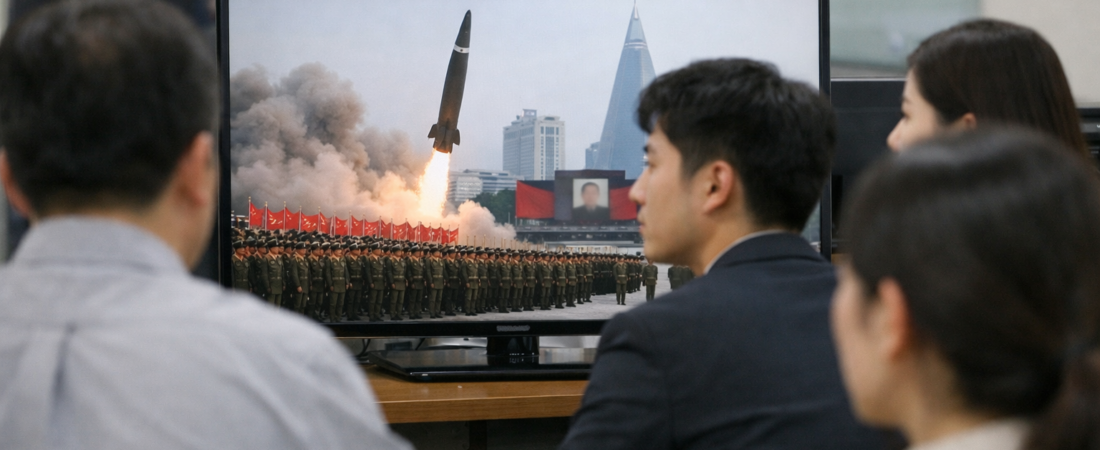
Can a country actually edit its own history? It sounds impossible, but North Korea just did exactly that. Recent findings show North Korea altered old documentary footage praising Kim Il-sung, removing unification imagery and changing the color of the Korean peninsula map.
Why would a regime tamper with decades-old propaganda films? The answer says a lot about where North Korea wants its people to look next. This isn’t just about old movies — it’s about rewriting how North Koreans understand their own identity.
North Korea Rewrites Its Own Propaganda History
Here’s what analysts discovered. In archival documentaries celebrating Kim Il-sung, North Korea quietly modified scenes showing a unified Korean peninsula. Map colors changed, unification references vanished, and certain footage disappeared entirely.
Why does this matter? These films weren’t minor internal documents. They were core propaganda tools, shown to generations of North Koreans to build loyalty and shape historical memory.
Editing them means North Korea isn’t just managing today’s message. It’s reaching backward, into footage decades old, to make history match current policy. That’s a striking level of control over the past.
Think about it this way: imagine a government going back and editing old national holiday broadcasts to remove references to a former ally. That’s roughly the scale of what North Korea appears to be doing here. It signals a level of ideological discipline that few other nations attempt so openly.
The Legacy of Kim Il-sung and the Idea of One Korea
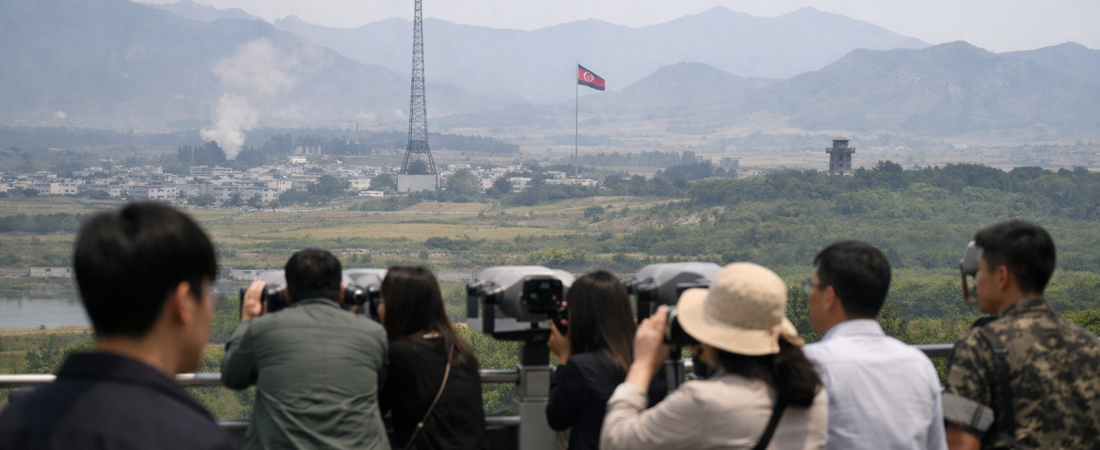
To understand why this matters, you need some background. Kim Il-sung, North Korea’s founding leader, built his legitimacy partly on the promise of Korean unification.
For decades, North Korean propaganda showed the two Koreas as one divided family, waiting to reunite. Maps colored the entire peninsula the same shade, symbolizing a single nation temporarily split by outside forces.
This wasn’t just political messaging. It reflected a real cultural belief, shared across generations, that North and South Koreans remain one people — same language, same history, same blood.
Even during the coldest years of Cold War tension, North Korea rarely denied this shared identity outright. Unification remained the stated national goal, at least on paper. You could disagree with the regime’s methods, but the underlying claim — “we are one people” — stayed remarkably consistent for over seventy years.
That consistency is exactly what makes these recent edits so notable. North Korea is now quietly walking away from a founding pillar of its own ideology.
Why North Korea Is Erasing Unification from the Past
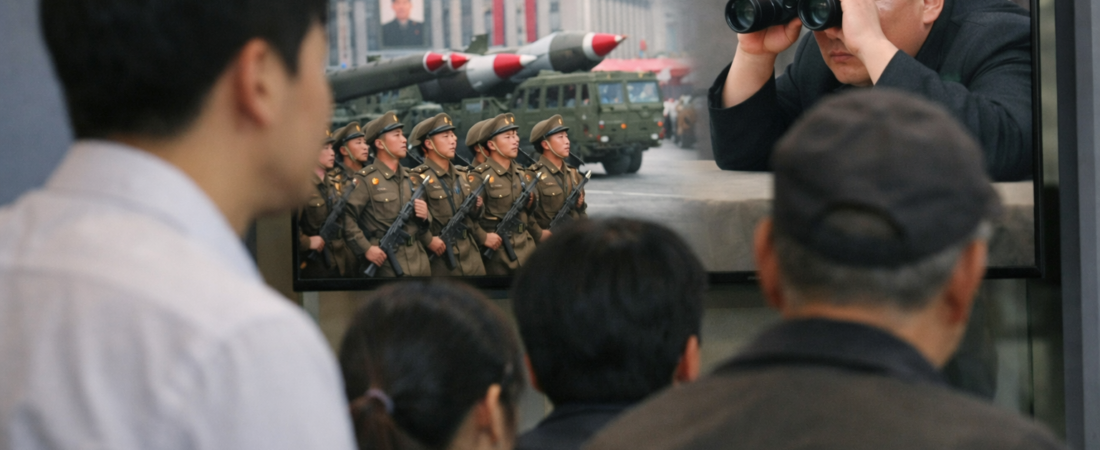
So what changed? In recent years, North Korea’s official stance has shifted dramatically. Leader Kim Jong-un has moved away from unification rhetoric, instead describing South Korea as a separate, even hostile, state.
This policy shift didn’t stay confined to speeches and new statements. Now it’s reaching into archival films from the Kim Il-sung era, decades before this “two states” doctrine existed.
Why go through the trouble of editing old footage? Analysts believe North Korea wants to apply its current anti-South Korea line retroactively, making it look like this stance has always existed.
Think of it like erasing a founding chapter of a story to make a new plot twist feel natural. If North Korean citizens never see old footage celebrating unification, will they question today’s separatist messaging? Probably not — and that seems to be exactly the point.
This strategy also serves a practical political function. It protects Kim Jong-un’s current policy from uncomfortable comparisons to his grandfather’s stated goals. If North Korea can control what its citizens see of the past, contradictions simply disappear from view.
According to reporting covered by Yonhap News Agency, experts see this as a deliberate effort to weaken the sense of shared ethnicity between North and South Korea. That’s a significant departure from decades of official ideology.
What This Means for the Next Generation
Here’s the part that should concern you most. North Korea isn’t just changing government policy — it’s targeting how young North Koreans think about South Korea altogether.
If unification disappears from history lessons and old films, younger generations may grow up never seeing North and South Koreans as one people. Instead, they’ll learn South Korea is simply a foreign, unfriendly nation — nothing more.
Why does this generational shift matter so much? Because national identity often forms early, through media, education, and repeated cultural messaging.
Remove the “we are one people” narrative long enough, and it eventually stops feeling true — even if it once was central to national identity. North Korea seems to understand this psychological reality well, and it’s using state media as the primary tool to reshape it.
This isn’t happening in isolation, either. North Korea has also removed unification-related language from its constitution-adjacent political rhetoric and downgraded state agencies previously tasked with inter-Korean dialogue.
Taken together, these moves suggest a coordinated, long-term strategy rather than a one-time policy adjustment. North Korea appears to be building an entirely new generational narrative, brick by brick, film by film.
For South Korea and the international community, this raises hard questions. Can two nations divided by ideology, but connected by shared history, simply choose to redefine themselves as unrelated? North Korea seems determined to try.
What happens if an entire generation grows up believing North and South Korea were never truly one people? That’s the real stake behind these seemingly small edits to old propaganda films. North Korea isn’t just managing the present — it’s quietly reshaping how history itself will be remembered.
Looking ahead, this trend will likely deepen, not fade. As Kim Jong-un’s government continues consolidating its “two hostile states” doctrine, expect more historical materials to be adjusted, trimmed, or reframed.
North Korea’s approach shows how authoritarian systems can use media control not just to manage today’s narrative, but to rewrite yesterday’s as well. For anyone studying Korean affairs, this is a case worth watching closely in the months ahead.
What do you think — can decades of shared identity really be erased through edited footage and new state messaging? Or will cultural and family ties across the Korean peninsula prove stronger than any propaganda campaign North Korea produces?
AI-Generated Photorealistic Image — All people, scenes, and details in this image are entirely AI-generated and fictional. Not a real photograph of an actual person or event. 이 이미지는 AI로 생성된 가상 이미지입니다.


Leave a Reply