
Table of Contents
Can a web drama change how South Koreans see their northern neighbors? That’s exactly what a new 12-episode series hopes to do. It centers on North Korean defectors chasing startup dreams alongside South Korean classmates.
The show, titled “Start Hana,” launched on July 31. It comes from the Korea Hana Foundation, an organization under the Ministry of Unification that supports North Korean defectors. The timing isn’t random — it coincides with Bukhyangmin Day, a day set aside to honor North Korean defectors and their journeys.
A New Day, A New Story for North Korean Defectors
Bukhyangmin Day exists because language matters. For years, South Korea used terms like “tal-buk-min” (defector) to describe people who fled North Korea. That word focused only on escape, not on identity or future.
“Bukhyangmin” shifts the focus. It means someone who faces or looks toward the North, suggesting connection rather than rupture. This small linguistic change reflects a bigger cultural shift in how Korea talks about its divided history.
Why does a name change matter so much? Because language shapes perception, and perception shapes policy. If society sees North Korean defectors only as refugees, integration efforts stay limited to survival support.
But if society sees them as future citizens with dreams and skills, the conversation changes entirely. The Korea Hana Foundation seems to understand this shift deeply. Releasing a web drama about entrepreneurship — not trauma — sends a clear message about where the narrative should go next.
Inside “Start Hana”: Startup Dreams on Screen
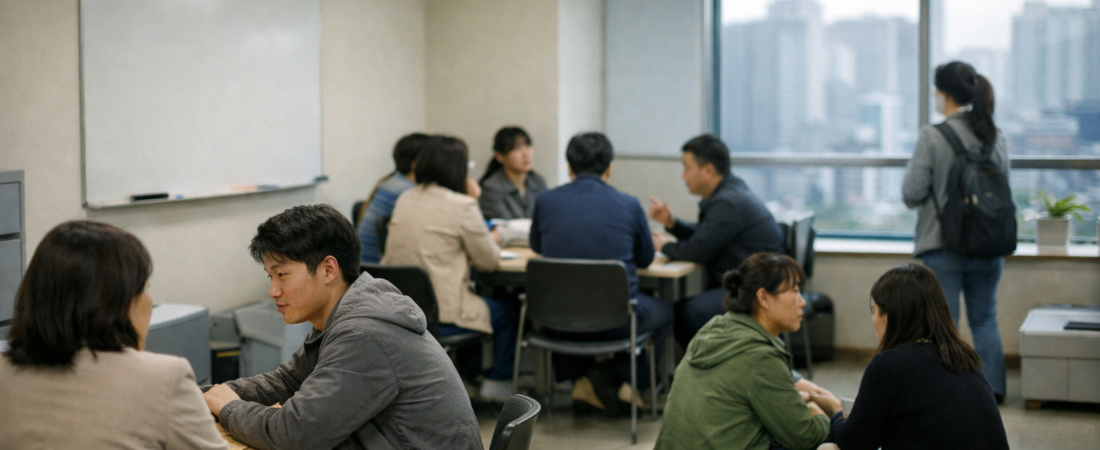
So what actually happens in “Start Hana”? The story follows North Korean defectors and South Korean students in a university startup club. Together, they build businesses, face failures, and learn from each other.
This setup matters more than it might seem at first glance. University entrepreneurship clubs are common across Korea, but rarely do dramas feature North Korean defectors as active builders rather than passive recipients of help.
The production team didn’t just imagine this world from the outside. Actual North Korean defector youth participated in both production and advisory roles. That detail changes everything about authenticity.
When creators consult real North Korean defectors about accuracy, the result avoids stereotypes. Instead of showing only hardship, the drama shows ambition, humor, and the messy process of building something new. Isn’t that closer to how young people actually experience life, regardless of where they were born?
The 12-episode format also matters strategically. Releasing one episode weekly, starting July 31, keeps viewers engaged over three months. This slow rollout mirrors how real relationships develop — not instantly, but through repeated contact and shared struggle, much like the fictional students in the drama’s startup club.
Why This Story Matters for North Korean Defectors

Roughly 34,000 North Korean defectors now live in South Korea, according to Ministry of Unification data. That’s a small population within a nation of over 50 million people. Yet their integration remains one of Korea’s most complex social challenges.
Many North Korean defectors face job discrimination, cultural gaps, and social isolation after resettlement. Government support exists, but stigma persists in workplaces and neighborhoods. A web drama alone won’t erase that stigma, but media representation plays a real role in shifting public attitudes over time.
Think about how television shaped attitudes toward other marginalized groups in different countries. Representation doesn’t just entertain — it normalizes. When young South Korean viewers watch North Korean defectors solving startup problems, laughing with friends, and pitching ideas, something shifts quietly.
They stop seeing “the North Korean defector” as a category and start seeing individual characters with names and goals. That’s a subtle but powerful form of social change. Organizations focused on unification policy, like those referenced by Yonhap News Agency, have long argued that soft cultural tools matter as much as formal policy.
Entrepreneurship itself carries symbolic weight here too. Starting a business requires risk-taking, confidence, and belief in the future. By framing North Korean defectors as entrepreneurs rather than victims, “Start Hana” reframes their entire social role.
It suggests they aren’t just adapting to South Korean society — they’re actively shaping it. Doesn’t that framing feel more accurate to how integration should actually work?
Looking Ahead: What Comes Next for North Korean Defectors
Media projects like this rarely appear in isolation. They usually signal a broader institutional strategy. The Korea Hana Foundation likely sees storytelling as a long-term integration tool, not a one-time publicity effort.
If “Start Hana” succeeds, expect more scripted content featuring North Korean defectors in professional and academic settings. This could extend beyond entrepreneurship into medicine, technology, or the arts. Each new setting would chip away at outdated stereotypes a little more.
There’s also an educational angle worth considering. University students watching this drama might reconsider their own assumptions about classmates from North Korea. Some may even seek out real startup clubs that include North Korean defectors as members.
That kind of ripple effect can’t be measured easily, but it matters just as much as formal policy outcomes. Still, challenges remain significant. One web drama can’t fix employment discrimination or housing barriers overnight.
North Korean defectors still need stronger structural support — job training programs, mentorship networks, and anti-discrimination enforcement. Storytelling can shift hearts, but institutions must shift systems. The real test will be whether public sympathy generated by shows like this translates into policy pressure or workplace change.
Korea’s relationship with its northern history remains complicated and evolving. Renaming a commemorative day, funding authentic media projects, and involving real North Korean defectors in production all point toward a more nuanced national conversation. Whether that conversation reaches boardrooms and hiring managers is the next chapter to watch.
What do you think — can a web drama really change how a society treats North Korean defectors, or does lasting change require something more?
AI-Generated Photorealistic Image — All people, scenes, and details in this image are entirely AI-generated and fictional. Not a real photograph of an actual person or event. 이 이미지는 AI로 생성된 가상 이미지입니다.




Leave a Reply