Table of Contents
Can you type “BTS” on a phone and have it disappear? On one North Korean smartphone, it depends entirely on which version of the name you use. This small detail reveals something much bigger about how North Korea fights a losing battle against South Korean pop culture.
A recent look at the North Korean smartphone model known as Samtaeseong 8 shows exactly how this battle plays out. Type “Bangtan Sonyeondan,” the Korean name for BTS, and the word vanishes from the screen. Type “BTS” in English letters, though, and it stays put.
That gap is not an accident. It’s a window into how North Korean authorities try to police culture, word by word, keystroke by keystroke. And it shows just how hard that job has become in 2026.
What Happens When You Type “BTS” on a North Korean Smartphone
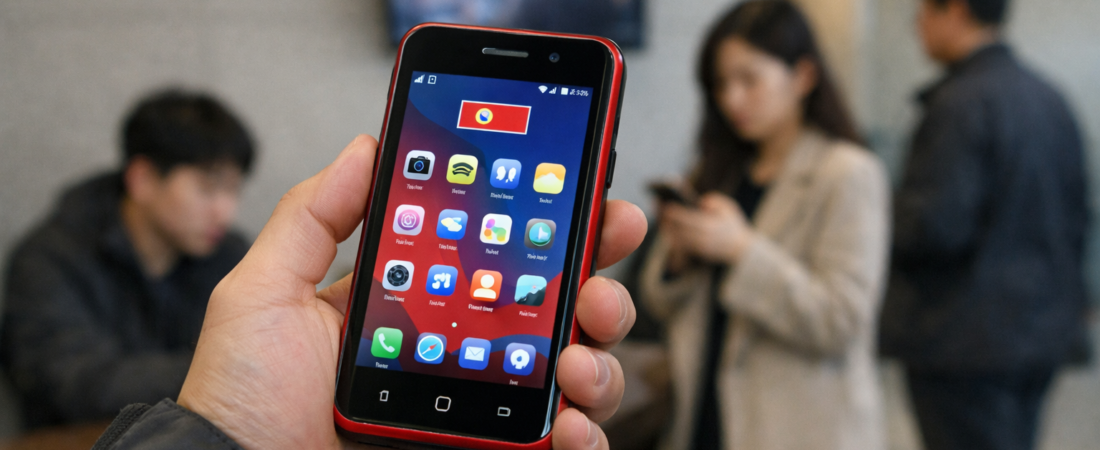
The Samtaeseong 8 is a domestically produced North Korean smartphone. Like most devices sold inside the country, it comes with built-in software that monitors what users search for and type. This isn’t a hidden feature — it’s marketed as normal, expected behavior.
Researchers testing the device found a strange pattern. Enter “Bangtan Sonyeondan” in the search or messaging function, and the text gets blocked or erased immediately. Enter “BTS” using Roman letters instead, and nothing happens — the word passes through untouched.
The same inconsistency showed up with Blackpink, the South Korean girl group known worldwide. Some spellings triggered the block. Others slipped through without any resistance at all.
Popular South Korean drama titles faced a similar mixed fate. Certain titles got flagged and erased instantly. Others, often typed slightly differently or using foreign script, avoided detection completely.
This isn’t just a funny glitch. It’s a real-time snapshot of a government trying to control language on a device that millions of ordinary citizens now carry in their pockets. Every North Korean smartphone sold today comes loaded with this kind of quiet surveillance software, built right into the operating system.
Why North Korea Built Language Filters Into Every Device
Why would a government care so much about a boy band’s name? For North Korea, this isn’t really about music. It’s about controlling ideas at the source, before they can spread person to person.
South Korean pop culture — K-pop, K-dramas, slang, fashion trends — has quietly seeped across the border for over a decade. USB drives, smuggled hard drives, and cross-border radio broadcasts have all carried fragments of South Korean life into North Korean homes. Authorities call this “anti-socialist” content, and they’ve fought it aggressively.
In 2020, North Korea passed the Reactionary Thought and Culture Rejection Law. This law criminalizes watching or spreading South Korean media, with penalties that can include hard labor or worse. Every North Korean smartphone sold since then has been engineered to help enforce that law automatically, without a human censor needing to check each message.
This is where the language processing software comes in. Instead of relying only on police checkpoints or informants, the government built censorship directly into the technology itself. If your phone won’t let you type “Bangtan Sonyeondan,” you can’t easily share it, search for it, or discuss it with friends.
It’s a quieter form of control than a soldier at your door. But in some ways, it’s more effective, because it operates constantly, silently, on every device, every day. For readers unfamiliar with North Korea’s information environment, this level of built-in surveillance on a personal smartphone might sound extreme — but it fits a decades-long pattern of tightly restricting outside information.
You can read more background on North Korea’s media restrictions and enforcement efforts through Radio Free Asia, which has tracked these policies closely over the years.
The Loophole: Why “BTS” Survives But “Bangtan Sonyeondan” Doesn’t

So why does English lettering slip past the filter while Korean script gets caught? The answer likely comes down to how the software was built in the first place. Language filters usually work by matching specific keyword lists, not by understanding meaning the way a human censor would.
If North Korean engineers built their blacklist primarily using Korean-script terms, English abbreviations like “BTS” may simply never have been added to that list. It’s not that officials approve of BTS — it’s that their filtering program has a blind spot. The North Korean smartphone censors what it’s told to censor, nothing more, nothing less.
This creates an odd irony. Young North Koreans curious about South Korean culture may have unintentionally found a workaround, simply by using English letters instead of Korean ones. Whether this is a temporary oversight or a lasting gap remains unclear.
The same logic seems to explain the inconsistent blocking of Blackpink’s name and various drama titles. Alternate spellings, abbreviations, or foreign-script versions of these terms weren’t fully anticipated when the filter was designed. Every North Korean smartphone runs on software that needs constant updates to stay current with how people actually talk.
Isn’t it fascinating that a government spending so much energy on ideological control still can’t fully predict how people type? Language is messy. Slang shifts. Abbreviations multiply.
Keeping up with all of it, especially foreign cultural terms crossing into a closed information system, is a task that never really finishes. This mismatch between rigid government intent and flexible human language is exactly why gaps like the BTS loophole keep appearing.
What This Means for the Future of the North Korean Smartphone
Where does this leave North Korea’s efforts to seal off its population from South Korean culture? Based on the pattern seen with the Samtaeseong 8, the answer looks like an endless game of catch-up. Every North Korean smartphone update likely closes a few loopholes while leaving new ones open elsewhere.
This matters because it shows the limits of top-down information control in a digital age. Even in one of the world’s most closed societies, language itself resists being fully contained. Words move faster than rulebooks can track them.
For readers outside Korea, this story offers something valuable beyond curiosity. It shows how cultural influence — soft power, in academic terms — doesn’t need tanks or trade deals to cross borders. A boy band’s name, typed correctly or not, becomes a small act of resistance against total control.
Will North Korea eventually close every loophole in its language filters? Possibly, with enough investment in more advanced software. But as long as global pop culture keeps evolving new slang, spellings, and platforms, the North Korean smartphone censorship system will likely stay a step behind, chasing a moving target rather than catching it.
South Korea’s cultural exports, often grouped under the term “Hallyu” or the Korean Wave, have become one of the country’s most powerful diplomatic tools over the past two decades. From film to television to K-pop, this influence keeps finding cracks in even the most controlled environments. The story of a single smartphone in North Korea, quietly failing to block “BTS,” is a small but telling example of that larger trend.
For scholars and casual observers alike, this episode is worth watching closely. Future versions of the North Korean smartphone will almost certainly try to patch this gap. But history suggests new gaps will simply open somewhere else, because controlling language completely may be an impossible task, even for a government determined to try.
What do you think — can any government truly control language in the smartphone era, or is this kind of censorship destined to keep failing at the edges?
AI-Generated Photorealistic Image — All people, scenes, and details in this image are entirely AI-generated and fictional. Not a real photograph of an actual person or event. 이 이미지는 AI로 생성된 가상 이미지입니다.
Leave a Reply