
Table of Contents
What happens when a crime victim files a complaint, and no one follows up? That question sits at the heart of a new legislative push from the People Power Party. This week, the party introduced three bills together under one name: the “Crime Victim Protection 3 Act.”
The goal sounds simple. Keep prosecutors’ supplementary investigation powers intact, strengthen police-prosecution cooperation, and give victims more chances to be heard. But is it really that simple? Let’s break down what’s actually in these bills, and why they matter.
What the People Power Party Just Proposed
The People Power Party bundled three separate law amendments into one package. Each bill targets a different weak point in Korea’s current criminal justice system. Together, they aim to close gaps that victims often fall through.
The first piece keeps prosecutors’ supplementary investigation authority alive. This power lets prosecutors add investigative steps after police finish their initial work. Without it, critics argue, some cases simply stall.
The second element requires mandatory cooperation between police and prosecutors from the very start of a case, but only for serious crimes. Think violent crimes, major fraud, or cases with significant public harm. Early cooperation, the party argues, prevents evidence from disappearing before prosecutors even get involved.
The third bill expands the range of cases that must be forwarded when someone files an objection to a complaint or accusation being dropped. In plain terms, if police decide not to pursue a case, victims can object. This bill widens how many of those objection cases get sent up for further review.
Taken together, these three bills form what the People Power Party is calling a victim-first package. The party frames the entire effort as protection legislation, not a power grab. But not everyone in the National Assembly sees it that way.
Understanding Korea’s Prosecution-Police Power Struggle
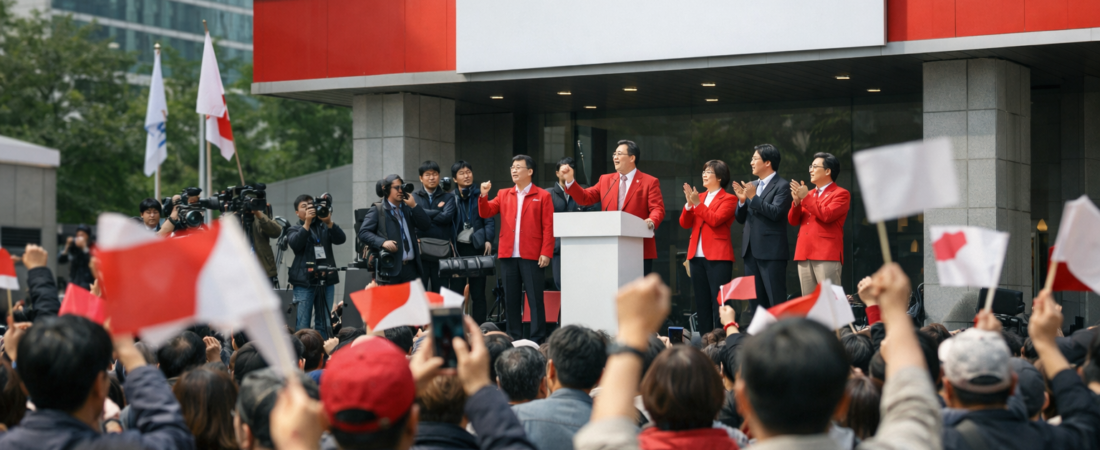
To understand why this bill matters, you need some background. Korea has spent years fighting over who controls criminal investigations: prosecutors or police. This isn’t a new fight.
Back in 2020 and 2021, major reforms stripped prosecutors of much of their direct investigative power. The idea was to prevent prosecutorial overreach, a real concern after decades of concentrated authority. Police gained more independence, and prosecutors were pushed toward a narrower, supervisory role.
But did that reform actually help victims? That’s the question many lawmakers, including those in the People Power Party, are now asking again. Critics of the 2020-2021 reforms argue that police sometimes lack the resources or expertise to fully investigate complex cases. When that happens, victims wait longer for justice, or get no justice at all.
The Democratic Party of Korea, for its part, generally supports keeping police-centered investigation power. The party has long argued that concentrated prosecutorial authority created abuse of power in the past. This philosophical divide is exactly why crime victim protection has become a political battleground, not just a policy question.
You can see the pattern here. Every time one side pushes to expand prosecutorial power, the other pushes back, worried about history repeating itself. It’s a tug-of-war that’s been going on for years, and this new bill package is just the latest round.
Why These Bills Matter for Crime Victims

Here’s a scenario worth imagining. A victim reports a serious assault. Police investigate, but the case has legal gaps, missing evidence, or unclear jurisdiction issues.
Without prosecutorial follow-up power, the case might simply close. That’s the exact scenario the People Power Party says its bill package prevents. By keeping supplementary investigation authority, prosecutors can step in and finish what police started, rather than letting cases go cold.
The mandatory early cooperation clause matters too. Serious crimes often require fast, coordinated action, before evidence disappears or witnesses forget details. If police and prosecutors must collaborate from day one on major cases, response times could improve significantly.
And what about the objection process? Right now, when police close a case and a victim disagrees, the path to review isn’t always guaranteed. Expanding referral scope means more of these disputed cases actually reach a second set of eyes.
For everyday citizens, these details might seem technical. But they translate into real outcomes: does your case get a second chance, or does it die quietly in a filing cabinet? That’s not an abstract legal question. It’s a lived experience for thousands of crime victims across Korea every year, according to reporting from Yonhap News Agency.
The People Power Party clearly wants to position itself as the party protecting victims. Whether voters see it that way, or see it as reopening old prosecutorial power debates, remains to be seen.
Can the People Power Party Actually Pass This?
Here’s the hard truth. The People Power Party doesn’t hold a majority in the National Assembly. Passing any bill alone, without Democratic Party of Korea support, is nearly impossible.
And the ideological gap between the two parties on this issue runs deep. The Democratic Party of Korea has spent years working to limit prosecutorial power, not expand it. Asking that party to support a bill preserving supplementary investigation authority feels, to many observers, like asking for a reversal of core policy positions.
So why introduce the bill at all, if passage seems unlikely? Good question. Political messaging matters here as much as actual legislative outcomes.
By branding this package as victim protection legislation, the People Power Party shifts the public conversation. Instead of framing the debate as “prosecutors versus police,” the party reframes it as “victims versus bureaucratic gaps.” That’s a smart rhetorical move, regardless of whether the bill ever reaches a final vote.
There’s also historical precedent worth remembering. Korean political parties frequently introduce bills they know face long odds, using them to stake out policy positions ahead of future elections or negotiations. This package may serve exactly that purpose: a marker for future debate, rather than a bill destined for quick passage.
Still, don’t count out the possibility of partial compromise. Sometimes bills get split apart during committee review, with popular provisions surviving while controversial ones get dropped. The mandatory cooperation clause, for instance, might find broader support than the supplementary investigation authority piece, simply because it feels less like a power expansion and more like a practical fix.
What should you watch for next? Keep an eye on how the Democratic Party of Korea responds in committee hearings. Their reaction will tell you whether this stays purely symbolic, or whether genuine negotiation begins.
Korea’s justice system keeps evolving, shaped by this ongoing tension between prosecutorial authority and police independence. The People Power Party‘s new bill package won’t resolve that tension overnight. But it does keep the conversation alive, and it puts victim protection squarely back into the political spotlight.
Whether these three bills eventually pass, get modified, or quietly fade away, they reveal something important about Korean politics today. Legislative gridlock doesn’t stop parties from trying. It just changes how they frame their arguments, and who they’re trying to convince.
So here’s my question for you: do you think victim protection legislation should be separated from broader prosecutorial power debates, or are the two issues impossible to untangle in Korea’s current political climate?
AI-Generated Photorealistic Image — All people, scenes, and details in this image are entirely AI-generated and fictional. Not a real photograph of an actual person or event. 이 이미지는 AI로 생성된 가상 이미지입니다.


Leave a Reply