Table of Contents
Can a political party punish its own members and still look unified? That question sits at the heart of a brewing controversy inside South Korea’s main opposition group. The People Power Party has just opened disciplinary proceedings against three of its own lawmakers, and the reasons behind each case reveal deep cracks in party loyalty.
This is not a small administrative matter. When a party’s central ethics committee steps in, it signals something has gone seriously wrong behind closed doors.
What Just Happened Inside the People Power Party
The Central Ethics Committee of the People Power Party has launched formal disciplinary reviews against three sitting members of the National Assembly. Their names are Cho Kyung-tae, Jin Jong-oh, and Kwon Young-jin. Each faces a separate accusation, but all three cases share one common thread: internal party conflict spilling into public view.
Why does this matter to anyone outside Korea? Because how a major party handles internal dissent tells you a lot about its stability heading into future elections.
The People Power Party has struggled with factional tension for years. This latest round of discipline shows that struggle has not gone away. If anything, it looks sharper than before.
Three Lawmakers, Three Different Controversies
Let’s break down what each lawmaker is accused of doing. The details matter, because they show different flavors of the same underlying problem: party unity under strain.
Cho Kyung-tae and the Vice Speaker Race
Cho Kyung-tae faces accusations tied to the race for the opposition’s nominee for National Assembly Vice Speaker. According to the complaint, he allegedly worked to help defeat a specific candidate during that internal competition. In Korean politics, the vice speaker position carries real institutional weight, so competition for the nomination gets intense.
Was this simply hard campaigning, or something that crossed a line? That is exactly what the ethics committee must now decide.
Jin Jong-oh and the Busan By-Election
Jin Jong-oh’s case centers on the Busan Buk-gap by-election. He is accused of supporting Han Dong-hoon, who ran as an independent candidate at the time, rather than backing the official People Power Party nominee. In a party system built on loyalty during elections, backing an outside candidate is a serious breach.
This case is especially sensitive because Han Dong-hoon remains a major figure in Korean conservative politics. Supporting him as an independent, rather than through the party’s own candidate, raises hard questions about where loyalty should lie.
Kwon Young-jin and the Physical Altercation
Kwon Young-jin’s case is the most dramatic of the three. While raising concerns about committee assignments, he reportedly grabbed the collar of floor leader Jeong Jum-sik. That is not a metaphor — this was an actual physical confrontation between two elected officials.
Committee assignments may sound like a bureaucratic detail. But in the National Assembly, they determine which lawmakers get influence over which policy areas, so tempers can run hot.
Why Internal Discipline Matters for the People Power Party
Here’s the bigger picture. The People Power Party is not just punishing three individuals — it is trying to send a message to its entire membership. Discipline like this usually means: loyalty comes first, personal ambition comes second.
But does harsh discipline actually fix internal division, or does it just push tension further underground? This is a real dilemma for party leadership. Punishing outspoken members can silence dissent in the short term, yet it can also breed resentment that resurfaces later, often at the worst possible moment — like right before a major election.
Korean political parties have a long history of ethics committees acting as internal courts. These bodies can suspend party membership, block candidacy nominations, or issue formal warnings. For a party like the People Power Party, currently working to rebuild its public image after recent political turbulence, these actions carry extra weight.
Consider the context. South Korea’s conservative bloc has faced serious internal fractures in recent years, and public trust has been hard to rebuild. Every visible instance of infighting — like a floor leader getting grabbed by the collar — becomes ammunition for opposing parties and skeptical voters alike.
You might ask: why would a lawmaker risk open conflict with party leadership at all? Often, it comes down to genuine policy disagreement, personal ambition, or a belief that the party’s official strategy is simply wrong. Cho Kyung-tae’s case, for example, touches on internal competition for institutional power — the kind of contest where personal relationships and factional alignment often matter more than official party lines.
Jin Jong-oh’s case raises a different but equally important issue: how do parties handle members who support outside candidates during elections? If you are a longtime party member, does personal friendship or ideological alignment ever justify backing someone running against your own party’s nominee? These are not easy questions, and the People Power Party’s answer here will shape how strictly it enforces loyalty going forward.
For readers interested in the broader mechanics of Korean party discipline, outlets like Korean News Wire have tracked similar ethics committee cases across multiple parties in recent years. This is not unique to the People Power Party — the Democratic Party of Korea has run comparable disciplinary processes. But the timing and intensity here suggest something more than routine housekeeping.
What Comes Next for the People Power Party
So what happens now? The ethics committee will review evidence, hear from the three lawmakers, and decide on penalties. These can range from formal warnings to membership suspension, and in serious cases, even expulsion.
Expulsion would be a major step. It would mean the People Power Party is willing to lose sitting lawmakers rather than tolerate open defiance.
Will the party choose harsh punishment to project strength, or lighter penalties to avoid further public embarrassment? Both paths carry risk. Heavy discipline might look decisive, but it could also alienate factions within the party at a time when unity matters most.
Light punishment, on the other hand, risks looking weak — as if the People Power Party cannot enforce its own rules. Either way, this case will likely shape internal party dynamics for months to come. Lawmakers watching from the sidelines will take note of exactly how far they can push before facing real consequences.
For readers outside Korea, this story offers a useful window into how party discipline actually works in a functioning democracy. Political parties everywhere struggle with the same tension: how much internal dissent should be tolerated before it threatens the party’s public image? The People Power Party’s handling of Cho Kyung-tae, Jin Jong-oh, and Kwon Young-jin will be a real-time case study in that balancing act.
Korean politics moves fast, and stories like this rarely stay static for long. Expect updates as the ethics committee reaches its final decisions, and expect reactions from across the political spectrum once penalties are announced.
What do you think — should political parties punish members harshly for internal disagreements, or does that approach do more harm than good to long-term unity?
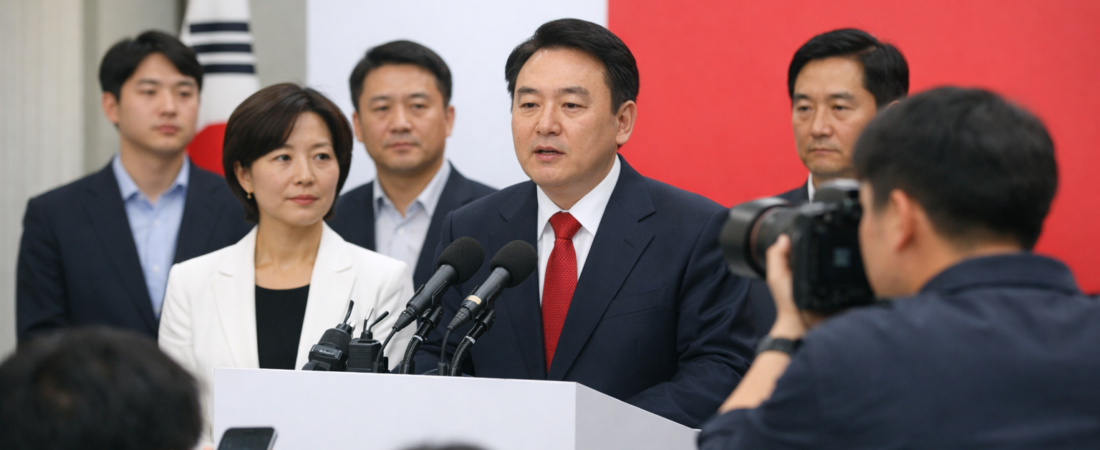
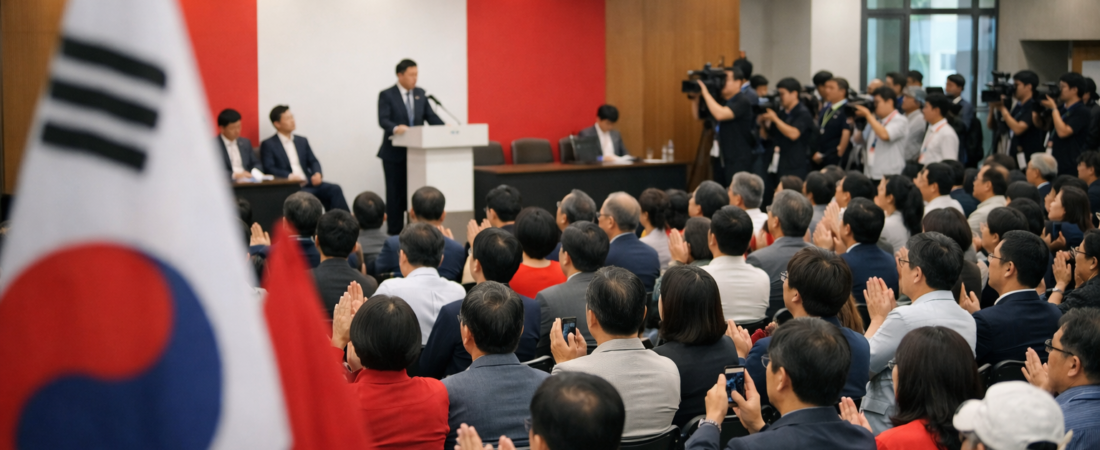
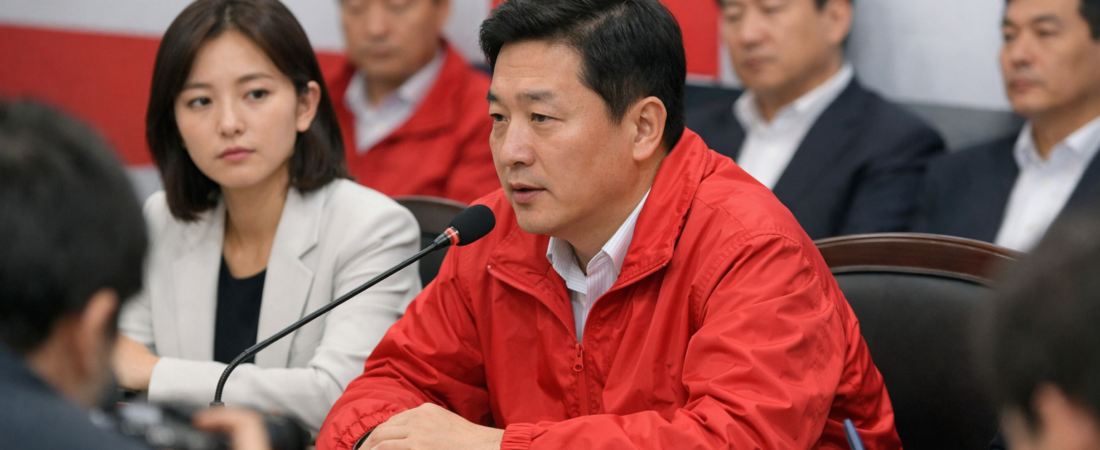
AI-Generated Photorealistic Image — All people, scenes, and details in this image are entirely AI-generated and fictional. Not a real photograph of an actual person or event. 이 이미지는 AI로 생성된 가상 이미지입니다.