Table of Contents
Can a political party discipline its own lawmakers without tearing itself apart? The People Power Party is testing that question right now. Three sitting lawmakers face formal disciplinary procedures, and the fallout is exposing deep cracks inside South Korea’s main conservative party.
This isn’t a quiet internal matter. It’s a public fight over power, fairness, and who really controls the party’s direction. And the answer matters far beyond party headquarters.
What’s Happening Inside the People Power Party
The People Power Party has launched disciplinary action against three of its own sitting members of the National Assembly. That’s a serious step for any political party to take against its own elected representatives.
Disciplinary procedures inside Korean political parties aren’t new, but they rarely happen without controversy. When a party turns its ethics process against sitting lawmakers, it signals something has gone wrong internally.
Is this about genuine ethical violations? Or is it about controlling dissent within the party ranks? That question sits at the heart of the current dispute inside the People Power Party.
South Korean political parties typically operate ethics committees to handle internal violations, from campaign finance issues to conduct unbecoming a lawmaker. These committees hold real power. They can recommend suspension, expulsion, or other penalties that directly affect a lawmaker’s political career.
But power without oversight tends to invite suspicion. That’s exactly what’s happening now inside the People Power Party, where the ethics committee’s motives are being questioned as loudly as the lawmakers’ alleged misconduct.
The “Privatization” Backlash: Lawmakers Fight Back
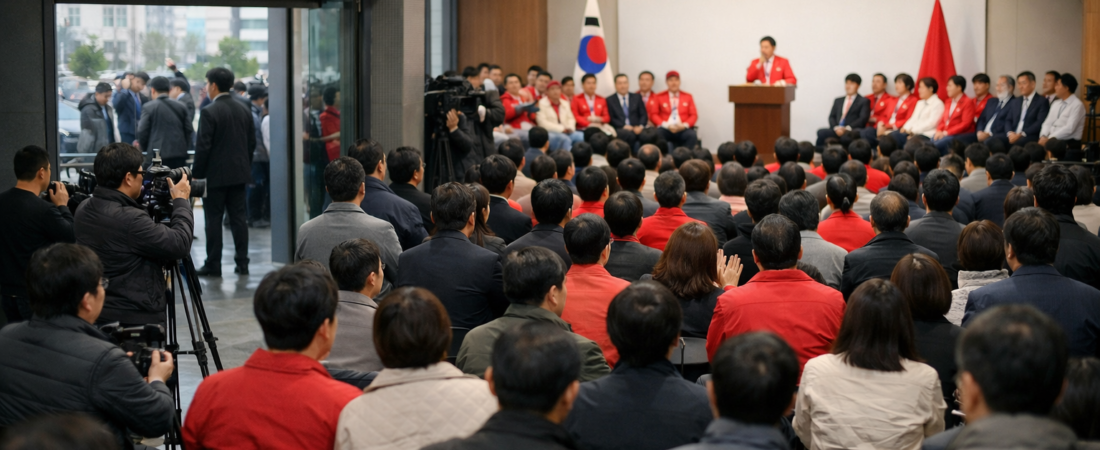
The three lawmakers targeted by the People Power Party’s disciplinary process aren’t staying quiet. They’ve pushed back hard, calling the move an attempt to turn the party into a private fiefdom controlled by a narrow leadership circle.
In Korean politics, this accusation carries weight. It suggests party leadership is using formal procedures as a tool for personal or factional control, rather than genuine accountability.
Think about what that claim really means. If lawmakers believe disciplinary action targets political rivals rather than actual wrongdoing, trust inside the party collapses fast.
This kind of internal conflict isn’t unique to the People Power Party. Korean political history is full of examples where party discipline became a weapon against internal opposition rather than a tool for genuine ethics enforcement.
When that happens, it usually deepens factional lines instead of healing them. The current situation inside the People Power Party looks like it’s following that same troubling pattern.
You have to ask yourself: why would a party risk this level of public infighting unless something bigger is at stake? Party unity, leadership control, and the direction heading into future elections all hang in the balance.
The three lawmakers under scrutiny clearly believe they’re being singled out for political reasons. Whether that claim holds up will shape how Korean voters view the People Power Party’s internal governance going forward.
Ethics Committee Under Fire: Fairness Questions Mount
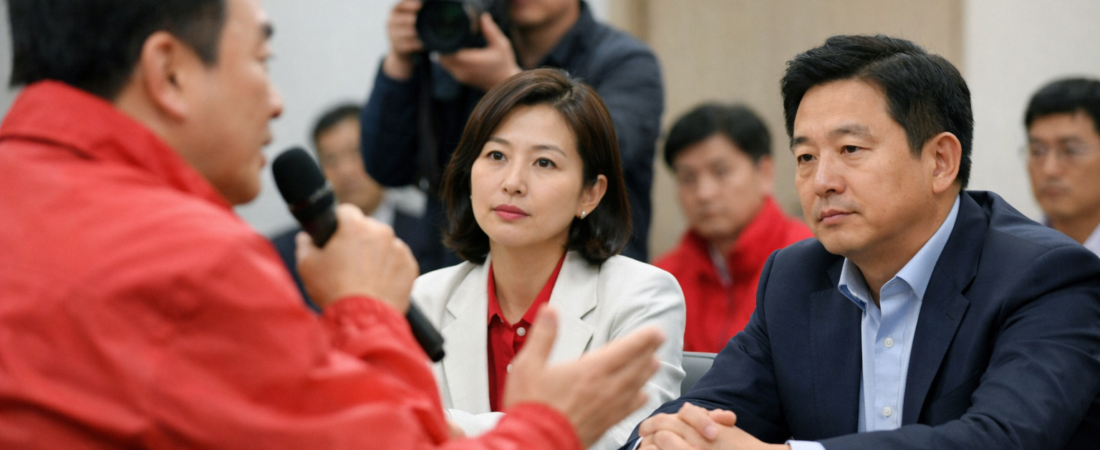
The controversy doesn’t stop with the accused lawmakers. Inside the People Power Party’s own ethics committee, serious questions have emerged about how the chairman is running the process.
Critics inside the party describe the committee’s operation as unilateral, meaning decisions are being made without proper consultation or transparency. That’s a red flag for any body meant to enforce fairness.
There’s also a controversy over what’s being called “bodyguard” behavior, where certain committee members appear to be shielding the chairman’s decisions rather than independently evaluating the cases. Doesn’t that undermine the entire point of having an ethics committee in the first place?
An ethics body only works if it’s seen as neutral. Once members are accused of protecting leadership rather than applying rules fairly, the committee’s credibility takes a direct hit.
This matters enormously for the People Power Party’s internal legitimacy. Fairness controversy erupted from the very moment the disciplinary resolution was voted on, and that early controversy has only grown since.
If the starting vote itself faced accusations of bias, the entire disciplinary process inherits that shadow. Every future decision the committee makes will likely face the same skepticism.
South Korean media outlets have covered similar internal party disputes before, and the pattern tends to repeat. Once fairness is questioned early, resolution becomes much harder to reach cleanly.
For readers following Korean political coverage through outlets like Korean Political News Report, this kind of internal party conflict offers a rare, transparent look at how Korean party discipline actually functions behind closed doors. It’s messier than most outside observers assume.
What This Means for the People Power Party’s Future
Where does the People Power Party go from here? The disciplinary process against these three lawmakers is far from over, and the road ahead looks anything but smooth.
Every step in this process now faces scrutiny. Any final decision the ethics committee reaches will likely be challenged as unfair by at least one faction inside the party.
That’s a dangerous position for any political organization. Public disputes like this chip away at voter confidence, especially heading into future election cycles.
Korean political parties operate in a system where internal unity often determines electoral success. When the People Power Party’s own members accuse leadership of authoritarian control, that message reaches voters just as clearly as any policy announcement.
Historically, Korean conservative and progressive parties alike have suffered when internal discipline turned into public spectacle. Splits, defections, and long-term voter distrust have followed similar episodes in the past.
Will the People Power Party manage to resolve this without a lasting split? Or will this disciplinary fight become another chapter in Korea’s long history of party infighting? Only time will tell, but the early signs suggest a difficult path ahead.
For the People Power Party, the stakes go beyond three individual lawmakers. This is fundamentally about who controls the party’s future and whether internal processes can be trusted by its own members.
If the People Power Party can’t resolve this fairly, expect the fallout to shape internal party dynamics well into the next election cycle. Party unity, once damaged this publicly, takes real time and genuine transparency to rebuild.
Korean politics has always rewarded parties that manage internal conflict without letting it spill into public view. The People Power Party now faces a real test of whether it can meet that standard.
What do you think about how the People Power Party is handling this internal discipline crisis? Do you believe party ethics committees should have this much unchecked power over sitting lawmakers?
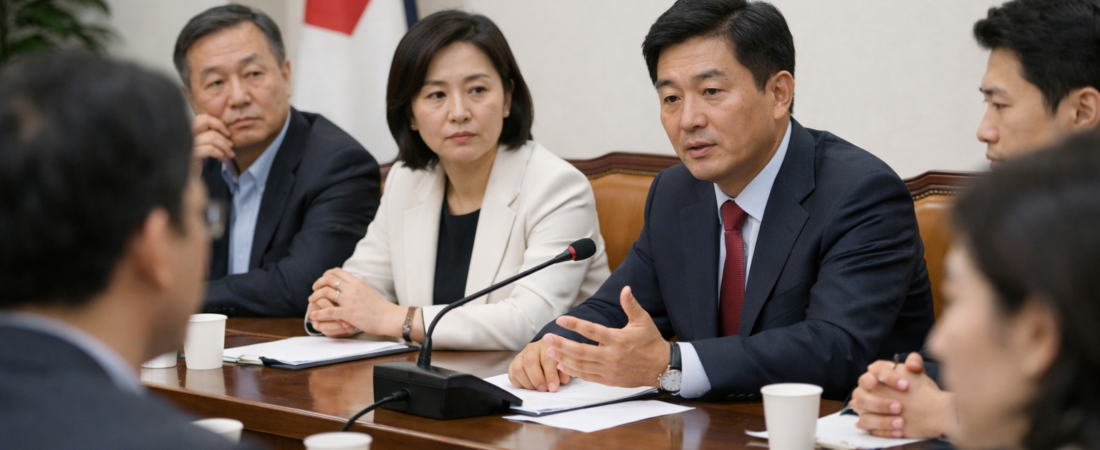
AI-Generated Photorealistic Image — All people, scenes, and details in this image are entirely AI-generated and fictional. Not a real photograph of an actual person or event. 이 이미지는 AI로 생성된 가상 이미지입니다.