Table of Contents
Can one policy phrase split an entire political party? Right now, the prosecution supplementary investigation power is doing exactly that inside Korea’s Democratic Party of Korea. As the party heads toward its national convention, five prominent figures have staked out five very different positions on this single legal question.
Some want it abolished completely. Others want it limited but preserved. And one former minister’s comments have triggered a firestorm that even the presidential office felt compelled to address.
Why the Prosecution Supplementary Investigation Power Is Back in the Spotlight
Let’s start with the basics. The prosecution supplementary investigation power refers to a prosecutor’s authority to conduct additional investigation after police complete their initial probe.
This power sits at the heart of Korea’s ongoing debate over separating investigation from indictment. Since 2022, Korea has moved to limit prosecutors’ direct investigative reach, shifting more authority to police.
But the supplementary investigation power remained a gray zone. Does it let prosecutors reopen cases too broadly? Or does it protect victims from incomplete police work? That question now sits at the center of the Democratic Party’s internal debate.
Why does timing matter here? The party’s national convention is approaching, and leadership candidates need to define their stance on justice reform. Whoever wins this internal argument will likely shape how the prosecution supplementary investigation power evolves under future legislation.
This is not a minor procedural detail. It touches how ordinary citizens experience the justice system — whether a case gets thorough scrutiny or gets dropped too early.
Five Voices, Five Positions Inside the Democratic Party
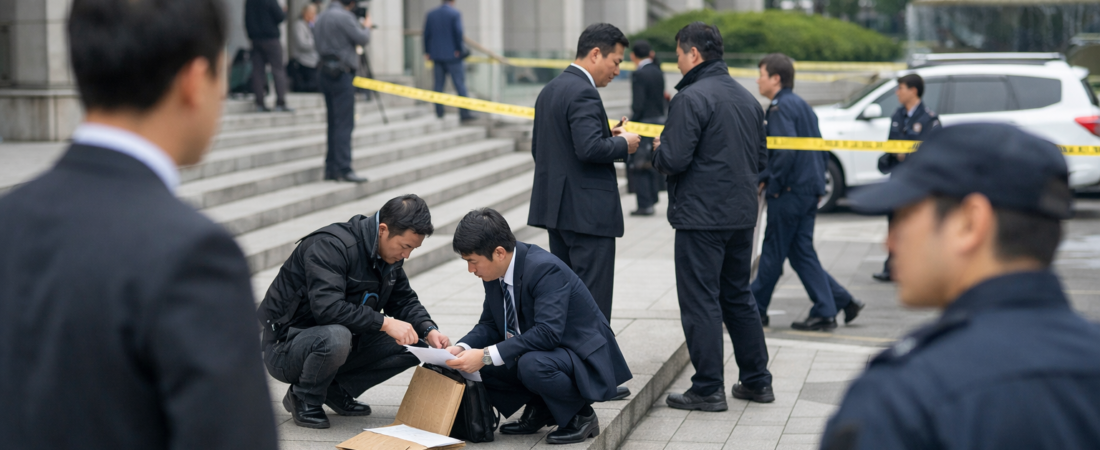
Jung Chung-rae has taken the most aggressive stance. He argues the prosecution supplementary investigation power should be abolished entirely, framing it as a leftover tool of prosecutorial overreach.
Hong Ki-won offers a middle path. He supports a limited, narrowly defined version of the prosecution supplementary investigation power, arguing complete abolition risks leaving investigation gaps unaddressed.
Kim Min-seok has echoed similar caution, suggesting reform should proceed carefully rather than through sweeping elimination. Meanwhile, Song Young-gil has weighed in with his own take, adding yet another layer to the party’s internal disagreement.
Then there’s Ko Min-jung, who took a different approach entirely. Rather than debating the policy itself, she directly criticized comments made by Yoo Si-min, a former cabinet minister known for his outspoken political commentary.
Yoo Si-min’s remarks on the topic sparked backlash across party lines. His comments reportedly touched on sensitive territory regarding how the prosecution supplementary investigation power interacts with ongoing political cases.
Ko Min-jung’s public pushback shows how personal this debate has become. It’s no longer just about legal theory — it’s about who gets to define the party’s identity on justice reform heading into the convention.
What does this fractured response tell us? It reveals a party still searching for consensus on one of Korea’s most consequential legal reforms. For readers following Korean politics through outlets like Yonhap News Agency, this internal split is a useful barometer of where reform momentum stands.
Cheong Wa Dae Responds — But Draws a Firm Line
Given the controversy, many expected a strong reaction from the presidential office. Instead, Cheong Wa Dae chose restraint.
Officials confirmed they would not issue a separate response to Yoo Si-min’s specific remarks. That silence itself sent a message — the administration wants distance from a party-internal squabble.
But restraint on one point didn’t mean flexibility on another. Cheong Wa Dae was explicit that the principle of separating investigation from indictment has never wavered.
Why draw this particular line? Because the separation principle represents years of reform work, and any perceived retreat could undermine public trust built since 2022.
Think about it this way. If the presidential office stayed silent on everything, critics would accuse it of losing control over its own reform agenda.
By staying quiet on Yoo Si-min while affirming the separation principle, Cheong Wa Dae threaded a careful needle. It let the party sort out its convention politics internally, while protecting the core reform framework from appearing negotiable.
This distinction matters for understanding Korean governance. The presidential office and the ruling party often move as a unit, but they aren’t identical.
Party figures can debate the prosecution supplementary investigation power freely during convention season. The administration, however, must maintain policy continuity regardless of internal party noise.
What This Debate Means for Korea’s Justice Reform Future
So where does this leave the prosecution supplementary investigation power going forward? The honest answer is: still unresolved.
Five party leaders, five positions, and no clear majority view yet. That uncertainty will likely persist until the national convention produces new leadership with a defined stance.
Here’s a historical parallel worth remembering. Korea’s push to separate investigation and indictment powers dates back to reforms first pursued in the early 2020s, driven partly by concerns over prosecutorial concentration of power.
Those reforms reshaped how police and prosecutors share responsibility for criminal cases. The current debate over the prosecution supplementary investigation power is really a continuation of that same struggle — just with new political faces attached to old questions.
Should Korea abolish the prosecution supplementary investigation power outright, as Jung Chung-rae argues? Or does Hong Ki-won’s limited-allowance approach better balance thoroughness with restraint? These aren’t easy questions, and reasonable reformers disagree.
What’s clear is that this issue won’t stay confined to convention speeches. Whoever leads the Democratic Party next will need to translate their position into actual legislation.
That means the prosecution supplementary investigation power debate happening today will directly shape courtroom procedures tomorrow. For global observers, this is a case study in how democracies balance investigative thoroughness against the risk of prosecutorial overreach.
Korea isn’t alone in wrestling with this balance — many countries debate how much authority prosecutors should retain versus police. But Korea’s version carries unique political weight, tied closely to memories of past prosecutorial power struggles.
Watch the national convention closely. The winning candidate’s stance on the prosecution supplementary investigation power will likely become official party policy within months.
And that policy could reshape how thousands of criminal investigations proceed each year. Where do you think Korea should draw the line on prosecutorial authority — full abolition, limited allowance, or something else entirely?
AI-Generated Photorealistic Image — All people, scenes, and details in this image are entirely AI-generated and fictional. Not a real photograph of an actual person or event. 이 이미지는 AI로 생성된 가상 이미지입니다.

Leave a Reply