Table of Contents
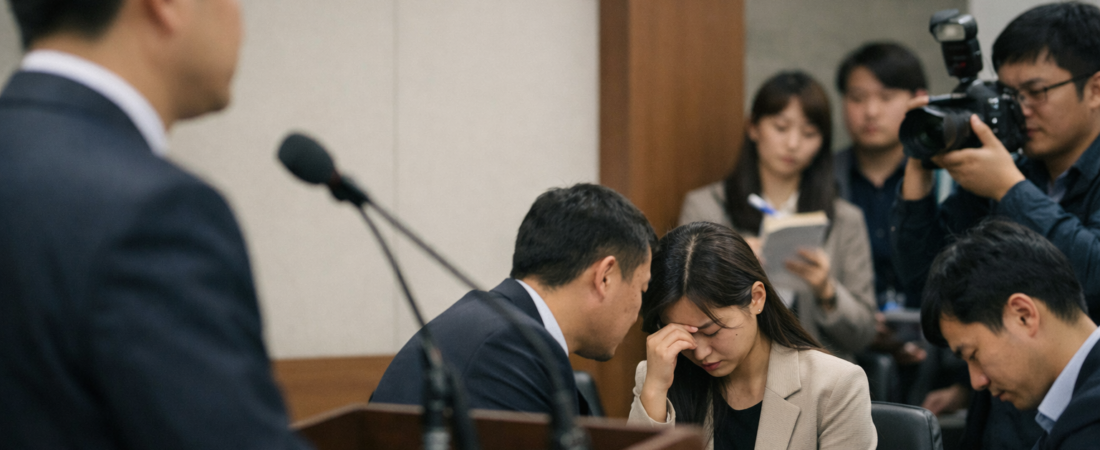
Can a ruling party fight itself over its own signature policy? That’s exactly what’s happening with prosecutorial reform inside Korea’s Democratic Party right now. A public clash has broken out among lawmakers over whether prosecutors should keep any investigative power at all, or lose it completely.
This isn’t a quiet policy debate happening behind closed doors. It’s playing out in public, with sharp words and open disagreement. And at the center of it sits a question that has haunted Korean politics for years: how far should prosecutorial reform actually go?
A Public Rift Over Prosecutorial Reform
Korea’s ruling party has long promised sweeping prosecutorial reform. But promises are easy. Execution, it turns out, is much harder.
Lawmakers within the Democratic Party of Korea are now split into two camps. One side wants to allow prosecutors an exceptional, limited form of supplementary investigation power. The other side wants to abolish that power entirely, with no exceptions.
Why does this split matter so much? Because it exposes a deeper truth: even within one party, there’s no single vision for what prosecutorial reform should look like. Some lawmakers see complete abolition as the only way to finish what they started years ago. Others worry that stripping all investigative authority could create gaps in law enforcement that hurt ordinary citizens.
This isn’t just an internal squabble. It’s a preview of how difficult the next phase of prosecutorial reform will be to pass into law.
What Is “Supplementary Investigation Rights” — And Why Does It Matter?
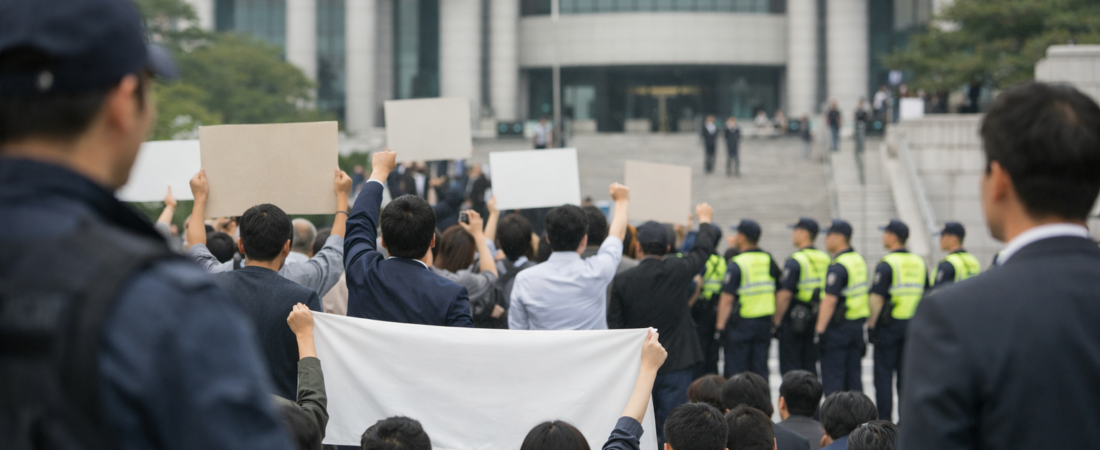
Let’s break this down simply. Supplementary investigation rights allow prosecutors to conduct additional investigation after police complete their initial work.
Think of it as a second check. Police investigate first, then prosecutors can step in if they believe more digging is needed. Supporters say this catches mistakes. Critics say it lets prosecutors hold onto power that reform was supposed to take away.
This debate traces back to a major overhaul of Korea’s justice system a few years ago. That reform separated investigation and indictment powers, a system prosecutors had controlled for decades. The goal was simple: reduce concentrated power in one institution.
But reducing power completely, versus reducing it partially, are two very different outcomes. That’s exactly the gap dividing lawmakers today. Do you keep a small safety valve for prosecutors, or do you close the door for good?
For readers unfamiliar with Korea’s legal history, this matters because prosecutorial power has been a hot-button issue since democratization. Prosecutors once wielded enormous influence over both investigation and prosecution. Many Koreans saw that concentration of power as a threat to fair justice, especially in politically sensitive cases.
Yoo Si-min’s Comments Ignite the Firestorm
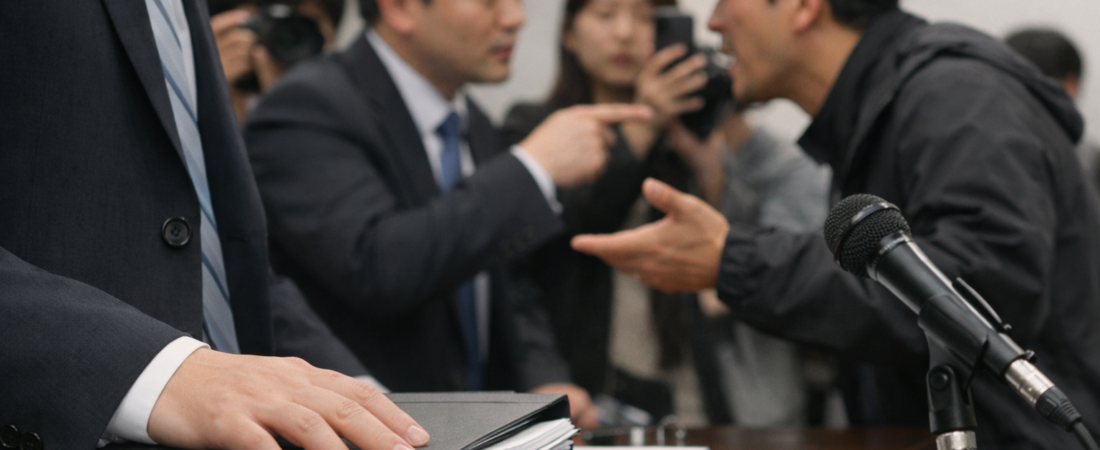
Then came the comment that lit the fuse. Writer and political commentator Yoo Si-min suggested that delays in prosecutorial reform trace directly back to President Lee Jae-myung’s own position.
That’s a bold claim. And in Korean politics, bold claims about a sitting president rarely go unanswered.
Several Democratic Party lawmakers pushed back hard. They rejected the idea that the president was slowing down prosecutorial reform. Some called the comment unfair, others called it politically damaging at a sensitive moment.
Why did this single comment cause such a strong reaction? Because it touched a nerve. If reform-minded lawmakers admit the president himself is the obstacle, what does that say about the party’s unity? What does it say about the president’s own commitment to the cause he once championed?
Yoo Si-min isn’t a random voice in Korean politics. He’s a long-time progressive commentator with deep credibility among reform-minded voters. His words carry weight precisely because he has historically supported the same cause he’s now criticizing from within.
That’s what makes this moment different from ordinary political sniping. When an ally raises doubts, the criticism lands harder. You can dismiss an opponent’s attack. It’s much tougher to dismiss a friend’s honest concern.
What This Means for the Future of Prosecutorial Reform in Korea
So where does prosecutorial reform go from here? The honest answer is: nobody knows yet.
The party needs to settle its internal disagreement before any bill can move forward. Right now, that disagreement is public, personal, and unresolved.
Some analysts argue this exposes a hard truth about legislative reform in general. Big structural change is easy to promise, but hard to finalize once real details, exceptions, and legal consequences enter the conversation. Prosecutorial reform is no exception to that pattern.
This conflict also raises a bigger question for Korean democracy. Should major justice-system reforms happen quickly, driven by political momentum? Or should they happen slowly, with room for internal debate and course correction?
There’s no easy answer. Complete abolition of supplementary investigation rights offers a cleaner, simpler system. But clean and simple isn’t always the same as effective. Exceptions can protect against wrongful convictions or missed evidence. Full abolition risks throwing out useful safeguards along with unwanted power.
For those following Korean politics from abroad, this story offers a valuable lesson. Reform is never just about passing a law. It’s about building consensus first. According to reporting from Korean Daily Life News Desk, this internal party conflict shows just how fragile that consensus can be, even among lawmakers who supposedly share the same goal.
What happens next will likely shape how Korean voters view the ruling party’s credibility on justice issues. If the party can’t agree internally, how can it convince the public it has a clear plan? That’s the challenge facing every lawmaker involved in this debate right now.
Prosecutorial reform was never going to be simple. Korea’s justice system carries decades of institutional history, political sensitivity, and public mistrust. Any reform effort touching prosecutors’ powers inevitably becomes a fight, not just about policy, but about trust itself.
Looking ahead, expect more public disagreement before this issue resolves. The gap between “exceptional allowance” and “complete abolition” is not small. Bridging it will require real negotiation, not just political statements.
What do you think? Should Korea completely abolish prosecutors’ supplementary investigation rights, or is a limited exception the wiser path forward for prosecutorial reform?
AI-Generated Photorealistic Image — All people, scenes, and details in this image are entirely AI-generated and fictional. Not a real photograph of an actual person or event. 이 이미지는 AI로 생성된 가상 이미지입니다.


Leave a Reply