Table of Contents
Train station food prices in Korea have jumped 24 percent over the past five years, according to recent data on railway restaurant menus. A simple kimbap roll now costs 4,078 won on average, and pork cutlet runs 10,026 won. If you’re planning to grab a quick meal before boarding a KTX train, your wallet will feel the difference.
Why does this matter to you, even if you’re just visiting Korea for a few days? Because train stations are often the first and last place travelers eat.
Understanding train station food prices helps you budget better and avoid surprise costs during your trip.
Why Train Station Food Prices Keep Rising
Train stations are not ordinary neighborhoods. They’re captive markets, meaning travelers often have limited time and few alternatives nearby.
That setup gives vendors more pricing power than a typical street restaurant would have. Rent inside major stations like Seoul Station or Busan Station also tends to run higher than average commercial rent, and that cost gets passed down to customers.
Add rising ingredient costs, higher minimum wages, and increased utility bills, and you get a steady upward climb in train station food prices. Is this pattern unique to Korea? Not really.
Airport and transit hub food has followed similar trends worldwide for decades. What makes Korea’s case notable is the pace: a 24 percent rise in five years outpaces general consumer inflation during the same period.
That gap tells you something important. Train station food prices are rising faster than everyday grocery or restaurant prices elsewhere in the country, which means the convenience you’re paying for comes at a real premium.
What You’ll Actually Pay for Kimbap and Pork Cutlet
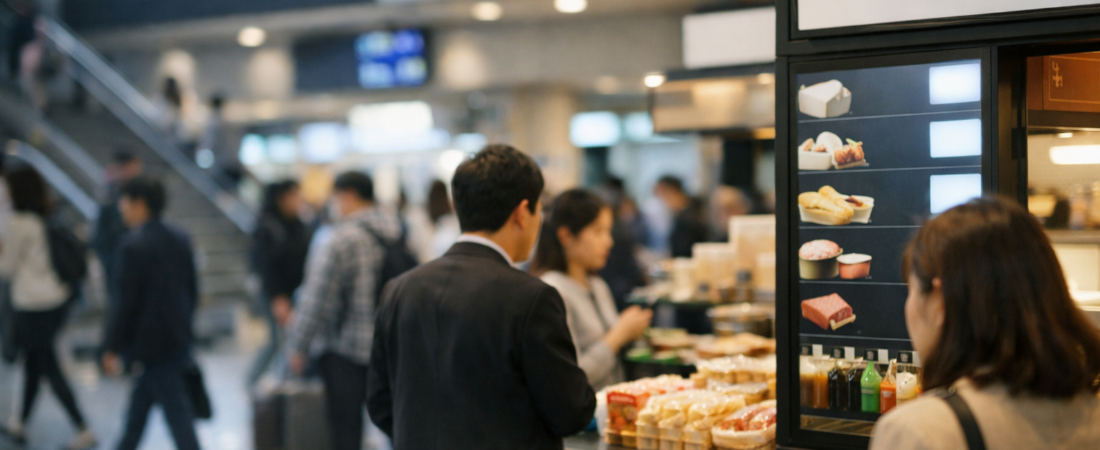
Let’s break down the numbers. Kimbap, Korea’s beloved rice-and-seaweed roll, now averages 4,078 won at train stations.
That might sound cheap to a Western reader used to sandwich prices, but compare it to a neighborhood kimbap shop, where the same roll often costs 3,000 won or less. You’re paying roughly a 30 percent markup just for the station location.
Pork cutlet, or donkatsu, tells an even bigger story. At 10,026 won on average, it has crossed the psychological 10,000-won threshold for the first time in this kind of survey.
Five years ago, that same dish likely cost closer to 8,000 won. Does a 2,000-won difference sound small?
Multiply that by millions of travelers passing through Korea’s rail network every year, and the total spending shift becomes significant. Train station food prices, in other words, aren’t just a personal budgeting issue.
They reflect a broader trend in how transit infrastructure monetizes captive foot traffic. For more detailed reporting on this pricing trend, see the coverage from Yonhap News Agency.
The Bigger Picture Behind Korea’s Food Inflation
Korea’s overall consumer price index has climbed steadily since 2021, driven by global supply chain disruptions, energy costs, and currency fluctuations. Train station food prices simply amplify that broader trend.
Why does the amplification happen specifically at stations? Because vendors there operate under contract terms set by railway operators, and those contracts often include revenue-sharing arrangements that push retail prices upward.
Here’s where things get more complicated, and honestly, more human. Small vendors inside stations often face brutal lease terms, high turnover pressure, and unpredictable customer volume tied to train schedules.
Some of them raise prices simply to survive, not to profit unfairly. At the same time, ordinary commuters and budget travelers genuinely struggle when a quick meal costs nearly as much as a sit-down restaurant dinner elsewhere.
Both realities are true at once, and neither cancels out the other. What gives me some hope, though, is that several regional stations have started experimenting with fixed-price “value menus” for students and seniors, and consumer advocacy groups have pushed successfully for price transparency boards near station food courts.
These aren’t perfect solutions, but they show that people on both sides, vendors and travelers, are looking for fairer middle ground rather than accepting rising train station food prices as simply inevitable.
How to Eat Smart at Korean Train Stations
So what can you actually do about this? First, consider eating just outside the station gates rather than inside the main concourse.
Prices often drop noticeably within a five-minute walk. Second, convenience stores inside stations, like CU or GS25, typically offer kimbap and simple meals at prices closer to neighborhood rates than restaurant-style vendors do.
Third, check whether your station has a designated food court versus scattered individual stalls. Food courts tend to have more competitive pricing because vendors compete directly for the same foot traffic.
(And yes, someone really did survey every major station menu to produce these average figures.) Fourth, if you’re traveling with family, bringing your own snacks for the platform wait can save real money over a multi-day trip.
Korean rail travel remains fast, clean, and genuinely convenient by global standards. Train station food prices are simply one small cost of that convenience, and knowing the numbers ahead of time helps you plan rather than get caught off guard.
Looking ahead, expect this upward trend to continue unless railway operators adjust lease structures for vendors. Whether you’re a frequent KTX commuter or a first-time visitor grabbing kimbap before boarding, understanding train station food prices puts you in control of your travel budget.
What’s your experience been with food prices at train stations, in Korea or elsewhere?
AI-Generated Photorealistic Image — All people, scenes, and details in this image are entirely AI-generated and fictional. Not a real photograph of an actual person or event. 이 이미지는 AI로 생성된 가상 이미지입니다.



Leave a Reply