Table of Contents
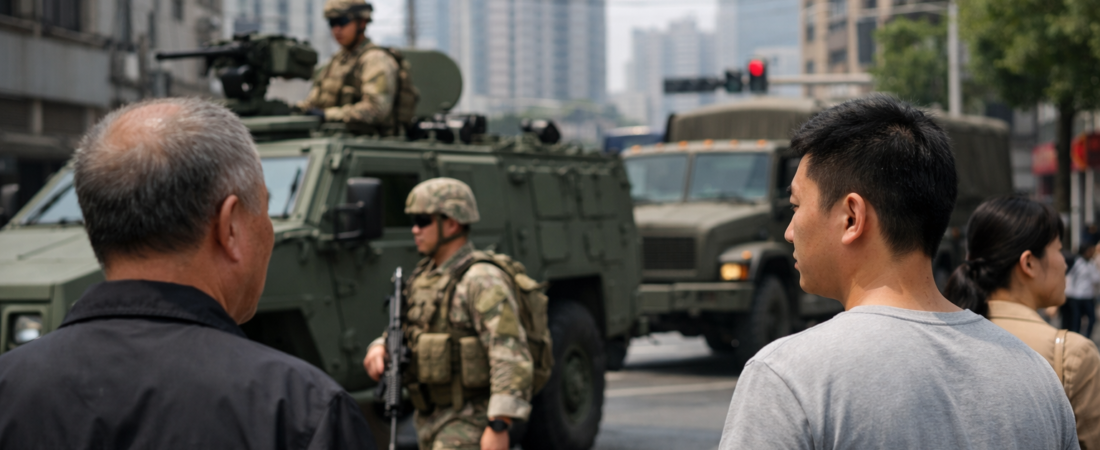
Is USFK still just a force that defends the Korean Peninsula? Recent training exercises suggest something bigger is happening. USFK leadership has repeatedly said it wants to become a logistics hub for the entire Pacific region.
This isn’t just talk anymore. The largest-ever combined South Korea-US sustainment training just took place. And the scenario they practiced tells you exactly where this is heading.
USFK’s New Mission: More Than a Peninsula Force
For decades, most people thought of USFK in simple terms. Troops stationed in Korea, ready to respond if North Korea attacked. That mission hasn’t disappeared, but it’s no longer the whole story.
USFK commanders have made their intentions clear in recent statements. They want USFK to serve as a logistics and supply hub for the broader Indo-Pacific region. Why does this matter?
Because it changes what USFK is for. Instead of a force tied only to one peninsula, USFK becomes a launching point for regional operations. Think of it as upgrading from a local fire station to a regional emergency response center.
This shift didn’t happen overnight. It reflects years of strategic thinking about how the US military should position itself in Asia. China’s rising military capability, tension over Taiwan, and instability across the Indo-Pacific all play a role.
USFK sits in a strategically valuable location. South Korea has modern ports, airfields, and infrastructure. Turning USFK into a logistics hub makes practical sense from a military planning perspective.
Understanding USFK’s Role in the Indo-Pacific
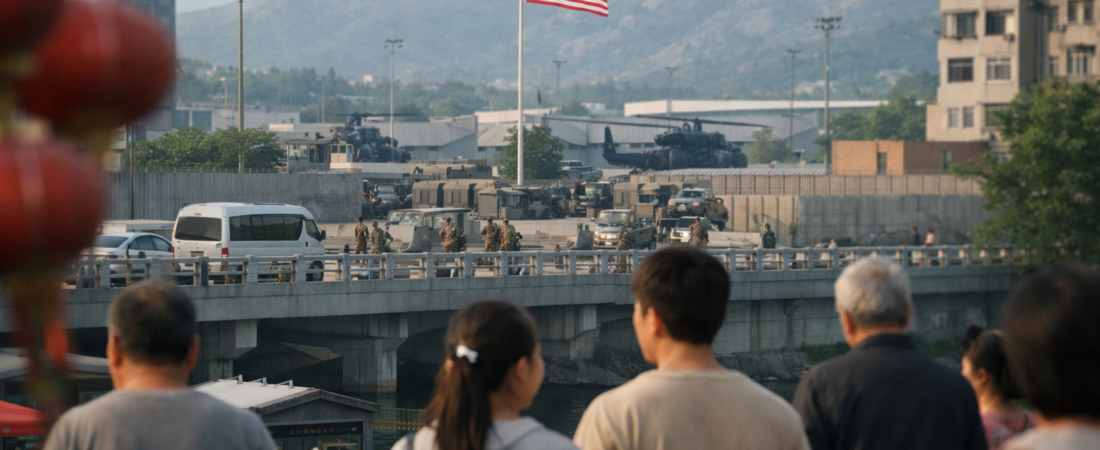
Let’s step back for a moment. What exactly does “logistics hub” mean in military terms? It means storing supplies, moving troops, and repairing equipment for operations far beyond Korea’s borders.
USFK has always played a supporting role for broader US military operations in the region. But the current push formalizes and expands that role significantly. This is a notable shift in how USFK defines its mission.
Historically, US forces in Korea focused almost entirely on deterrence against North Korea. That single-mission focus shaped everything about USFK’s structure. Now, planners are asking a different question: how can USFK support operations across the entire Indo-Pacific theater?
This connects to a larger US military strategy called “strategic flexibility.” The idea has circulated for years, but implementation has been slow. Recent training suggests USFK is finally putting this concept into concrete action.
You might wonder why this matters to ordinary Koreans. If USFK’s mission expands, resources, attention, and priorities shift too. Understanding these changes helps you make sense of future military cooperation between Seoul and Washington.
Readers interested in deeper policy context can find additional analysis through Yonhap News Agency, which has tracked these developments closely.
Inside the Largest-Ever Combined Sustainment Training
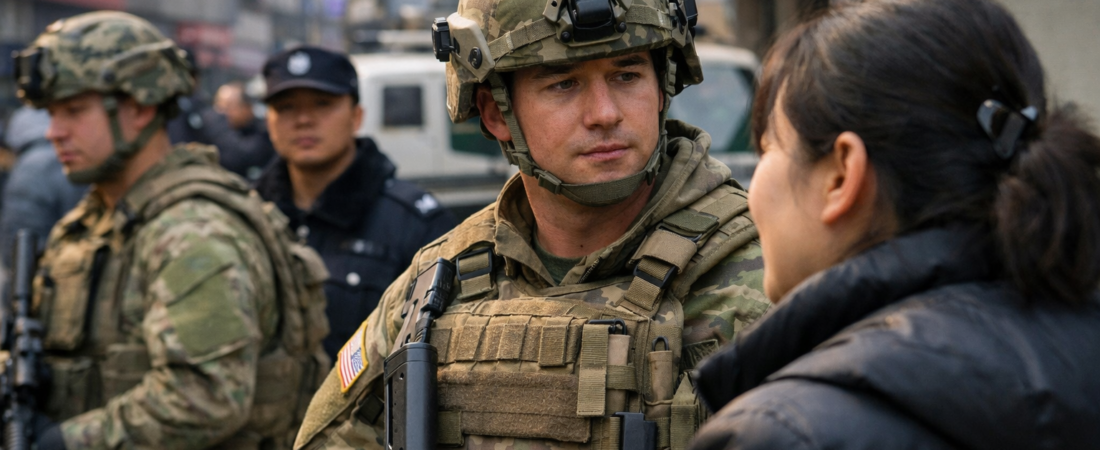
So what actually happened during this training exercise? South Korean and American forces practiced moving troops and supplies under extreme conditions. The scenario assumed something dramatic: no functioning port, or a port that had been destroyed.
How do you move an army when the port is gone? That’s exactly the problem this exercise solved. Forces used modular causeway systems, essentially floating bridge sections that connect ships to shore.
Amphibious vehicles carried troops and cargo straight from the sea onto land. No dock required. No crane needed.
This capability matters enormously in real conflict scenarios. Enemy forces often target ports first, knowing that ports are critical supply lifelines. If USFK can move supplies without relying on traditional ports, that’s a massive tactical advantage.
The scale of this training set a new record for combined operations. Calling it the largest-ever joint sustainment exercise isn’t just for headlines. It signals serious investment in this specific capability.
Military analysts point to something important here. This wasn’t a peninsula-defense drill. It was a rehearsal for something much broader.
The skills practiced here, moving cargo without ports, deploying rapidly across water, apply directly to any Indo-Pacific contingency. Taiwan, the South China Sea, or other flashpoints all share one thing in common with this training scenario: contested or damaged port infrastructure.
Think about the practical challenges involved. Modular causeway systems require careful assembly under time pressure. Amphibious vehicles must coordinate with naval assets precisely.
Running this exercise at record scale means USFK and South Korean forces built real confidence in these systems. That confidence translates directly into faster response times if a real crisis occurs somewhere in the region.
USFK Hub Ambitions and What They Mean for the Region
Why should you care about this shift in USFK’s mission? Because it reshapes South Korea’s role in regional security, whether Seoul fully embraces that role or not. USFK becoming a logistics hub means Korean territory becomes more central to broader US strategy.
This raises real questions for Korean policymakers. Does expanding USFK’s regional role increase risk for South Korea? If tensions rise over Taiwan, does Korea’s proximity to USFK infrastructure pull it into conflicts it never chose?
These aren’t abstract concerns. South Korea has walked a careful diplomatic line with China for years, balancing security ties with the US against economic relationships with Beijing. An expanded USFK role complicates that balance.
At the same time, there’s an upside worth considering. A stronger, more capable USFK could deter aggression more effectively across the entire region. Deterrence that works broadly can, in theory, protect Korea too.
South Korea’s own military has gained valuable experience through this training. Modular causeway systems and amphibious logistics aren’t skills Korea’s forces used regularly before. This joint training builds capability that serves Korean national defense as well, not just US regional strategy.
Looking at historical precedent helps frame this moment. USFK’s presence in Korea started in 1953, right after the armistice ended active fighting. For seventy years, its mission stayed relatively fixed on peninsula defense.
This pivot toward regional logistics represents one of the most significant redefinitions of USFK’s purpose in decades. That’s worth paying attention to, regardless of where you stand politically.
What comes next? Expect more joint exercises testing these same capabilities. Expect continued statements from USFK leadership reinforcing this Pacific hub vision.
And expect ongoing debate in Seoul about how much Korea should embrace this expanded USFK mission. The relationship between Korea and USFK has always evolved with regional circumstances. This latest chapter simply reflects a changing Indo-Pacific security environment, one where China’s rise and Taiwan tensions shape every major military decision.
USFK’s transformation into a broader logistics hub won’t happen through announcements alone. It happens through exercises like this one, building real capability step by step. Watching how frequently these training events occur will tell you how seriously this vision is being pursued.
South Korea now stands at an interesting crossroads. Embracing USFK’s expanded regional mission brings deeper alliance cooperation and stronger deterrence. But it also means accepting a more complex strategic position, one connected to conflicts beyond the peninsula itself.
What do you think about USFK expanding its mission beyond Korea’s borders into the wider Indo-Pacific region?
AI-Generated Photorealistic Image — All people, scenes, and details in this image are entirely AI-generated and fictional. Not a real photograph of an actual person or event. 이 이미지는 AI로 생성된 가상 이미지입니다.
Leave a Reply