Table of Contents
Can a military drill in Pohang and Hongcheon reshape how you think about Korea’s role in the Pacific? That question is worth asking after South Korea and the United States just wrapped up their largest-ever combined logistics exercise. This wasn’t a routine training event.
It involved 4,400 troops and roughly 600 ships, aircraft, and vehicles. And it points to something bigger: USFK’s growing ambition to become a supply and logistics hub for the entire Pacific region.
Let’s break down what this drill really means, and why it matters far beyond the Korean Peninsula.
What Just Happened: Inside the Largest Combined Logistics Drill
The exercise took place in two locations: Pohang in North Gyeongsang Province, and Hongcheon in Gangwon Province. Both sites are familiar training grounds for combined U.S.-Korea operations.
But the scale this time was different. Some 4,400 American and Korean service members took part, backed by around 600 vessels and aircraft.
What were they actually practicing? The core mission was moving supplies and personnel from ships at sea onto land. That sounds simple, but it’s one of the hardest logistical challenges any military faces.
Getting fuel, ammunition, food, and troops from a ship to a beachhead—then to a forward base—requires precision timing. It requires coordination between navies, air forces, and ground units. This drill tested exactly that chain, from sea to shore to sustainment.
Why does this matter to ordinary readers, not just defense analysts? Because logistics, not firepower, often decides whether a military campaign succeeds or fails. A tank without fuel is just scrap metal.
USFK commanders have said, more than once, that they want Korea to serve as a logistics and resupply hub for the wider Pacific theater. This exercise looks like proof they’re serious about that goal. According to Yonhap News Agency, defense officials described the drill as the largest of its kind ever held between the two allies.
Why USFK Wants to Become a Pacific Logistics Hub
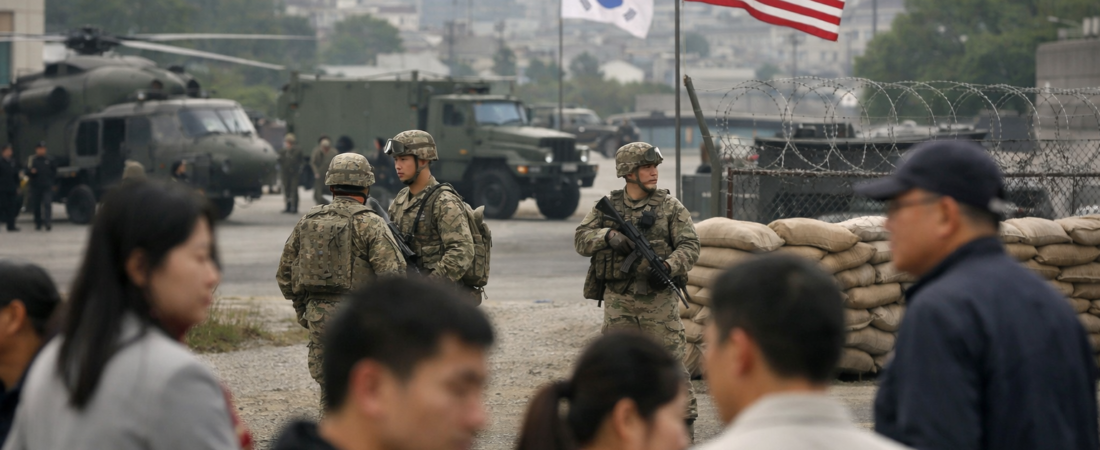
Here’s a question worth sitting with: why would American forces stationed in Korea want to expand their mission beyond the peninsula? The answer has to do with geography and geopolitics.
South Korea sits at a strategic crossroads in Northeast Asia. It’s close to China, close to Japan, and close to critical shipping lanes.
For decades, USFK’s primary job was straightforward: deter North Korea. That mission hasn’t disappeared, but the strategic environment around it has changed dramatically.
China’s military buildup, tensions around Taiwan, and shifting power balances in the Pacific have all pushed Washington to think regionally, not just locally. USFK, positioned in Korea with established bases and infrastructure, is a natural candidate for a broader logistics role.
Think of it like this: if a crisis erupts somewhere in the Pacific, where do you resupply forces quickly? Having a ready-made hub in Korea, with ports, airfields, and trained personnel, saves precious time. That’s the logic driving USFK’s leadership as they push this vision forward.
This isn’t just talk anymore. The scale of this recent drill, the largest combined logistics exercise on record, shows USFK translating strategy into practice. Four thousand four hundred troops and 600 platforms don’t get mobilized for a symbolic gesture.
What This Means for South Korea’s Security Role
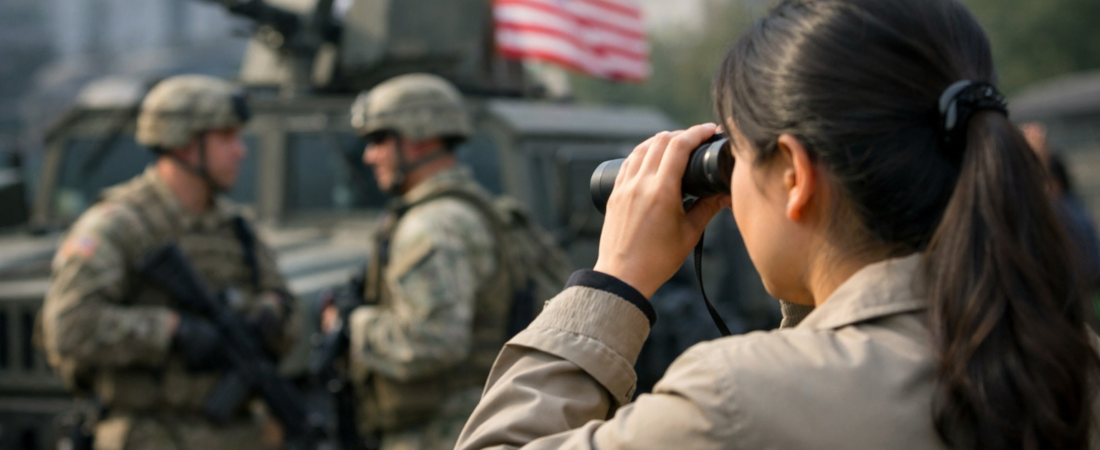
So what does this shift mean for South Korea itself? It’s a meaningful change in how the alliance functions, and how Korea’s territory gets used.
For decades, the U.S.-Korea alliance was framed almost entirely around deterring Pyongyang. That framing is now expanding.
If USFK becomes a logistics hub for the broader Pacific, Korea’s bases and ports take on new strategic weight. That brings benefits, but also risks. On one hand, deeper integration with U.S. Pacific strategy could strengthen Korea’s own security guarantees.
On the other hand, it could draw Korea more directly into tensions it didn’t originally choose, particularly around Taiwan or the South China Sea. Have you ever wondered how much say a host country really has when its ally reshapes its regional mission? That’s a legitimate question for Korean policymakers right now.
South Korea has historically tried to balance its alliance with the United States against its economic and diplomatic relationship with China. A more expansive USFK role, explicitly framed as a “rehearsal” for operations beyond the peninsula, complicates that balancing act. Seoul will need to manage this carefully, both domestically and with regional neighbors watching closely.
It’s also worth remembering that South Korea’s own military has grown significantly more capable over the past two decades. Seoul isn’t just a passive host for USFK bases anymore. It’s an increasingly active partner shaping how combined logistics and readiness operations unfold across the region.
Looking Ahead: The Bigger Picture for the Region
Where does this trend lead next? If this drill really was a “rehearsal,” as analysts suggest, you should expect more exercises like it, not fewer.
USFK’s logistics hub ambitions align closely with broader U.S. Indo-Pacific strategy. Washington has spent years talking about “integrated deterrence,” a concept that links allies across the region into one connected defense network.
Korea, Japan, the Philippines, and Australia all play different roles in that network. USFK’s push to formalize Korea as a logistics hub fits neatly into this larger puzzle.
What should global readers take away from this? First, USFK’s mission is quietly evolving beyond its original Cold War purpose. Second, exercises like this one signal real operational planning, not just political rhetoric.
And third, South Korea’s role in regional security is becoming more consequential, whether Seoul fully embraces that shift or not. This matters even if you’ve never set foot in Korea, because supply chains and military logistics in the Pacific affect trade routes, regional stability, and by extension, the global economy.
Korea’s geography has always made it strategically significant. From the Korean War armistice in 1953 to today’s combined exercises, the peninsula has remained a focal point of great-power competition. USFK’s push toward a logistics hub model is simply the latest chapter in that long story, adapted for a new era defined by great-power rivalry between Washington and Beijing.
As these combined exercises grow larger and more frequent, expect closer scrutiny from Beijing, Pyongyang, and Tokyo alike. Each will interpret USFK’s expanding mission through its own strategic lens. What do you think about USFK’s evolving role as a Pacific logistics hub, and how do you think it will reshape the alliance in the years ahead?
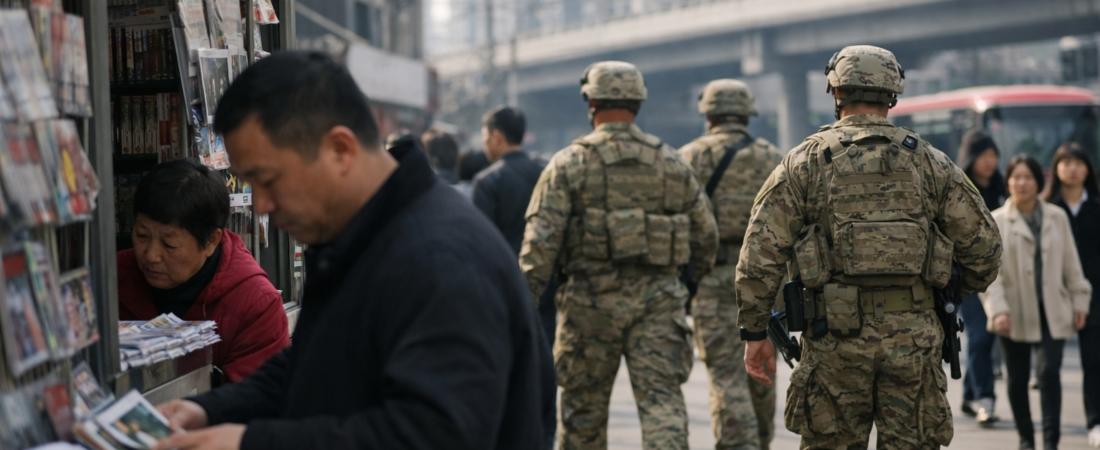
AI-Generated Photorealistic Image — All people, scenes, and details in this image are entirely AI-generated and fictional. Not a real photograph of an actual person or event. 이 이미지는 AI로 생성된 가상 이미지입니다.

Leave a Reply