Table of Contents
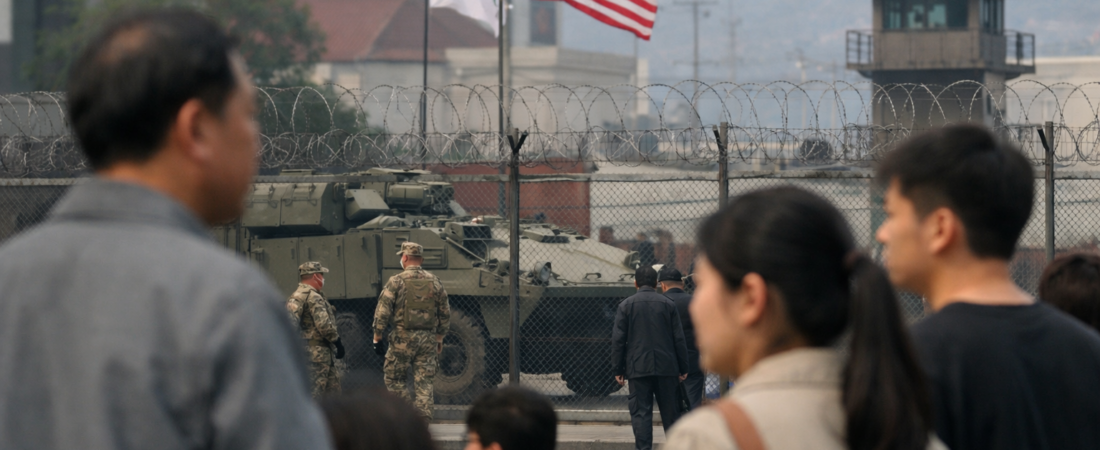
What happens when soldiers need to reach the shore, but there is no port waiting for them? That question sat at the center of Korea’s biggest joint military logistics exercise this year. USFK command has repeatedly talked about turning its Korean bases into a supply hub for the entire Pacific region.
This drill was not just a training exercise. It was a rehearsal for something much larger. Let’s break down what happened, and why it matters far beyond the Korean peninsula.
Why USFK Is Making Headlines Again
USFK leadership has been vocal lately. Their message is simple: Korea should serve as a logistics and supply hub for US forces across the Pacific.
Why does this matter now? Because the Indo-Pacific region faces growing tension, and supply lines can decide outcomes faster than firepower alone.
USFK is not just about defending the Korean peninsula anymore. It is becoming a piece of a much bigger regional puzzle.
Think about it this way. A military is only as strong as its ability to move troops and supplies where they are needed.
USFK commanders understand this deeply. They have said, again and again, that Korea’s location makes it ideal for exactly this kind of role.
Seoul sits close to Japan, close to the East China Sea, and close to potential flashpoints across the region. That geography is not lost on military planners.
Inside the Largest Joint Logistics Drill
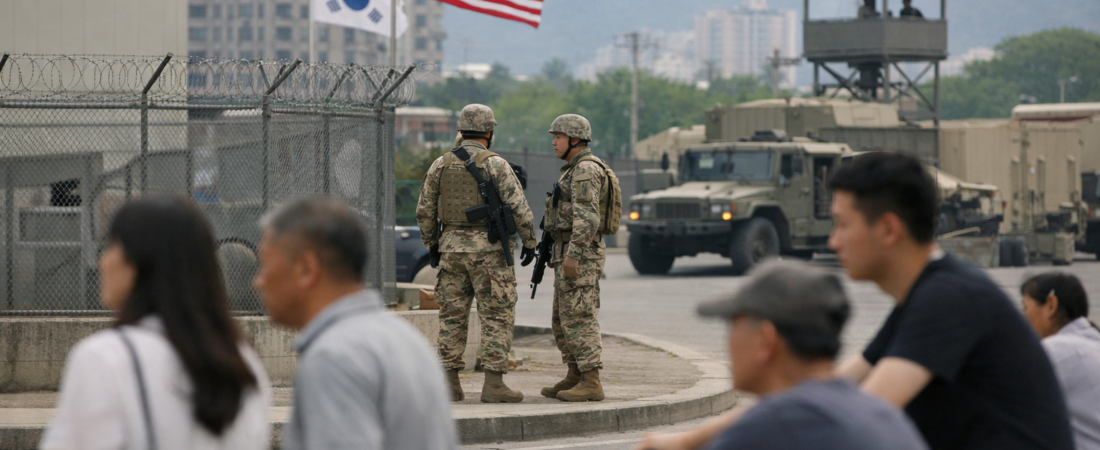
Korea and the United States just completed their largest combined logistics and supply exercise to date. The drill took place in two locations: Pohang in North Gyeongsang Province, and Hongcheon in Gangwon Province.
The numbers alone tell a striking story. Around 4,400 troops took part, alongside more than 600 pieces of equipment, including ships and aircraft.
That is not a small drill. That is a full-scale rehearsal of real wartime logistics.
So what exactly did they practice? The core scenario tested how to move troops and supplies from sea to land, even without a functioning port.
This detail matters more than it might first appear. In real conflict, ports can be destroyed, blocked, or simply unavailable.
Military planners call this “sea basing” or “over-the-shore” logistics. Forces must be ready to land personnel and equipment directly onto open coastline, using ships, small craft, and aircraft instead of docks.
Practicing this scenario builds real capability for worst-case situations. It also sends a clear signal to anyone watching closely.
USFK and Korean forces can adapt, even when the easiest option — a working port — is not available. That flexibility is exactly what modern military planning demands.
USFK as a Pacific Logistics Hub: The Bigger Plan
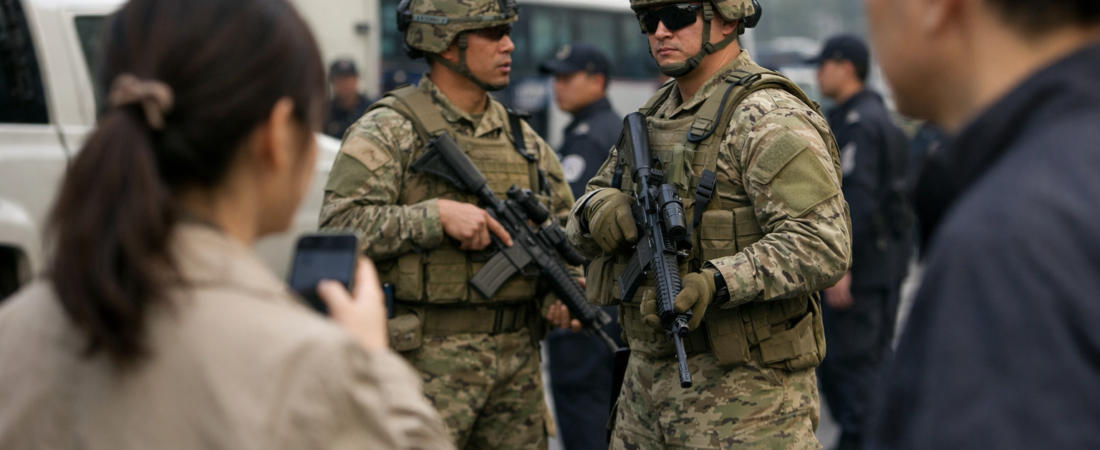
Here is where the story gets bigger than one training exercise. Analysts see this drill as more than routine readiness training.
They see it as a rehearsal for turning USFK into an actual logistics hub for the wider Pacific theater. Is that a stretch? Not really, when you look at the pattern of statements from USFK command.
The idea is straightforward, even if the execution is complex. Instead of relying only on bases in Japan, Guam, or Hawaii, the US wants Korea to serve as a forward staging point.
Supplies could move through Korea, then out to wherever they are needed across the Pacific. This would make USFK far more valuable strategically, beyond its traditional mission of deterring threats on the peninsula alone.
Why does this shift matter for Korea specifically? Because it changes the nature of the alliance itself.
USFK would no longer exist solely to defend Korea. It would become a regional logistics anchor, supporting operations that may have nothing to do with the Korean peninsula directly.
This is a meaningful shift in strategic identity. For decades, USFK’s mission centered narrowly on deterrence against North Korea.
Now, the conversation is expanding to cover Taiwan contingencies, South China Sea tensions, and broader Indo-Pacific stability. You can see why some in Korea might feel uneasy about this expanded role.
Does hosting a regional hub increase Korea’s exposure to conflicts far from its own borders? That is a fair question, and one policymakers in Seoul are certainly asking themselves.
For more background on the shifting US military posture across the region, readers can explore related coverage from Yonhap News Agency.
What This Means for the Korea-US Alliance
Let’s step back and look at the alliance as a whole. USFK has existed since the Korean War armistice in 1953, built around a single clear purpose: deterring North Korean aggression.
That mission has not disappeared. But it is clearly evolving into something broader.
Turning USFK into a Pacific logistics hub would deepen Korea’s role in regional security architecture. Some in Seoul may welcome this, seeing it as proof of Korea’s rising strategic importance.
Others may worry about entanglement in conflicts beyond the peninsula, particularly around Taiwan. Both reactions make sense, and both deserve serious discussion.
What does this recent exercise tell us practically? It shows the US and Korean militaries are not just talking about this hub concept.
They are actively testing it, refining procedures, and building real operational capability. That is a meaningful difference between policy rhetoric and battlefield readiness.
For everyday readers, this story matters beyond military circles. USFK’s evolving role affects Korea’s diplomatic balancing act between Washington and Beijing.
It also affects how neighboring countries — Japan, China, and others — interpret Korea’s alignment in future regional disputes. USFK is no longer just a peninsula story; it is becoming a regional one.
Looking ahead, expect more joint exercises like this one in Pohang and Hongcheon. Expect USFK command to keep emphasizing the hub concept in public statements.
And expect Korean policymakers to keep weighing the benefits of strategic relevance against the risks of broader entanglement. This balance will define Korea’s alliance posture for years to come.
So, where does this leave you as a reader watching from outside Korea? USFK’s transformation from a peninsula-focused force into a regional logistics anchor is one of the more consequential shifts in Northeast Asian security today.
It reshapes what the Korea-US alliance actually means in practice. What do you think about USFK taking on this expanded, Pacific-wide logistics role?
AI-Generated Photorealistic Image — All people, scenes, and details in this image are entirely AI-generated and fictional. Not a real photograph of an actual person or event. 이 이미지는 AI로 생성된 가상 이미지입니다.
Leave a Reply