
Table of Contents
Can one public intellectual’s remarks really shake an entire political party? That’s exactly what’s happening with Yoo Si-min right now.
The former chairman of the Roh Moo-hyun Foundation is at the center of a growing storm inside South Korea’s Democratic Party. His recent comments have triggered sharp criticism from within his own political camp, and rival lawmakers are reading deeper strategy into his words.
What Happened: Yoo Si-min’s Remarks Spark a Political Firestorm
SBS News Briefing recently dedicated coverage to the backlash surrounding Yoo Si-min’s latest remarks. You might wonder why a single comment from a former foundation chairman would dominate a national news segment.
The answer lies in who reacted, and how strongly they reacted. Democratic Party lawmaker Im Mi-ae did not hold back her criticism.
She called Yoo Si-min’s remarks “reckless” and said he had “gone far beyond the line.” That’s a serious accusation, especially coming from within the same political party Yoo Si-min has long been associated with.
On the other side of the aisle, People Power Party lawmaker Kim So-hee offered a different interpretation. She suggested that Yoo Si-min’s remarks appeared designed to rally hardcore supporters within the party’s base.
In other words, she framed this as calculated political strategy, not a slip of the tongue. Was it a genuine misstep, or a deliberate move to energize loyal followers?
That question is now dividing commentators across Korea’s political spectrum. An SBS editorial columnist described the internal reaction within the Democratic Party as “intense,” noting that emotions ran high among party members.
The columnist also pointed to a broader pattern emerging alongside this controversy. Internal party conflict over prosecution reform is intensifying, and so is a related controversy known as “coordinate-pointing,” a term describing coordinated online targeting of individuals.
Who Is Yoo Si-min, and Why Do His Words Carry So Much Weight?
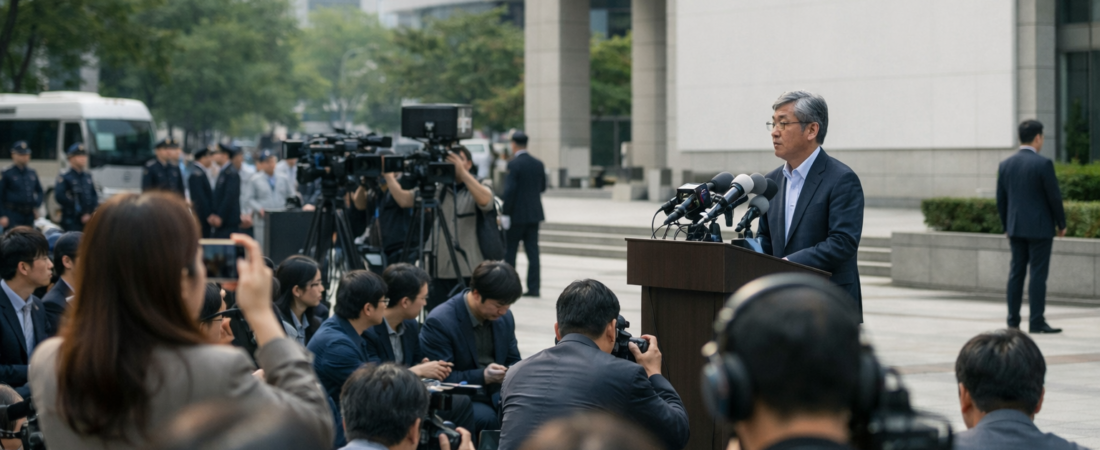
If you’re not deeply familiar with Korean politics, you might be asking, who exactly is Yoo Si-min? He’s far more than just a former foundation chairman.
Yoo Si-min built his public reputation over decades as an author, broadcaster, and political commentator. He served in government under the late President Roh Moo-hyun, and later became chairman of the Roh Moo-hyun Foundation, an organization dedicated to preserving Roh’s political legacy.
That role alone gives Yoo Si-min symbolic authority within progressive politics in Korea. Think of him as a bridge between the old guard of liberal Korean politics and today’s Democratic Party leadership.
His opinions don’t just circulate quietly among academics. They ripple through party headquarters, television panels, and social media almost instantly.
That’s precisely why Yoo Si-min’s recent remarks landed with such force. When a figure of his stature speaks, party insiders listen closely, and so do political rivals looking for an opening.
Here’s what makes this moment particularly delicate. Yoo Si-min has historically been seen as aligned with the party’s progressive wing, yet his own colleagues are now the ones criticizing him most harshly.
That internal friction says something important about where Korean progressive politics stands today. Is the party fracturing over strategy, ideology, or something more personal?
For readers outside Korea, this kind of intra-party clash might sound familiar. Democratic parties worldwide often struggle with tension between pragmatic centrists and their more vocal, ideologically driven wings.
Korea’s Democratic Party is no exception, and Yoo Si-min’s remarks have simply brought that tension into public view. You can learn more about ongoing coverage of these political developments through SBS News.
Prosecution Reform, Party Unity, and the “Coordinate-Pointing” Controversy
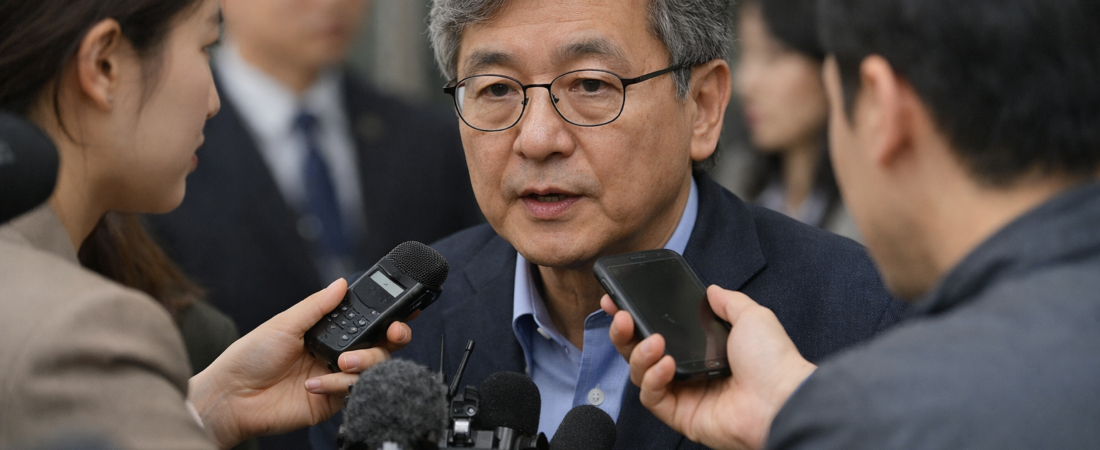
Let’s zoom out for a moment. Yoo Si-min’s remarks did not emerge in a vacuum.
They landed right in the middle of an already heated debate over prosecution reform within the Democratic Party. Prosecution reform has been one of the most contentious topics in Korean politics for years, touching on how much power prosecutors should hold and how that power gets checked.
Since the Roh Moo-hyun era, prosecution reform has remained a defining issue for Korea’s progressive movement. Roh himself clashed repeatedly with prosecutors during his presidency, and that history still shapes how his political allies, including Yoo Si-min, approach the topic today.
Given that legacy, it makes sense that Yoo Si-min would weigh in on prosecution reform debates. But his specific comments apparently struck a nerve that went beyond policy disagreement.
Lawmaker Im Mi-ae’s use of the word “reckless” suggests something personal, not just political, was at stake. What exactly crossed the line for her and other critics within the party?
That’s where the “coordinate-pointing” controversy enters the picture. In Korean political discourse, coordinate-pointing refers to when a public figure or influential voice singles out specific individuals, effectively directing online followers toward a target.
Once someone gets “pointed at” this way, they often face coordinated criticism, harassment, or public pressure campaigns from that figure’s supporters. It’s a phenomenon that has grown increasingly common in Korea’s highly online political culture.
If Yoo Si-min’s remarks are seen as a form of coordinate-pointing, that would explain the intensity of the backlash. Critics within his own party may fear that his words could unleash exactly this kind of targeted pressure campaign against fellow Democratic Party members.
That’s a serious concern for any political party trying to maintain internal unity. When a respected figure like Yoo Si-min appears to direct supporter energy against colleagues rather than opponents, it can deepen factional splits rather than heal them.
Kim So-hee’s comment about “rallying hardcore supporters” fits neatly into this framework. If Yoo Si-min’s goal really was to energize the party’s most loyal base, that strategy comes with real risks.
Rallying a hardcore base can boost short-term enthusiasm, but it often alienates moderate voters and swing constituencies. Korean political history offers plenty of examples where base-focused rhetoric backfired at the ballot box.
What This Fallout Tells Us About Korean Politics Today
So, what should you take away from this controversy surrounding Yoo Si-min? First, it shows that even respected elder statesmen of Korean progressive politics aren’t immune to internal criticism.
Party loyalty in Korea has limits, and Yoo Si-min’s experience proves that clearly. Second, this episode highlights how deeply prosecution reform continues to divide even members of the same political camp.
Nearly two decades after Roh Moo-hyun’s presidency, his party is still wrestling with the same fundamental question. How much should prosecutors be trusted, and who gets to decide?
Third, and perhaps most importantly for global readers, this controversy reveals the growing influence of “coordinate-pointing” dynamics in Korean political culture. Social media has transformed how political figures like Yoo Si-min wield influence, sometimes in ways that outpace traditional party discipline.
That shift matters far beyond Korea’s borders. Democracies everywhere are grappling with how online mobilization reshapes internal party politics, and Korea’s Democratic Party is currently living through a vivid example.
Looking ahead, expect this Yoo Si-min controversy to keep resurfacing as prosecution reform debates continue. Party leadership will likely face pressure to clarify boundaries around acceptable rhetoric, especially from influential outside voices like Yoo Si-min.
Whether Im Mi-ae’s harsh criticism becomes a turning point or simply a passing flare-up remains to be seen. One thing feels certain: Yoo Si-min’s remarks have exposed fault lines that won’t disappear quickly.
For those of us watching Korean politics from outside, moments like this offer valuable insight into how personality, legacy, and online mobilization intersect. Yoo Si-min’s story isn’t just about one controversial statement.
It’s about the ongoing struggle within Korea’s progressive movement to define its own identity, nearly two decades after Roh Moo-hyun left office. What do you think about Yoo Si-min’s role in shaping, or dividing, Korea’s Democratic Party today?
AI-Generated Photorealistic Image — All people, scenes, and details in this image are entirely AI-generated and fictional. Not a real photograph of an actual person or event. 이 이미지는 AI로 생성된 가상 이미지입니다.



Leave a Reply